The Mysterious World of Production
This is a six-story look at production I did for the Independent in Chapel Hill, NC for the February 9, 2005 issue. For some reason, the 9th Wonder interview is lost.
Walking in Both Worlds
Creating great records is a balancing act between art and science
To the layperson, the producer is a sometimes invisible part of any recorded piece of music. While different levels of fidelity and production are apparent in some recordings, for many music lovers what a producer does is somewhat ineffable. That’s the way they like it, in general, because while they are usually musicians themselves, they approach their job like a craftsman, making the best work look like no work at all.
“[Music] that doesn’t excite you may not have reached you in part because of the way it sounds. Presentation has a lot to do with perception of music,” explains Marc Williams, a protege of Rick Miller who’s worked with Miller on several Southern Culture on the Skids albums.
But most producers agree–the key is the performance, not necessarily how or what’s used to capture it.
“I have a microphone I literally used to hammer with, so it’s got all these dents in it,” producer and musician Chris Stamey says. “One day, we were out of mikes. [Ryan Adams] was playing guitar and wanted to sing along, so I said give him that mike. It was recorded on an ADAT. He did like 10 songs in a row and they’re great, and nobody complains about the mike or about the ADAT. Making records is about recording people. It’s people, combined with machines and a lot of technical elements in it, given–but people’s ears are going to go to the people on the track. What’s great about good hip hop is it cuts out all the distraction, it’s just the voice.”
None of the producers we talked to preferred the sound of digital recording to analog, but every one of them found it useful.
“I’m so used to [digital sound] sound now. It’s one of those things where if you don’t look back, it’s alright. But when you look back it’s like, ‘Wow, listen how much better that sounds.’ But you have to weigh that against the flexibility, speed and options that working with a digital workstation give you. Especially when you’re working on something quick and dirty,” says producer Brian Paulson. “Even on long term projects, it’s time consuming doing it in analog and it’s mind-melting to sit there and operate a tape machine for 10 hours a day. After two hours my eyes start to glaze over.”
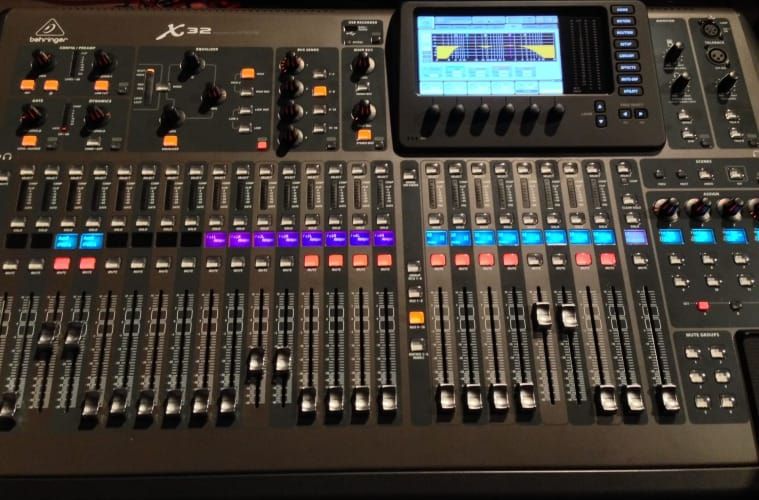
There’s no disputing that the flood of inexpensive digital recording equipment has radically changed the nature of recording for bands, who can now do many things at home right into their computer, then mix it down with software such as Pro-Tools, creating the possibility of making studio-quality recordings in your bedroom. But opening up the playing field didn’t necessarily make things easier for bands or music fans, because as Rick Miller puts it, “more shit just makes it harder to pick out the good pieces.”
“It’s been a great thing for us,” says Brent Lambert, who masters albums by numerous regional acts in his studio The Kitchen. “Although digital technologies democratized the actual creative process of making records, in the end it really boils down to physics. And if you don’t have a great listening environment with the proper ratios for acoustics, you can’t make a really great record at home.”
Another problem with recording the individual parts directly into a computer and assembling them that way is you can lose the interaction of the players and the spark that energized the song in the first place.
“It’s funny, there’s recordings I’ve done where you do the demos and then do the so-called real records, and then all of a sudden it’s like there’s no imagination left,” Paulson says. “That’s the thing about that Comas record that we did. Everything was so worked over, and it was definitely a computer-generated record. It was great at the time. I really wanted to make a record like that, to turn on all the toys. That was kind of the goal. I don’t think I realized what we would be losing in the process.”
But it’s more complex than an aesthetic choice between digital and analog. Most recordings are a blend in one way or another. Even if you record to digital, you can use the color that analog equipment provides in other ways on the front end.
“You can try and get a signal flow that represents certain sonic qualities and paint with that,” says Williams. “It’s not just about the source, but choosing between a ribbon or a dynamic or a condenser mike, picking a particular amplifier and choosing a couple different kinds of cable. Pick a heavy transformer and a couple older type pre-amps or a direct coupled later type pre-amp. All these things add up and affect the sonic color of the signal going through them.
“You choose analog gear based on its side effects. You go through this thing and before you’ve ever adjusted anything it sounds a certain way. Digital stuff is designed to be invisible. Which has a place, and there are all sort of virtual things that imitate the analog gear. But virtual is just another word for imitation, and the real shit just sounds better,” he says.
Choosing a producer is much like choosing the gear to record on. Each brings something unique to the recording of an album. It can be as simple as a good business arrangement, such as that of Durham’s Pox World Empire studios. Run by Zeno Gill, who also runs a label of the same name, Gill allows the bands that sign to his label free use of the studio, essentially for a split of the profits.
Stamey suggests people seek him out when “they’re looking for someone that can arrange. Or maybe they’re looking for someone who knows about songwriting.”
For Miller, “the selling point on a lot of studios is how the room sounds,” which has made his very “live” studio Kudzu Ranch a popular location to record drums–one of the most integral and difficult parts of an album’s construction.
Paulson, who tends to work in other people’s studios (“To this day I don’t want to be in the business of studio management”), feels his strategy is akin “in the classic sense to something like Phil Spectre. Someone who has the vision. Though, I feel like there are a lot of bands that aren’t looking for a vision.”
But just because a producer may have a particular style doesn’t dictate the album’s sound. Sometimes producers like to take jobs to stretch out and try something new, or may like to try a variety of different musical takes on the same material.
“I have my preferences, definitely, but I think it’s pretty unreasonable to think that works for everybody. So I always get extra–it’s easier to take something away than to add,” says Track & Field Studio’s Nick Peterson, who like Paulson grew up on Midwestern punk, and recently has recorded albums by Des_Ark, Fake Swedish and The Nein.
“With a lot of new artists I ask the direction. When I did the joints with Destiny’s Child, Beyonce came right out and said, ‘This is where we’re going, this is what we’re trying to do, and why we got you here,’” says DJ 9th Wonder. “She said, ‘We’re trying to go for the old emotional type sound. We got you here because you got a lot of soul in your tracks. But can you bring the emotions through your tracks but make it a Destiny’s Child sound?’ Not like I’m a chameleon and you don’t know it’s me. But I’ll conform to that artist.”
Part carpenter, part psychologist, a producer’s job is one of a facilitator working with the band to capture the music in its best light. Because of that, what a producer brings to a project can be as ineffable as the idea of great music.
“Records are like movies in that you have to go through a lot of crap to end up with less than two hours on the screen,” Stamey says. “It’s hard work, but if you love records and you love music, it’s what you do.”
Rick Miller Road Tested
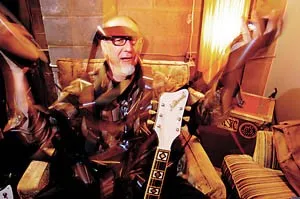
In his straw hat, overalls and KFC goatee, Rick Miller may not look like the owner of the area’s best studio, but redneck culture has been good to him. As leader of Chapel Hill’s Southern Culture on the Skids, Miller’s released more than a dozen LPs and EPs, including three for major label Geffen, helping fund his studio, Kudzu Ranch, in Mebane. While Miller was into music, he was a visual artist, not a musician, when he realized what he wanted to do with his life.
“When I first saw The Cramps was when I decided I’d like to be in a band. I saw them way back in the late ’70s,” says Miller. “We started playing as a way to drink some beer, meet some girls and have some fun. Because art is really wine and cheese.”
“Back then, the music and art scene were really intertwined,” he continues. “We did a few gigs and the response was good, and it was like playing music live and performing was such a different thing compared to painting, which is such a solitary thing.”
Founded in 1985, SCOTS went through a number of lineups before settling on what’s become their classic composition with Dave Hartman and Mary Huff in 1987. Their big break came on their Geffen debut, Dirt Track Date, with the release of the radio single “Camel Walk.” Like many classic pop tracks, it was practically an afterthought, added to the album at the last minute at engineer Marc Williams’ request.
True to his nature, Miller’s studio doesn’t look like most you’d visit. The large, cinderblock, garage-shaped room was designed for comfort.
“I want to make it fun and comfortable. No wood paneling, no ferns, no clocks. Everything’s polka dots and bright colors. We have velvet paintings of Wiley Coyote and The Roadrunner on the wall,” says Miller. “I didn’t want to make it like a studio; I wanted to make it a clubhouse, where you could come to have some fun. When I decided I thought, ‘What’s the decor going to be like?’ The only thing I looked at was a picture of Lee Scratch Perry in the studio, and it had stuffed ducks and this huge speaker right in front of his face, an Altec Lansing painted turquoise or something. I thought, ‘That’s it.’”
“I tell people it’s like a really nice band practice space with one fabulous collection of equipment,” says Williams. “The casual thing is the most important thing. It’s all about creativity and being loose and having a good time, because that’s when it happens.”
For Miller, it’s a great way to downshift after being on tour, and warm up to recording a new album.
“I like to make records, and it’s fun to make music with other people, and it’s fun learning about this stuff. You always need something to learn. It’s a really big toy,” Miller laughs. “I’m not really a producer–I’m in a band. That’s how it started. But it gives me a nice perspective and I can get along with artists, because I know where they’re coming from, whereas some producers from the other side might not. Producing makes you want to play. I can’t wait to work on one of our new albums (the forthcoming live DVD or new studio LP), because I’ve got lots of ideas I’m going to steal from the bands that have come in here.”
For a kid who started out reading Mad Magazine and going to matinees and drive-ins, seeing movies such as I Drink Your Blood, it doesn’t seem so strange where Miller landed.
“My parents bought me guitar lessons with these beatniks. I remember going up there and it was acoustic guitars and sandals. They were doing ‘Greensleeves’ and stuff like that,” Miller says. “I stuck around for two lessons. My mom would drop me off. I would pretend to go to the lessons and instead would go to the smoke shop where I could look at dirty magazines. So music and what I liked–at a very early age, I made a connection.”
Selected discography
The Moaners Dark Snack
Dexter Romweber Blues That Defy My Soul
The Fleshtones Do You Swing?
Southern Culture on the Skids Mojo Box
Brian Paulson Studio Aesthetics
He was born in the Great White North, and he’s put his mark on a number of the Midwest’s signature acts from Soul Asylum, Arcwelder and Jesus Lizard to Wilco, Son Volt and Golden Smog. Brian Paulson has avoided easy categorization; though he definitely has a sound, it just doesn’t remain in one place.
“I was known as Mr. Organic, live in the studio guy, but after doing that for six years it gets very tiresome. I had such a knee-jerk reaction to that. I got so tired of being strapped to that that I did an about-face for a long time. People don’t suspect you can do anything else,” says Paulson. “If I had my druthers, I would do one insane, glitzy digital production a year, one very organic live-to-two track thing, a glossy rock record. I love to be able to approach different ways to make a record. Music is pretty broad and I like to be able to dabble in all of it.”
“It was weird while I was doing that record because I remember sitting there, and I just knew there was something about it. I’ve never heard anything like this. I’m really digging this but it’s really fucking weird. Though not so weird I don’t get it,” Paulson recalls. “We knocked that record out in four days. It was a stay-up-all-night-until-you-can’t-see-anymore. And then the phone started ringing after I did that.”
“[My head] didn’t get big, but it did get weird. It was a puzzling thing for me. It just happened so quickly. I remember the first time I got flown to England. I was like, ‘What the hell is going on? Yikes! I don’t feel ready.’ I was working with the Wedding Present,” he continues. “At that point in time I was pretty limited in my knowledge of recording. But they liked something I’d done, so I just kind of did what I knew how to do.”
Since then, Paulson’s worked with Beck, Archers of Loaf, Dinosaur Jr., Squirrel Nut Zippers, Royal Trux, Superchunk, Rosebuds and Mark Eitzel, evidence of his eclectic tastes.
“There’s so much to listen to now. I’ve kind of got lost in the vast range of production. It’s equally exhilarating and mind-numbing at the same time. My attention span for it is so small,” he says.
“Every job that I’ve had I had figured out in about two months. I’d be happy with it for about six months by telling myself I still liked it. There are so many different directions you can go in learning about it, like this year I’m going to learn piano; this year I’ll learn guitar; this year I’ll learn how to arrange strings. I still don’t feel like I entirely have it.”
Selected discography
Archers of Loaf All The Nation’s Airports
Beck Odelay
Slint Spiderland
Superchunk Foolish, Here’s to Shutting Up
Wilco A.M.
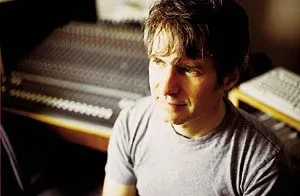
Chris Stamey Music Lover
The Music Lover He remembers being 5 years old when he made his first recording. Chris Stamey may not have been born to produce music, but he took to it pretty quick. Whether listening, playing or recording, music’s been a part of Stamey’s life since early on.
“I grew up around classical music. My father was a pianist. Not professional, but, we used to go see the orchestra a lot when I was growing up in the ’60s in Winston-Salem,” Stamey says. “Mitch Easter and I had a little studio in his parents’ basement, and we would make our own recordings.”
In the mid-’70s, while attending UNC-Chapel Hill, he founded the pop trio Sneakers, which would grow to a quartet with the addition of Easter. Several years later, he founded the dBs with Winston-Salem chum Peter Holsapple. Their catchy pop style would be a harbinger of the coming Southern pop renaissance, headed by REM. By 1983 Stamey had quit the dBs to pursue a solo career, but after several albums, including a reunion with Holsapple in 1991, he moved toward producing full time. For the last 15 years, he’s worked with such local acts as Whiskeytown, The Backsliders, Glory Fountain, Mayflies USA and Trailer Bride, to name just a few.
Though some have suggested Stamey is one of the 1980s’ great power pop progenitors, he chafes a bit at the suggestion of his work or that of Big Star being grouped with that of the Raspberries or Eric Carmen.
“I grew up with classical music and Mingus, as did Alex Chilton, and I don’t really think of those Big Star records being pop albums,” Stamey says. “When I was growing up I listened to albums by bands like Traffic and Cream. Even though I see it’s not without its flaws, I really liked the Blind Faith record. And they weren’t really pop albums, but there was an idea behind music when I was growing up–Phil Spector would say you make a contribution or you try to take it further harmonically or lyrically. I like people who do that.”
As a producer, one of his guiding principles is doing what’s necessary in service of the song. While he appreciates rich, full recordings, he suggests there’s a point of diminished returns.
“The thing you have to remember sometimes–and I have a hard time with this, I think I didn’t do it so well on my record actually–a record is like a little box, and you look at the speaker and it’s not that big. And think of it as a room you’re decorating. It’s hard to live in a room with a lot of little cute things,” he says.
Last year’s solo album, Travels in the South, marked Stamey’s first release in almost a decade and has been followed up with a recording with Yo La Tengo (under the name The Chris Stamey Experience) and another new record for which Stamey’s already recorded 18 songs.
Asked about what led to such a long hiatus, Stamey admits, “I don’t think I have a printable answer for that…. I never got into show business wanting to be a record star; I only did whatever I have done because I like being around music. If you’re looking at a past in terms of a career trajectory, that’s fine, I just never looked at it that way. I like being in love with music whether it’s mine or someone else’s. I feel that, and I like working on it, then having it come out. It almost doesn’t matter who it is.”
Selected discography
The dbs Ride the Wild Tom Tom
Caitlin Cary I’m Staying Out
Le Tigre Feminist Sweepstakes
Chatham County Line Chatham County Line
Whiskeytown Faithless Street
20 thoughts on recording music
Editor’s note: Like Kitchen Mastering’s Brent Lambert said in the first piece, recording is an act of physics. That’s the science. The performance and capturing it is where the art comes in. Following are a mixture of tips, tricks and things to keep in mind when you’re engaged in both.
Before you record
“Be as prepared and rehearsed as you can. It doesn’t happen as much anymore. But then everyone has Pro-Tools, and you can sit and monkey with stuff forever, which is great, but there is nothing better than a really tight performance just to build things on.”
—Brian Paulsen
“Headphones are kind of weird; you need to be careful about a headphone mix. It’s ambitious to think you can go in and wear headphones never having worn them before and play like you normally do. They’re a necessary evil most of the time, but I’d say practice over headphones if you can set up a little mixer. Get used to the headphones, because that will definitely throw you. It will throw your pitch; it’ll throw your rhythm.”
—Chris Stamey
“If rap is the only music you listen to, you’re in big trouble,” says Ninth Wonder. “There ain’t a rapper yet who’s said ‘I don’t like Coldplay,’ at least for most of us in the game. Young cats trying to get in the game are like, ‘I don’t listen to that shit.’ Why not? You need to. It will teach you a lot about your own music. You think Linkin Park just got the bright idea one day to do something with Jay-Z like that? I know for Phonte a lot of his harmonies come from Beach Boys records.”
—9th Wonder
“The smartest thing is to know the songs. Have them well-rehearsed and have played them live. It’s great to have done a couple tours. Because just from a performing perspective, you don’t know if a song is good or bad until you’ve played them in front of a room full of people.”
—Rick Miller
“I like people that are well-rehearsed and comfortable with a song; it makes recording so much easier. If everyone is comfortable and you’re capturing what is going on in that moment, to me that makes the rest of your recording with the overdubs and the mixing much better. If you get the sound there at the recording stage, mixing it is simple.”
—Nick Peterson, Track & Fields Studios
In the studio
“I think all the time about ‘Hello Mary Lou.’ Rickey Nelson was lined up to be in the studio, I think it was a three hour session, but there were other bands in the sessions and it came down to 15 minutes, and they were ‘OK, we’ve got 15 minutes,’ and they cut their record in that time. That also happens in regular sessions where the first 15-20 minutes and the last 15-20 minutes are really golden times, where magic happens all the time. You need to always honor that time when the tape is running out.”
—Stamey
“To make beats you have to be able to hear. In order to rap you have to be able to write rhymes. You might have raw talent. But that raw talent can benefit from something else. If you don’t have the raw talent, no machine in the world is going to make you better.”
—9th Wonder
“The biggest most common mistake I see is really poor arrangements musically, where you’ve got too many instruments fighting for the same real estate sonically, especially within a certain octave. It seems like the art of arranging is disappearing. Is the bass playing way up the neck an octave higher than a low D and if so, what are the guitarists doing, are they playing in the same octave? Did the bass get tuned down so he can play the bass note an octave lower, and stay out of the way of the guitars? It’s so simple to fix if you’re aware of them.”
—Brent Lambert
“Study where you come from. If rap music started for you in 1998, you got a really big problem. If you want to learn how to make beats then you got to go back, not maybe to the Cold Krush Brothers, but start at least when sampling became big. (The Bomb Squad might confuse you–don’t start there.) At least when sampling became popular–around 1990–if you want to learn to chop samples.”
—9th Wonder
“[Musicians should] like the sound of their instruments. Sometimes that’s a big shock for people. They have this ideal they place on their guitar or drum sound that is just not there. That happens to me even when I record myself. Yet be persistent and know the sound you want , and don’t be afraid to ask the producer that you work on it if you’re not happy. Whoever you’re working with should take the time to make everybody feel good about what they’re recording.”
—Peterson
“I’d say try to play together and play it for real . Don’t think you’re just playing a guide, and stay physically close to each other.”
—Stamey
Getting the sound
“You want to be able to use good room mikes. I really like a good room mike. If you put your head down where that mike is next to the snare drum, it really doesn’t sound very good. You’ve got to have something around it.”
—Miller
“Microphones are a big thing for me. I generally have a good idea about which mike to record the vocals, but I’ll usually put up at least three mikes for what I’m doing. So when somebody steps up to the mike with a set of headphones on, they can go down the line of two or three vocal mikes and use whichever one you see their eyes kind of light up–kind of let them choose. Hopefully they also learn a little bit, like, ‘Hey, this does make a difference,’ and they’re more involved.”
—Peterson
“You can make the creative part, you can record things, but if you don’t have an accurate monitoring environment , there’s no way you can make correct decisions. It’s like being a graphic designer on a monitor that all the colors are set wrong. You just know that what you’re looking at isn’t reality.”
—Lambert
“The other thing that’s important about the studio–and Mark hipped me to a lot of this stuff–front end is where everything happens. It’s the instruments, the microphones, the cabling, the power that you use. It’s the interfaces. If you don’t begin with a good sound , you can’t fake it later. You’ve got to start good.”
—Miller
“Technically, two mikes close together give you a blurred image, and singer/songwriters are at their best when they’re playing guitar and piano and singing at the same time. So you kind of decide what you want to get. Whether you want to get the ear-gripping performance with a little bit of blur, or whether you want to use just one mike on the voice and on the guitar. Whichever, it’s always kind of a trick. I approach it different ways with different people. If they play guitar really quietly, it helps. If I think they can overdub a vocal and get it there, that’s fine. But if a song was written to feel right, with a guitar in their hand, a lot of times everything changes when you take that away.”
—Stamey
“The nice thing about the real gear is it cost a lot but it never loses its value. You can spend so much money on this digital stuff and two years later it’s obsolete.”
—Miller
“We’ve rarely used any compression on anything that came in here, in fact. A lot of times we really do the opposite. Now I have tools that can back transience back in and expand things back out so we can even work on them. It’s interesting–there are some other tricks you can do, like … parallel compression … so you get the heavy, thick, compressed sound mixed in with totally uncompressed sound. And that sounds awesome. But most neophytes don’t do that; they just hammer it until there’s nothing left.”
—Lambert
“We were just talking about EQing stuff the other day. That’s where you get into the most trouble. You shape things too much in here, other than listening to what the band’s playing. I’ll help bands if I feel there is a problem. But most of the problems with playing rock ‘n’ roll are too much. Ninety-eight percent of the time I’d say less is more. And trying to overreach. Like, technically, there’s a part you’re having trouble doing. That happens a lot to me, and everybody. You’ve got to scale it back. Things like that.”
—Miller
“When people get into mixing, the most common mistake I have is sort of the same thing–too many things fighting for the same space either left to right in a mix or sonically as well. If you’re a mixer and have an arrangement where the piano player or the guitar player happen to play in the same range as the vocalist, cut the EQ of one of them to make space for the other. A lot of times people miss the boat on that.”
—Lambert