Pain Before Beauty
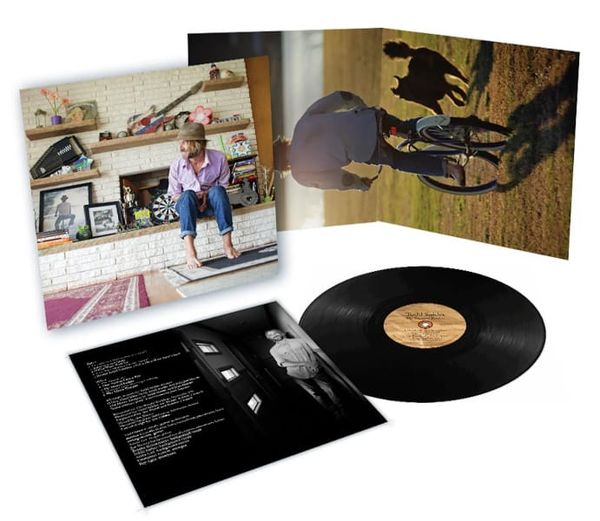
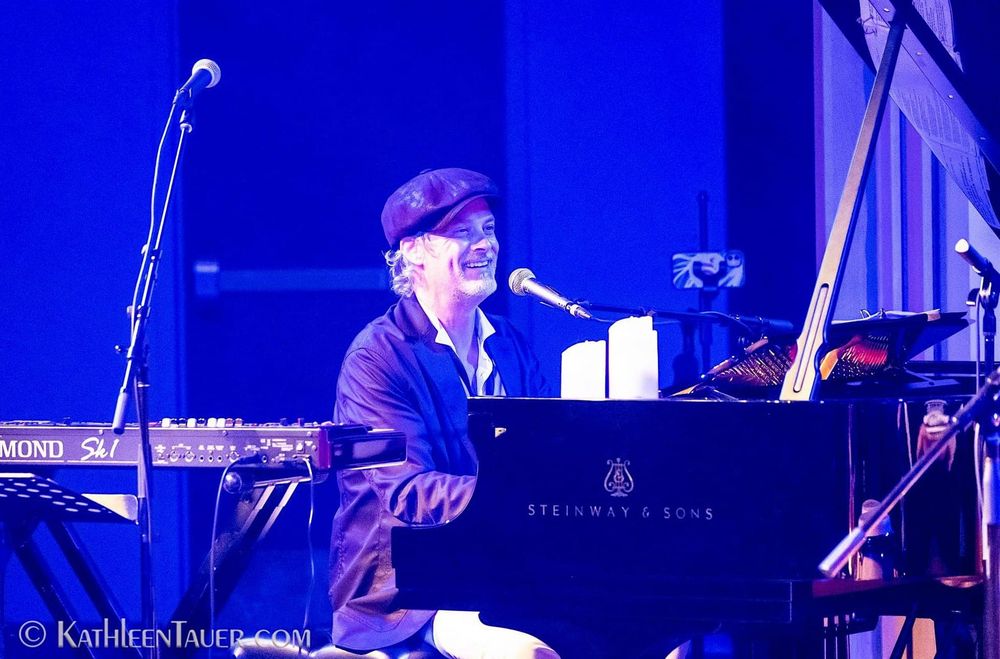
Jazz-Roots pianist Scottie Miller continues to explore fresh territory on baroque breakup album, Hello Pain.
If Death is the great leveler, striking indiscriminate of wealth, station or due, then Pain is its half-sister through Misery, a familiar (if awful) friend there to remind you that you’re not alone, by making you desolate.
The way Pain sees it, Happiness is a fair-weather friend that always elides past difficult subjects and offers nothing but vaseline-smeared, soft-focus takes which bring you no closer to the truth. Pain’s doing you a favor, telling you things none of your other “friends” will. Real glass half-empty, and the-water-is-high-in-PFAs kinda friend.
Scottie Miller came in contact with Pain after the Pandemic. Maybe he was feeling a little triumphant?
The Berklee grad had led a blues/roots combo in the Twin Cities for two decades, scratching his rock itch while sidelighting in a variety of shorter-lived combos and performing solo, while releasing ten albums, ranging from jazz and pop to folk, blues and rock.
Then during the pandemic he turned nearly two dozen poems he collected in notebooks over the years into oddly-rhythmed, jazzy beat-poet “songs,” throwing out traditional structure for the hypnotically off-beat release, Carnival Coccoon. Its vibrant stream-of-conscious and loose musical vibe echoes Kerouac’s patter, winning plentiful accolades. (It was accompanied by a book release.)
Hot on those heels he teamed with Ruth Foster, for whom he’s played keyboards for 18 years, on her album, Healing Time. He co-wrote the title track – which wasn’t even initially going to make the album – as well as the track, “What Kind of Fool.” The album received a Grammy nomination and the song, “What Kind of Fool” was the Blues Music Awards’ Song of the Year.
If there was only some manner to effectively “short” your life, because you could make some bank betting on a dip about here. How much better can it get?
Sadly, life’s success can’t paper over the parts that aren’t working. While his professional career was on the upswing, things weren’t great personally. He had to address a substance abuse problem that for many musicians comes with spending half your life in bars waiting for something to happen. His marriage was failing, and ended in a divorce.
Then moving his upright around his new rental home he cracked a vertebrae. (Have you ever noticed how quickly physical disability finds you when you’re in emotional distress?)
“I was just getting some new carpet,” Miller says, relating how Hello Pain’s two-and-a-half-year odyssey began. “I needed to move my upright but it doesn’t have big casters. I even cut slats of plywood to go over the old carpet just to pull it down the hall and I had a friend helping me. But sure enough I end up fracturing a vertebrae in my back, and I was just toast for two to three months.”
It was the middle of winter and Miller was sinking like the mercury. “It’s 20 below, my back is screwed and I’m going through a break-up,” he chuckles ruefully. “It’s like, Hello Pain. And it was born.”
Miller got to work, and did a clever thing. He separated the songs into two batches, corresponding essentially to two-sides of vinyl. He wound up with 10 songs, and each batch tells one half the story. This helps the album retain a strong narrative thrust. (Yes, Virginia, albums are collections of songs that when properly concepted can have their own arc.)
“If you look at it Side A, it’s all break-up, all relationship, and then you flip it over, it’s the re-emergence, reawakening and finding balance,” he says. “So it does follow the narrative trajectory,”
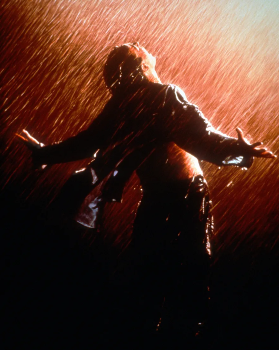
Like a play or movie that typically peaks with a climactic moment 80% of the way through, corresponding to the terrific, “Balance,” a pulsing exultant song that finds the way by “check your ego… everything you think you need is right there inside of you.” It follows the tentative, still brooding, “Awake and Willing,” about the challenge to push yourself back out there, and is followed by the stock-taking, “Mercy,” and the relatably plain-spoken, “I’ll Be Damned,” which puzzles after how he made it through, as we humans somehow do (okay, sometimes), like Shawshank’s Andy Dufresne, escaping through hundreds of feet of sewer pipe and emerging to be washed clean by the rain.
Yet there was another complication about the music Miller had written. After writing the basic structure of the song, he heard it with a huge orchestra. Every time he laid down a track, he added digital strings and brass. It’s what he heard in his mind.
“I’m like, ‘I’ve painted myself into a corner here because I really don’t want to release a sampled orchestra,” he recalls.
But do you have any idea how expensive it is to record an album with a full orchestra? I don’t have the numbers in front of me, but it’s “Very.” (Think $150/minute.)
It’s what Miller’s heart heard, but how to recreate it? His partner in crime violinist/cellist/orchestrator Cierra Alise Hill could maybe multi-track each instrument. Maybe they could hire other musicians to fill that out? Miller was stressing himself out. Again.
“Then I chilled out and I said, “You know? Whatever it takes. I want to make it happen but I really just didn’t know how in the world we could afford a large orchestra<” says Miller.
Then while in Australia on tour with Ruthie Foster, a friend texted and asked what they might be able to do to help.
“Out of the kindness of her heart she was paying it forward. She had a musician friend of hers that had passed away some years ago and he had told her how expensive it is to create an album, period, and so she was trying to extend that kindness,” he says. “She is the superhero of the project.”
They discovered their match in the Budapest Scoring Orchestra. The Hungarian group grew out of strapped film studios looking for ways to cheaply score their movies, and alighting on Budapest in the eighties, seeding the situation that afforded them a state-of-the-art facility to record with anyone around the world. That’s how Miller added a 52-piece orchestra, cutting the tracks together (thanks in part to increased studio facility compensating for latency) without breaking the bank.
The result is extraordinary. The sound is so big and emotional. The challenge is that music so full and grand will sometimes work against the intimacy of the lyrics. He generally sidesteps this by using the instrumental spaces and not flooding the space with words and, well, trying to keep it honest.
“I was admittedly in a bit of a sticky writing-place in my life,” Miller recalls, while hesitating to call it a block. “I was all over the place. I was like, ‘I don’t know what is it you’re after?' I was like, 'Just write your truth!’ It was literally just start writing down what you’re feeling and thinking and opened the gates for me.
“It became such a truth album, I was like, is this too transparent?” he confesses. “You start questioning yourself, you get a little paranoid. I’m like the truth wins; you gotta believe in that.”
It’s appropriate, given the way the album is about negotiating the crucible of ache, that while he tried different sequences, the one Miller went with was ultimately the order in which they were written. On some level, he lived the album from start-to-end.
“I‘m just so grateful for the journey,” he says. “And for Cierra taking all that digital orchestration – straightening it all out and retaining everything I was hearing but then going beyond. She went so far beyond in her production and compositional wheelhouse with the orchestration. I couldn’t have done it without her. I feel so lucky to work with everyone in the ensemble.”
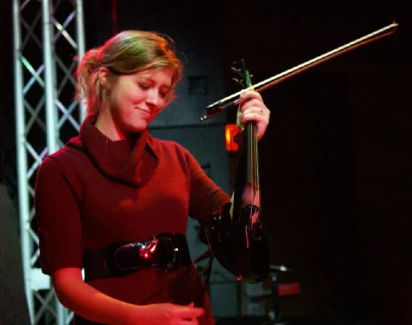
Perhaps the best part of the process for Miller has been taking the new songs out. As we mentioned there are ways in which big orchestrated pieces can succeed just because of the size and grandeur of a 52-piece orchestra. That’s how early pop music worked. But so far, Miller’s encountered nothing but joy incorporating these baroque songs into his different ensemble formats, from solo and duo (with Ciera) to his standard four-piece and even a five-piece with Ciera’s partner, guitarist Tom Brooks.
It’s a sign the songs are strong enough in themselves to still stun in different outfits.
“It seems like even in a loud bar, when I go to the material, just piano and vocal, I’m getting people tuning in, and I am really grateful for that,” he says. “We just played the other night (in a duo), outdoor patio stage in River Falls Wisconsin. I worried, ‘Does it need to be bumping, full band rocking?’ I was surprised and shocked, [the Hello Pain material] wasn’t docile or too quiet. It drew people in and was a highly effective.”
Of course, Miller’s not through with his taste for challenge, or adventure, whatever. He’s assembled a nine-piece pocket orchestra from friends, friends of friends and local skilled ringers to bring the album sound to life, with 15 people on stage. (That may seem small compared to 52, but wait until you hear it in space before you judge.)
“We’ll have nine strings and two people on winds and brass, along with the core band [he and Ciera], drums & bass,” Miller explains. He’s also trying to arrange tour dates with local orchestras/players in other towns. “The challenge continues. I’ve put myself in a position of thinking big, dreaming big. What a ride it continues to be.”
It’s as if that left turn he took during the pandemic with Carnival Cocoon into the poetry, a new lineup and a different sound was following his muse into entirely new territory that continues to challenge him creatively.
“It led to this place, with this new album. When I listen back to it, again here and there, I feel that segue of poetry being put a little more at the front of it. Concept again leading the mood of the tunes and that’s a good thing,” he says. “At times it leaves me feeling freed. Admittedly it also leaves me a little unsettled. I think, ‘You have a lot of different personalities coming thru.’ But then I think that’s typical of a lot of musicians these days.”
Sometimes you need to just trust the voices in your head, and believe Pain knows what it’s doing.
Scottie Miller, Hello Pain release party with Orchestra, Saturday, August 1, Parkway Theatre