Commons Besieged
Don't Look Now, Class War's Already Upon Us
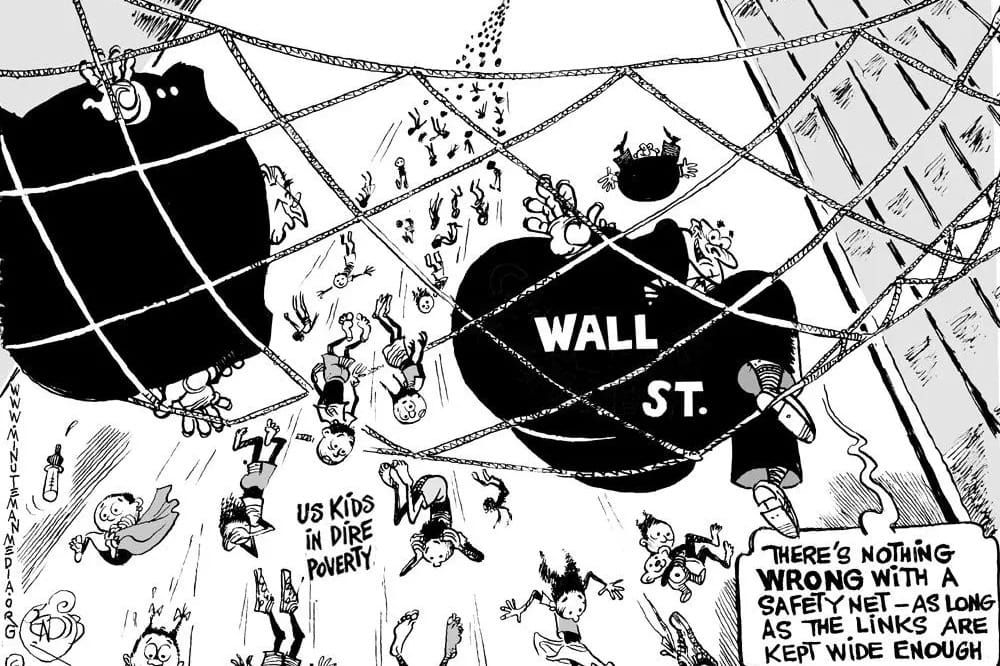
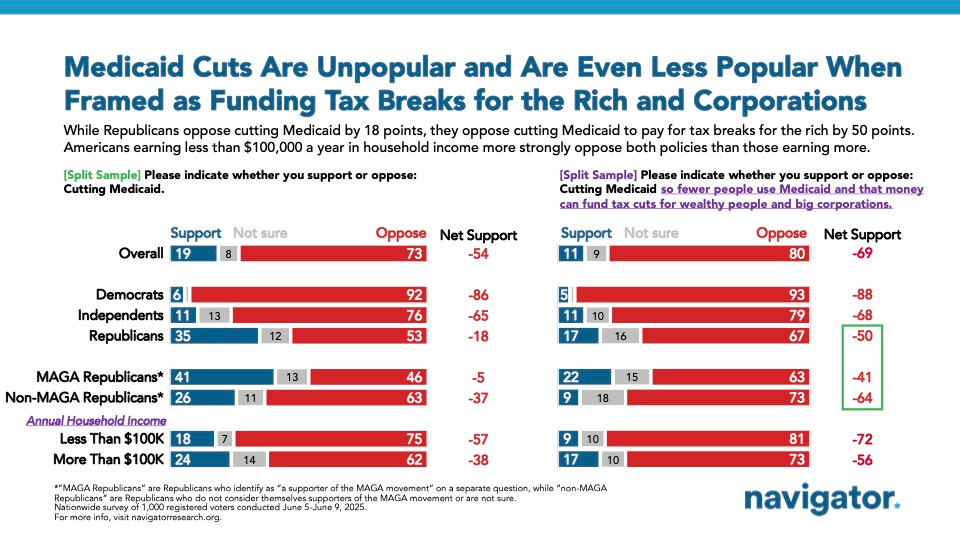
We’ve reached the moment in this Second Gilded Age where extreme wealth has nothing left but to swallow what the other 90% possess. The attacks were more rhetorical at first – the lazy poor are bankrupting us! – now they’re visceral (SNAP, Medicaid), though not always felt, as the changes to the safety net and science are more of the long-term catastrophic, and designed to blow up after they're out of the room.
Thanks to wealthy nuts, anything we have or share – our environment, safe food, a democratic government etc. – are something they'll despoil so they can charge us for it going forward. When you’re a hammer, everything is a nail, and the nails don’t talk back. (They seem to expect that they can continuously oppress more people down than history suggests is feasible.)
As such, "The Tragedy of the Commons” has begun a more perilous chapter.
On some level the whole idea of Trickle-Down Economics is based upon something true – and we’re talking here about the conceptual idea more than Laffer’s ludicrously oversimplified equilibrium graph on tax receipts– that's probably vexing for the wealthy as the apex creatures of conspicuous consumption: Everything the wealthy get – with the exception of Veblen goods, for implicit reasons – everyone else eventually gets too, and even those Veblen goods are available as cheap knockoffs.
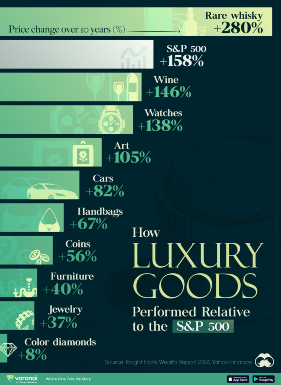
The alleged beauty of consumerism is that whatever brief endorphin hit you get from your market purchase is immediately devalued by the fact that someone else can easily acquire the same thing, requiring the next purchase and the next, keeping the engine of productivity humming. And that’s what we all want, more productivity, right? Keeping up with the Joneses is a treadmill, not an equilibrium state.
Nor is there any mental relief or acquisitive plateau. There’s a woman in the documentary Generation Wealth, who protests that she’s not the real 1%; she’s been on their jets, and, quite honestly, she knows several people with nicer jets than hers.
It’s fair to argue that capitalism may have been a necessary step in expanding the availability of a certain level of affluence across the world. The process of getting Ikea furniture, flat screens and stainless steel pans into everyone’s houses was gonna take some dedicated infrastructure. We built roads, airports, ports and designed legal structures to accommodate the easy transport and purchase of goods. Here we are!
Affluence is not widely (or evenly!) distributed yet, but it’s getting closer. The shorter path to catch-up by skipping many steps (steam, coal, oil, for example, straight to solar) has brought the third world into sight behind us. That trickle down seems to have unnerved the truly wealthy who lately have accelerated their efforts to undermine the collective systems and commons that helped generate their wealth. They seem to be rebelling about an advancing floor (potentially?) impinging on the perceptual height of their vaulted ceilings.
Pulling Up the Ladder
During Covid the wealthy got richer than ever, but faced more antagonism perhaps than ever as people took that moment to examine their lives and, often, tell their owners/employers to self-reproduce (and I’m not talking mitosis!)
To those very much invested in this hierarchically structure of toy-acquisition and status, the declining value of their accomplishments even as they monopolize more of the wealth appears to have cost them their collective sanity, and pushed them into full-fledged revolt against anything shared, probably because they can’t understand anything that’s not transactional. (Also, Twitter and the last? *fingers crossed* rear-guard action of white supremacy/Evangelical Christianity.)
Let’s clarify that we’re talking in broad, global generalities, though centered here in the U.S., and about a movement that can be traced back beyond the Powell memo, or the business plot, back to Malthus and Smith and Bentham, and the birth of capitalism, because you can’t discuss the commons – the subject of this essay – without the beginnings of private property and the seizure or, “enclosure” of the commons at the advent of the industrial revolution.
Equally, the development of liberal democracy was on some level a social contract to create ground rules in exchange for mediating the exploitation of labor, and stopping them from eventually hanging their boss in a fit of community pique. The wealthy are probably even more aware than we that the police are typically a post-hoc solution, but at least they have the resources to mitigate the cost of their misfortunes.
The Tragedy of (the) Commons
In December 1968 a University of California ecologist named Garrett Hardin wrote a tremendously influential, wildly presumptuous, mostly inaccurate and Malthusian (which was the fashion of the time *cough* Paul Ehrlich), surreptitiously (or not) right-wing 6000 word essay for Science called Tragedy of the Commons. It’s one of the most cited works in academic history.
There are many reasons for that, among them the sudden high salience of environmental concern coinciding with a very retrograde, frightening teaser of oppressive backlash about those not able to govern themselves or their impulses. While this is an epitaph heaped on the culture’s marginalized (poor, minorities, women), a quick look at the pedo-con trail suggests just the opposite.
It’s not how shiftless the poor are, it’s how rich people project to protect their ego, limiting their empathy. (Less guilt makes wealth easier to enjoy, plus if you believe it’s only luck, then you have to accept/fear it could disappear just as quickly. Note all the rich dopes, saying they could pull another rabbit from their hat.)
Hardin suggested the Commons were a tragedy because people are just too selfish to not destroy things, and in a finite world, that's an issue, but there’s, like nothing we can do about that, except maybe reduce the number of people. (Laissez-Faire being what it is….) Sounds like something the wealthy might hatch, amirite? Suggesting "freedom" is the problem?

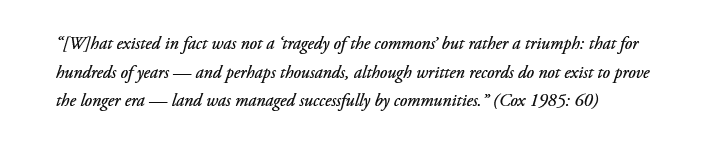
The historical record suggests otherwise. Communities worked the land cooperatively for years. Suggestions otherwise are just fixing the evidence to the case. English communities installed grazing limits because of their experience with overgrazing, known as stinting.
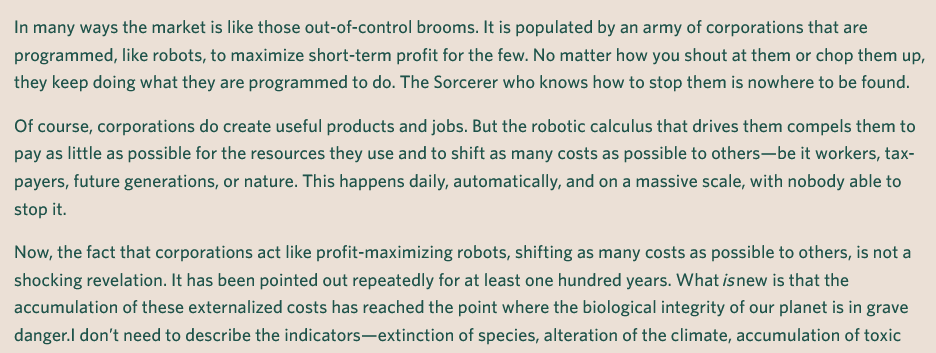
Indeed, it’s the introduction of industry into the equation that hatches a creature incapable of thinking about anyone else – the corporation, able to diffuse financial and legal responsibility – like the brooms in Fantasia, shifting costs to others and endlessly burning through resources. They have no shame or regard for that which they despoil, so long as it bumps the bottom-line. While useful to industry, that attitude creates a lot of human costs, as author Peter Barnes explains:
A business grouping is a way to mitigate risk, but also minimize individual responsibility, like the bystander effect. In practice, many corporations insert themselves into situations that are already commons that they might extract profit from both as a middle man. (Amazon, for example.) Many are fundamentally extractive, since the best profit is in stuff you don’t have to make, limiting your overhead. Otherwise monopolize, then extract value.
“The efforts of men are utilized in two different ways,”noted nineteenth century Italian economist Vilfredo Pareto (who a decade later originated the Pareto Principle, or the 80/20 rule). “They are directed to the production or transformation of economic goods, or else to the appropriation of goods produced by others.” Such ‘appropriation’ benefits those who ‘have’ rather than ‘do’, and displaces activity that would otherwise yield greater community benefit.
It seems like the takers (exploiters), who complain most about how others are takers for benefiting from the social safety net, which ultimately enable business owners to underpay their employees, creating a floor that benefits all business owners. The Welfare System is little more than a minimal sop to the working class hatched as a bulwark for the rich against revolution and violence from those with nothing left to lose.
Indeed, this sort of American class detente (aka “welfare”) is something the rich have been arbitraging for decades, shaving off more and more slices like Jenga, comforted in the fact that the proletariat hasn’t risen up in their memory. As they say, strategies are successful and repeatable right up until they aren’t.
But we’ll content ourselves for now with the idea that as initially conceived, the “commons” is a very salient and surprisingly crisp manner to talk about the difference between private property and consumerism, on the one hand, with its pursuit of an ever-expanding GDP (never forget that disasters, add to GDP same as improvements), and the things that nobody could possibly “own" on the other, like natural resources, knowledge & technology, social norms & contracts, and healthy living/environmental conditions, which we expect to be sustained from one generation to the next.
It could be argued that the right’s soured compact with the poor is the wellspring of all our present strife, though perhaps greedy thirsty narcissists are “don’t hate the player, hate the game” outcomes of a system where entitlement, siloed communities and omnipresent social/status pressures have severed the connection between the creation of wealth and the communities that house it.
History Lesson
The term “commons” comes from the Latin co-, meaning “with” and munis, meaning obligation or duty. So commons, like community, is about what we owe each other, a shared responsibility that no one can fully possess. (Think groundwater, the weather, the water, the airwaves, the wind, etc.)
The pre-capitalist world was rich in “free takings.” The woods provided shelter, sustenance and when burned, warmth,free ofcost. Cattle grazed on common pastures, and wheat could be gleaned from what’s left by the reapers. When industrial England needed workers for mind-numbing factory work, it secured them by making these prior commons inaccessible, and leaving rural residents no choice but move to the cities to be exploited.
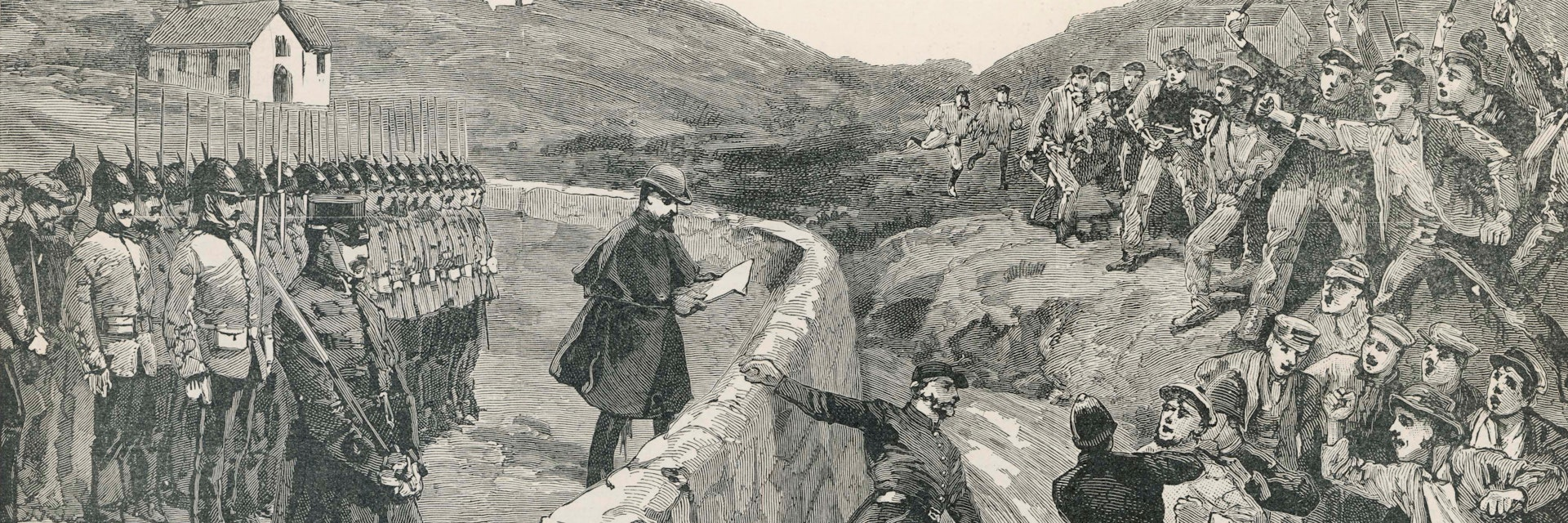
Governments created private property with laws against trespassing and poaching. This was the beginning of what was known as “enclosure,” which can be used to describe any circumscription of public property by private parties, and as such is the forefather of privatization – then by the landed gentry, now by corporations.
Barnes, who we quoted earlier, contrasts the market of private property and the shared commons as a pond with fish, enjoying a symbiotic relationship. One’s more necessary than the other, indeed, preceded it, because before there was any private ownership of the resource commons, we shared them. (indeed we constructed systems of authority and government to preserve and enforce those rights.)

This, it has been pointed out, is yet another commons – the one which must manage the commons. Without some system or agreement on utilization, violence could threaten access to the resource altogether,and why the rich are commonly against government regulation – it limits their collective plunder.
Managing the Commons: Most Challenging Common of All
This is another of the tragedy of the commons because this management is a collective activity that in its absence falls into tragedy thanks to the unmitigated rapacious self-interest of corporate capitalism. Absent regulation, exploitation reigns. The incentives are on the side of shirking responsibility and taking benefits without contributing.
That said, once established, regulations can be tightened, the issue is that crises in the commons typically only comes to light after the damage is done.
If it’s a resource with open access, nobody may feel invested in educating themselves about its decline or potential remediation strategies. Why not let someone else do it? Unlike private property, investing in learning about common resources requires efforts whose benefits accrue to everyone, and are not personally credited.Who can afford that?
Until the issue’s urgent, there is little incentive for users to monitor its health, as opposed to the situation with private property, whose owner presumably feels constrained to keep their assets in good shape(assuming of course, the price is dear enough; only children fret lost mittens.) Yet private ownership is often myopically focused on short-term returns and continual growth, unlike nature which is buy and hold.
This short-term focus is perpetually damaging, reinforced by corporate structure and incentives, as corporations push (externalize) the costs on others, and have no incentive to consider the future – frequently hoarding that knowledge to the detriment of the people using their product (tobacco, oil). For example,Oklahoma spent $20M last year closing dead oil wells bankrupt companies abandoned.
As a side note, it’s worth noting that here in America, we’ve never made as big a deal about the commons because we were born on a frontier. The ready availability of cheap land wasn’t the issue here so much as its development. This encouraged lawmakers to reduce property holder obligations as much as possible lest they leave to stake out land somewhere else.
In addition to the Magna Carta, which provided many of the kinds of rights and government assurances found in the Bill of Rights,England enjoyed something known as the Charter of the Forest, which abolished the death penalty for the theft of deer, recognized the people’s right to herbage, to feed pigs nuts from the forest, get honey from bees, etc. Note while Jefferson loved the Magna Carta, America didn’t add the Forest Charter. They weren’t trying to encourage any Henry David Thoreaus, they wanted Westward Expansion which required making property rights inviolable and easy.
The Wealthy Don’t Need Commons, They Have $$$
It’s no surprise that the idea of cooperative action is lost on those without need for anyone. The irony there, of course, is that it’s their money, not their rugged individualism that allows them to exist without fears or challenges. It’s not that you can manage finances necessarily, care for their kids, cook or even drive, but that they can afford to pay someone who can. The rest of us take part in the free takings when necessary, and it’s part of what bonds us to our community.
The rich are always threatening to leave the community if their needs aren’t met. They have that luxury, and sometimes the leverage, though it’s a flex not an honest threat in most cases. The rich can live where they want, so it follows there are reasons they live where they do, and to leave would be a sacrifice for people that rarely have a reason to anymore.
Most studies suggest only a small percentage move when challenged by taxes. If you have billions of dollars, would you move just to save some money, or is it “the cost of doing business.” Recently six of Califronia’s 214 billlionaires moved out of state. That’s billionaires, who are far more capably rootless than America’s roughly 24 million millionaires (around 7%-8% of the population).
It’s an empty threat, like Dad’s gonna-turn-the-car-around-if-the-horseplay-doesn’t-stop.
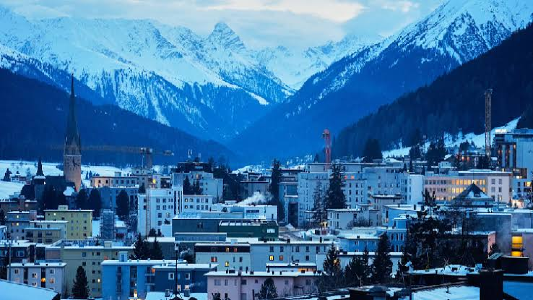
The wealthy are very into their own company and community. They hang out together at Davos, Bilderberg, Bohemian Grove, not to mention all the gated resorts for the extremely wealthy. It’s an easy and obvious self-sort. The only people they don’t think are trying to steal their hoard have their own hoard. The distrust is legion, so while it’s great you have this mutual admiration society, it would probably be better if you weren’t bonded in fear of the other 99%.
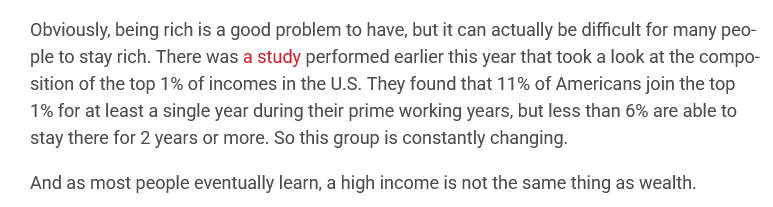
To that point, a 2016 Emory study found the rich weren’t simply anti-social (though they do spend 10 minutes less each day with others); they spent more time with friends and less with family and neighbors. (People who can reasonable expect things of you for 100, replacement Alex?)
Even for the rich it’s about the family you choose, amirite? Here’s the problem: the common thread between entitlement, narcissism and psychopathology is a lack of empathy.
“The paper reflects psychological findings about the social behavior of people with access to different levels of money, and demonstrates how they play out in the real world. For example, previous studies have shown wealthier people to be less interested in social interactions and less compassionate than people with lower incomes,” wrote Vox Reporter Josh Rosenblat. “These characteristics, the authors of the paper theorize, manifest themselves in people’s social tendencies.”
People Behind Gates Wind Up Siloed
At this point, the idea that the wealthy are siloed is pretty much confirmed by their social media posts. They live in exclusive gated communities attend exclusive functions and jet off to isolated paradises inaccessible to a normal person. Their isolation is chosen and that lack of real human contact defines their worldview. Not only does the disparity create a subtle but pervasive sense of superiority or entitlement, but the power differential is a shield against genuine (versus transactional) interactions.
It’s self-reinforcing, which presumably is part of the appeal of any silo.
A 2015 study found that people use their own neighborhoods as a measure of how much wealth other people possess, leading the rich to dramatically understate inequality.
“If you’re rich, there’s a good chance you know lots of other rich people and relatively few poor people; likewise, if you’re poor, you’re likely to know fewer wealthy people and more poorer ones,” says study co-author Robbie Sutton. “Even if people think objectively and follow rules of statistical inference, richer and poorer people may be led, by the information available to them, to very different conclusions about how wealthy their fellow citizens are, on average, and how wealth is distributed across society.”
“These results suggest that the rich and poor do not simply have different attitudes about how wealth should be distributed across society; rather, they subjectively experience living in different societies,” adds psychological scientist Rael Dawtry at the University of Kent, the study’s lead author.
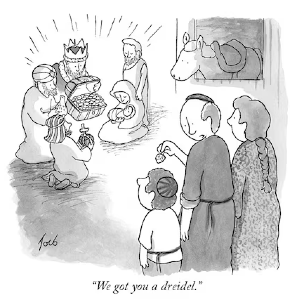
Perhaps this is where the wealthy get the idea that a lot of people are lazy layabouts who don’t do anything productive with their time. Meanwhile, to salve their ego, they pretend their wealth was merit-based which, like Manifest Destiny implies that they wouldn’t be rich if they didn’t deserve it. The corollary is that anyone who failed, did so through some personal defect, not (largely) luck and timing. (Like the difference between bleeding edge and cutting edge tech.)
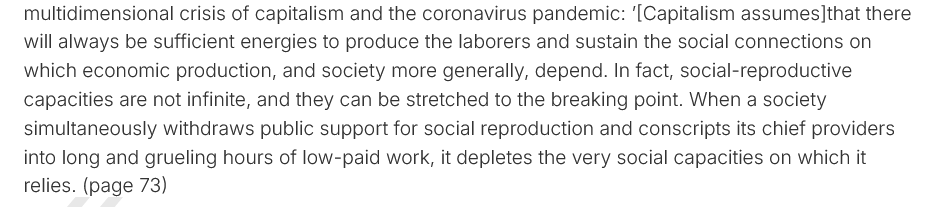
Of course in this silo, all their needs are met, or they wouldn’t be there. However that experience tends to damage the commons upon which their wealth is ultimately built, whether they appreciate it or not. There’s only so long you can suck from the water table before sinkholes develop. As Cinzia Arruzza, Tithi Bhattacharya and Nancy Fraser write in Feminism for the 99%:
Always Leave Them Wanting More
The apparent overall plan of the elites complicit in the authoritarian bent of our government is to create a permanent underclass so wretched and destitute that they stop fighting back and simply ask, “Is there anything else I can do for you, master?” It’s known as the Mudsill Theory of Labor, it was a justification for slavery based on the idea that there always needs to be an underclass. (Note the echoes of Manifest Destiny?)
They have set about a program that does this by leeching resources from the commons. That’s health care, food for the impoverished, unemployment insurance. They want to roll back the entire safety net. They’ve gone after unions. They’ve criminalized homelessness. Lately, they’ve come after the schools with vouchers. The end is the same – undermining the floor that supports our most vulnerable. With no education or means, workers would have no leverage to ask for better wages.
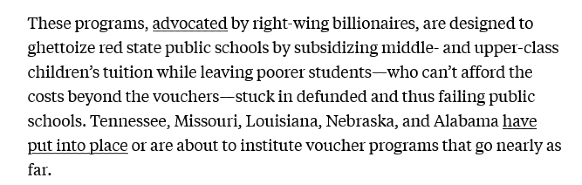
Or put more succinctly…..
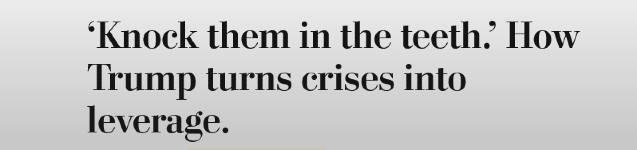
Perhaps this is the larger reason why as first world societies became wealthier their capacity to meet essential needs flagged. Some have coined the term, “Luxury Capitalism,” as a description for this late stage capitalist malady where suddenly rising national affluence becomes predicated on sacrifices by marginalized segments of the population.
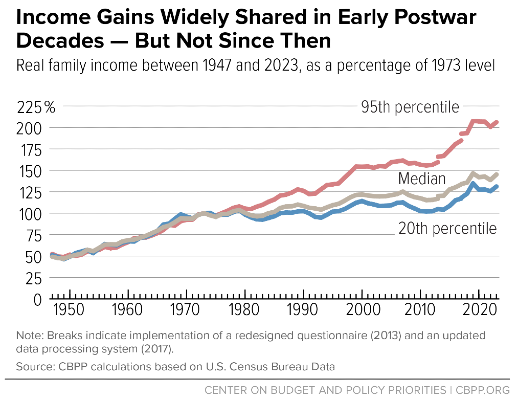
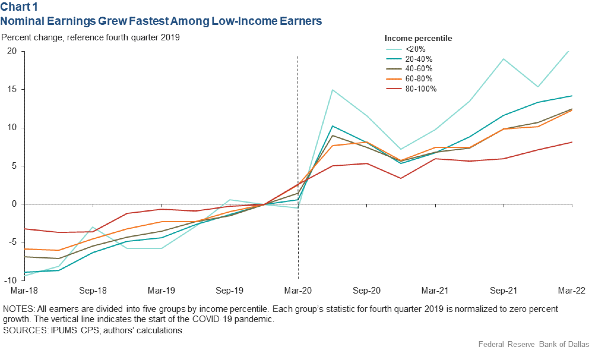
Among the many frustrating things about this is that it’s not only unethical but inefficient. Our economy was much more productive when it as less unequal, during the post WWII era from 1948-1973.
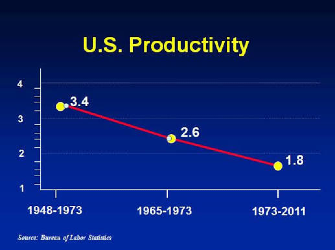
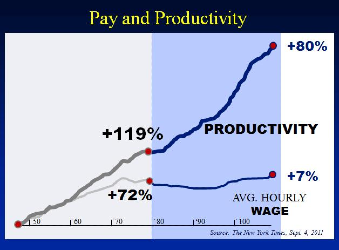
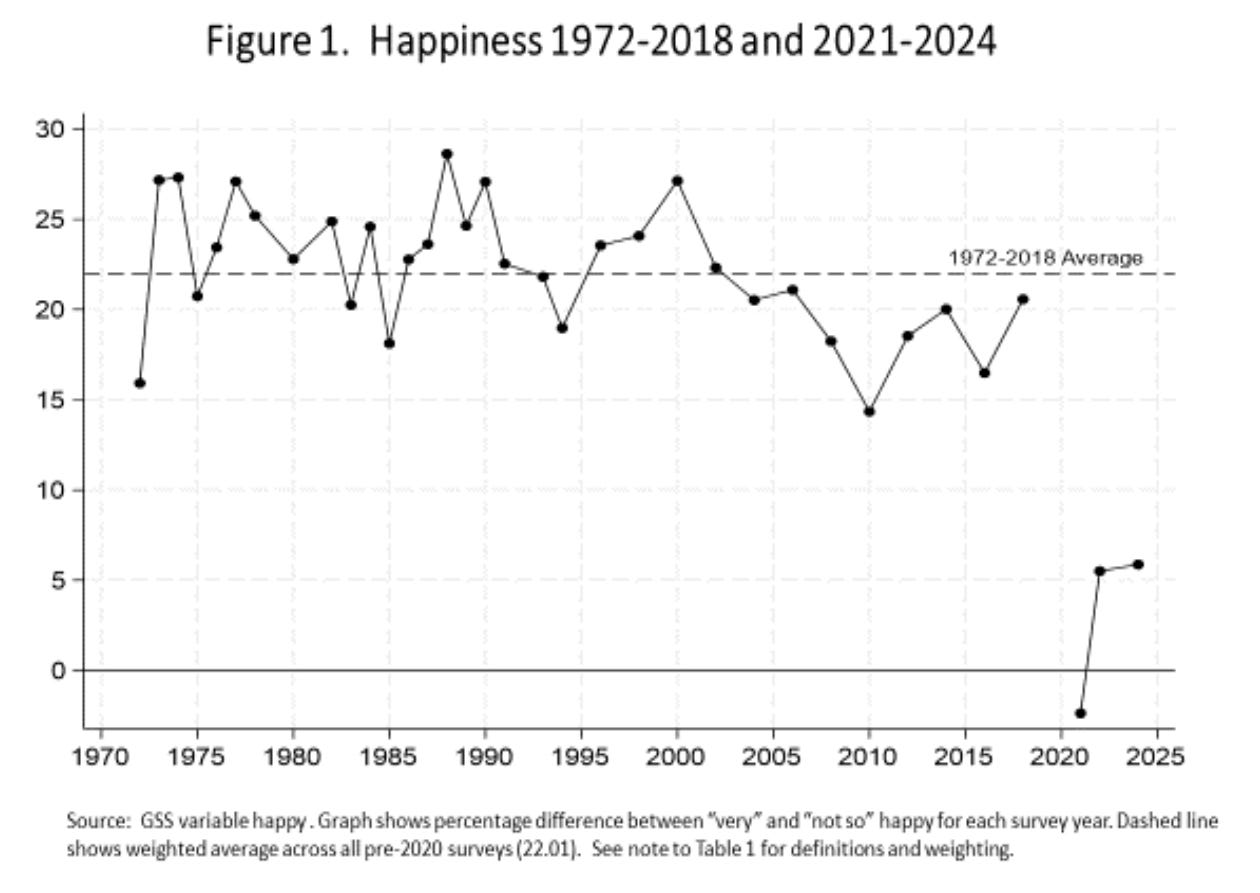
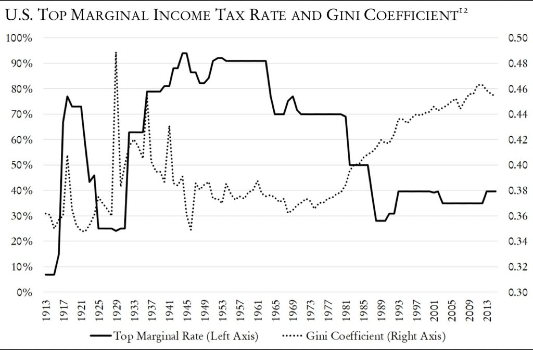
Then under Reagan we rolled back the progressive income tax and jacked the interest rate up to 20%. Happiness began a downward trend as wages stagnated, even as productivity grew, albeit at a lower rate.
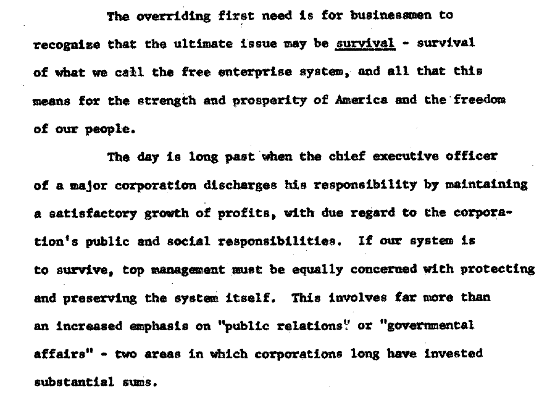
That’s when conservatives began their attack on the country, with the Powell Memo, which set the corporations of America against the American people and government for trying to make their system more responsive to constituents, not donors. (Well that worked out fine!)
The ensuing decades saw productivity growth bottom out, even as corporate profits rose, wages stagnated and all the wealth gains were seized by the top 10%, as corporate taxes shrunk and rather than raise people’s contribution, our government ran up debt. Inequality jumped. Now we’ve surpassed the Gilded Age ratio of 0.49.
Meanwhile profit rates have fattened.
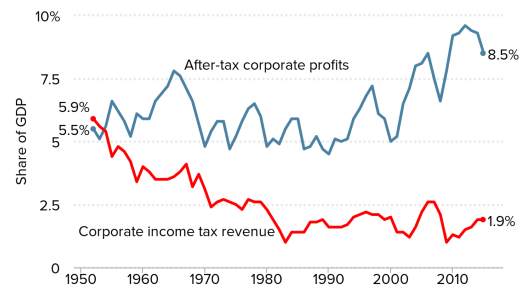
But at what price?
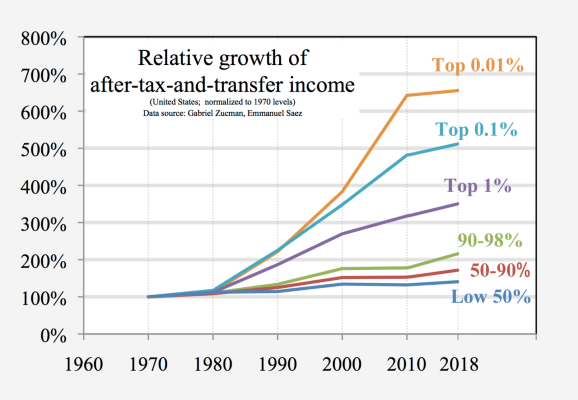
High Price of Inequality
It’s no coincidence that the Trump rode in flogging the idea of DEI and equality. Any time your side is losing ground it can always be framed as your imperialistic enemies, especially when you own propaganda repeater platforms.
Their goal – as MLK cannily derided it – is socialism for the rich, rugged individualism for the rest of us. They appreciate the value of community and are scared how many of us there are, and, given how unethically they’ve behaved, are fearful we’ll put their strength to a test, which in a democracy has to be a scary proposition when millionaires are outnumbered 15 to 1.
Yet it goes beyond political/economic power. There’s ample scientific evidence that larger income differentials in society amplify health and social issues, whose frequency and severity increase the more rungs you move down the social ladder. The gives lie to the canard of familial neoliberal “principles”: No family runs on neoliberalism because the children must come first, in contrast to GOP's public policy.

UK researchers Richard Wilkerson and Kate Pickett suggest in their 2009 book The Spirit Level: Why Greater Equality Makes Societies Stronger that our human sensitivities and competition make inequality a source of anxiety, stress and shame.
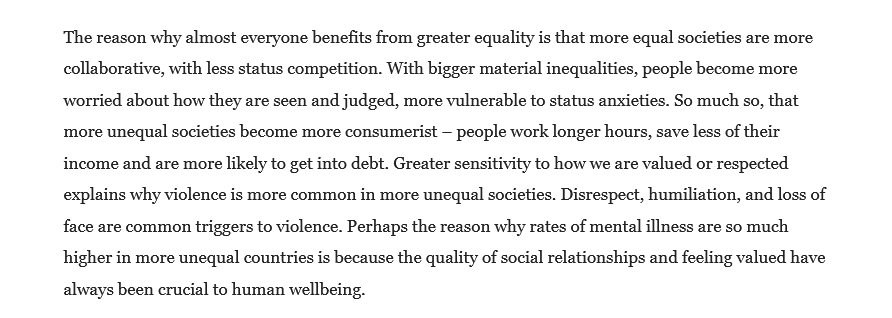
They find large societal effects. Measures of trust and social cohesion are higher, violence lower, in more equal societies. Mental illness is three-times more common in more unequal countries. Obesity doubles. Rates of imprisonment are eight times higher. Teenage births increased ten-fold.
Even if health and social problems are concentrated among the poor because they’re more vulnerable on the lowest rungs of the social ladder, it still doesn’t explain how much more frequent they are in unequal countries.
Inequality frays the social fabric, but the wealthy don’t care because they don’t have much use for it; they live in castles and fortresses for a reason. There’s even indications that children in unequal societies undergo epigenetic changes that impact their health and longevity.
The paper even suggests that particular strategies and pathologies develop based on the equality of the system, such as narcissism in the struggle for social survival against self-doubt and the sense of inferiority. Drug use and overdoses are higher in unequal societies and this since of thwarted opportunity appears to be at the core of Gen X’s high rate of “Deaths of Despair.”
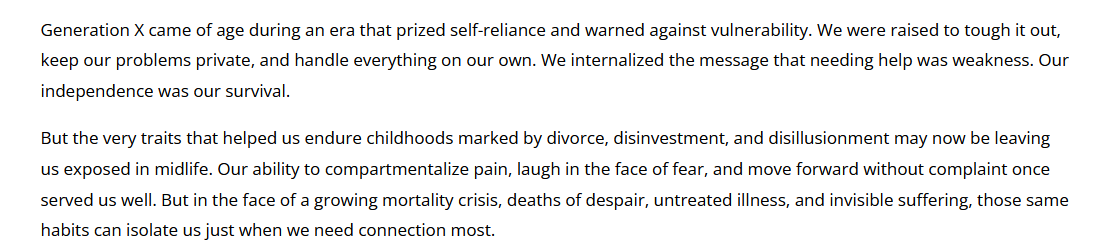
One of the key things Wilkerson and Pickert discern is how attitudes and approaches are shaped by the nature of the society and its expectations.
“Strategies adaptive to dominance relations involve heightened attention to status and self-advancement. Those appropriate to more egalitarian settings put greater emphasis on cooperation, mutual support and reciprocity," they write. "Although both social strategies are used in different contexts in all societies, how much each is used is affected by the extent of income inequality in a society.
"The evidence strongly suggests that greater inequality increases the importance of status differences and of the social evaluative threat. Responses to an increased social evaluative threat are likely to involve the Dominance Behavioral System and include forms of psychopathology related, on the one hand, to self-enhancement and, on the other, to a sense of defeat and depression.” (Grind Until You Make It!)
The problem is that the challenge isn’t limited to pernicious personal effect of modern luxury capitalism but the fact that it’s as unsustainable as it is dangerous. Constant growth is not something to be wished for, and feels like a residual impulse from when we had nothing, not appropriate to a time where we have so much trash we can’t decide where to throw it all.
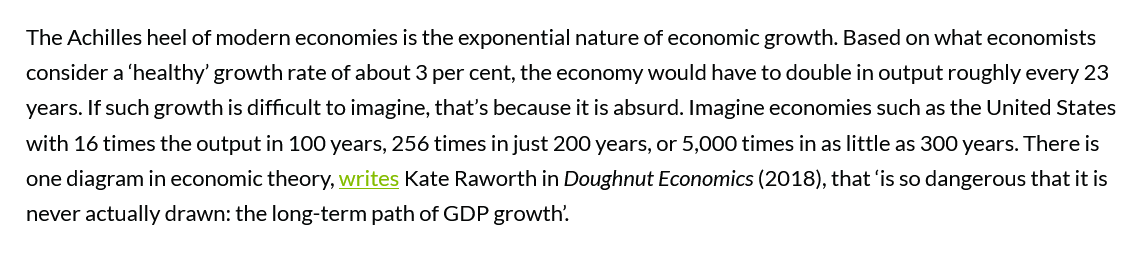
In our hearts we know perpetual growth is as perilous a pursuit as endless life. Bounds are the very things that make us human and attempts to break these natural rules puts us on an Icarian trajectory.
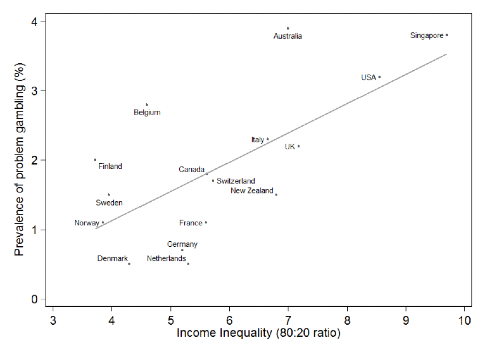
There are indications that inequality drives people into dysfunctional, addictive behaviors. Not just drug use, but caloric uptake and gambling. Obesity and gambling are more prevalent in unequal societies, presumably from stress, financial strain and anxiety.
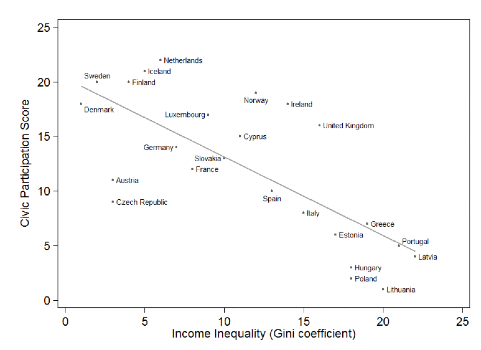
Similarly, higher inequality drives lower civic participation. Wonder why people are bowling alone? It’s Elon Musk.
The price of our elites making war on the commons is borne by everyone. Not only in the shittier economics of an extractive, top-down, low-competition plutocracy catering fully to capital with its lower growth, but also in an emotional malaise that is literally killing us. Deaths of Despair are just the tip of the spear, so to speak.
The Tragedy of the Commons has proven to be not that individuals are too short-sighted to manage communal assets, but that the rich will ply their economic advantage without shame or compunction because status is much more important to them than the collective health of their society.
There really is no alternative, as English elites are known to say. When someone makes war on you, the only choice is to fight back. If they won't abide the less affluent without attempting to punish and denigrate them, the only choice is class war against the greedy bastards who can't control their own animal desires.
Like their critique of the poor, these emotionally-challenged individuals have turned their fortune into a rationale for oppression because they are so base and unevolved that they can't play nice with others, and don't feel they need to. While the context was certainly different, I can't help but feel the solution has already been discussed.... at length in Heart of Darkness.