
Alone But Not Lonely
A Dispatch From the Front (of the Loneliness Epidemic)
In 2023, US Surgeon General Dr. Vivek Murthy released a report, Our Epidemic of Loneliness and Isolation, and the Healing Effects of Social Connection and Community. Like a lot of early 21st century liberalism, it’s longer on sentiment than solid science.
Nobody’s really arguing that the threads of social connection aren't fraying, or that many aren't alienated, angry, frustrated and, well, pissed about their lot. But loneliness has been our prevailing condition for a while, and may even be a product of our greater leisure. It’s a symptom of our age, but an open question if and how something elevated it to an epidemic.
Obviously our media doesn’t need any prompting, much less evidence. They absolutely adore any novel crusade or crisis, and treating this seemingly intrinsic condition of modern society like a plague suits their needs. Even invoking the conceptual underpinnings of a “contagion” hardly seems suited to the challenge. Are we going to mandate a shot of community? Two pills of social cohesion and camaraderie, then text the office in the morning?

Press “1” If You’re Feeling Alienated
It’s such a loosely defined problem, it almost begs for some superficial solution, like telling kids they’re super to “solve” the self-esteem crisis. Yet it’s also an enormously relatable one, the kind that our society is used to fashioning a one-size-fits-all resolution for,like a movie happy ending.
First we really need to define the problem better.
Oftentimes the handy, “mid” way of understanding this is that people are spending more time alone, and ergo, they’re lonely. But while there’s certainly an element of truth – people are often alone and isolated more than ever before, whether through insecurity, helplessness or choice.
At the same time, we’ve paved an eye-blinking array of avenues to self-amusement, and the number grows by the moment.
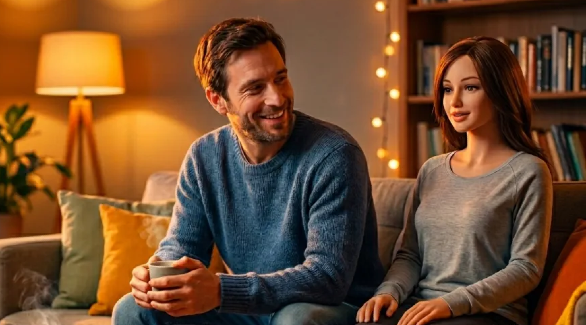
So being alone certainly doesn’t mean you lack ways to entertain yourself, though certainly there’s a building collective anhedonia and anomie, a gathering sigh of dissatisfaction implicit in all that self-gratification. Staving off boredom is no ward against loneliness. Nor does having a friend circle. Certainly being married doesn’t insulate or inoculate you against these feelings.
Not in my Feels
That’s an important detail as well – loneliness isn’t actually a “feeling,” according to doctors, it’s a constellation of affective states. It’s important to understand that your emotions light up similar affective states and emotionally-coded memories, like a pinball striking the mushroom-shaped bumpers.
These include feelings of anxiety, sadness, irritability and longing driven by the gap between one’s desires and perceived reality. These emotions can have a dramatic impact not just on momentary subjective happiness, a very undomesticated emotion, but more importantly on one’s health.
While it’s not hard to dismiss any of these your-mind-on-eggs analogies, the psychic stress and ensuing cortisol and inflammation is allegedly such to make it comparable to 15 cigarettes/day.
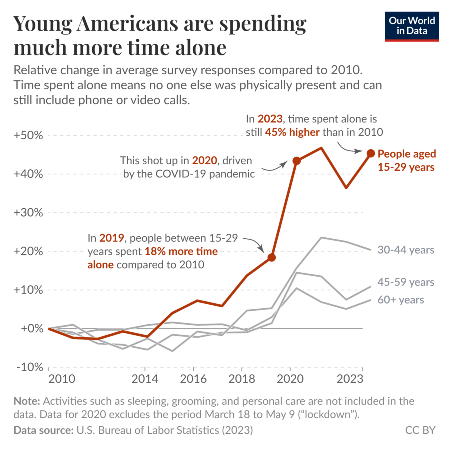
Hard to know what kind of weight to give health stats such as that, about something that’s very hard to define, and it’s not even a slam dunk, depending on the study and its focus. One American study found no increase in loneliness among young people from 2005 – 2016, and only the expected patterns (decreases after age 50 until about 75, after which it begins to increase).
Lacking a handle, some will proxy living arrangements. It’s not hard to find metrics demonstrating how more people globally are living alone, particularly as societies liberalize.
Yet while Denmark and Switzerland report high levels of solitary living, they have low levels of loneliness and high levels of social support. Another study in 2019 found that despite larger friend networks, young people reported more lonely days than late middle-aged adults. Other studies focusing solely on young people have produced inconsistent results.
It’s hard to know what they’re measuring or if they’re defining it the correct way, but that doesn’t mean it doesn’t exist.
Down My Avenue
I am an only child, no extended family, divorced person living in a city where I basically don’t know anybody, doing a job that (even sub teaching) rarely puts me into substantive contact with my peers or even people my age, let alone provide a sense of purpose. Not only am a writer, but for much of my life I’ve been a freelancer journalist, so my contacts have been heavily tiled toward editors, often limited to email.
If there’s someone capable of appreciating the emotional challenges of WFH (work from home) it’s me. The added scoop of self-discovery that typically accompanies a divorce only amplifies the sense of isolation and emotional desolation. It gets grim sometimes, especially as we sink inch-by-inch into an authoritarian mire. Nor am I a stranger to affective disorders. Do some speed dating, get picked by no one like a third grade kickball game, see how that hits your self-concept.
The world demands a level of courage that just about guarantees you’ll get your shins blasted and be knocked on your ass enough you’ll wonder why you get up.

Nor are there participation trophies or DQ blizzards upon completion. Just another opportunity to do it better. That can be slim consolation some mornings. But I doubt I’m telling you anything. Life is difficult work for a lot of us. Frankly, feeling lonely by myself is not nearly as devastating psychologically as feeling alone in my marriage.
There are just so many flavors layers and levels of loneliness.
Competitive Acquisitive Misery
One exacerbating factor I suspect is this predilection toward acquisition that pushes quantity over quality. There’s a “friendship recession” going on. For one thing, people with kids spend much more time with them (half of parents spend more time with their kids than their parents did with them), such that there’s less time for adult friends. People are working more (77% over 40 hrs) and even after 65, keep working (19% vs 11% in 1987).
Social community connections have been withering for a while. Robert Putnam’s Bowling Alone made a big point about that, and while critics countered that bowling was a passed trend and that people found other ways to cultivate community, which is undoubtedly true, the commons of civic engagement has been under seige for a while just by the individualistic bent of American culture.
We’ve traded convenience for connection. Our contact with retail is little more than a transaction, but this is at a societal cost. These small daily interactions are the oil that greases society’s gears. These fleeting encounters are known as “weak ties” and they are a surprisingly vital part of our lives. Studies suggest these brief interactions helps people feel connected, and having them is part of a diverse life that provides even more happiness than close friendships alone.
The accommodation is that while people have less close friends (3.6 on average), quantity appears to be unrelated to the quality of the connections. A few close connections can be just as effective as more. Maybe this is accommodation and adaptation, or maybe our modern lives are too busy to accommodate more.
It’s in How You Do It
What feels clear is that much of the loneliness is driven by the process of living our lives. The fact that everyone used to live in multi-generational homes and rarely stray from where they are born is the flip side. We traded greater economic freedom for the community and connection that used to be implicit in living all your life around people you knew.
Studies have found those experiencing discrimination and marginalization such that it limits their social or employment opportunities feel greater loneliness, and that unequal access to education or health care contributed to loneliness and isolation in Europe. Certainly the diminishing commitment to our social safety net alongside increasing economic inequality has been shown to manifest in greater feelings of loneliness.
The hyper-individualistic bent of American society can’t help. Feeling responsible for every aspect of our life despite a limited capacity to alter the relevant feedback loops is pretty close to Sartre’s description of Existentialism. Self-reliance is just another way of you saying you’re on your own.
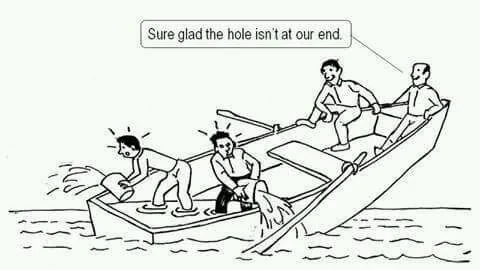
This sense that many were promised agency in our youth (the curse of self-esteem-ism) in bald defiance of prevailing history. How could one not feel a sense of betrayal when scales fall from the eyes to discover limited social (and geographical) mobility is what we reaped. (I believe that this is a major factor in the first world’s wide post-pandemic dissatisfaction/increasing push for greater liberalism.)
New Isn’t Better But Doesn’t Have to be Worse
It’s certainly a changing fabric. In 1990 more than a third of those surveyed had at least 10 friends. By 2021 that was down to 12% while those with no friends quadrupled from one in thirty-three to one in eight. It was even more pronounced among young men, 15% of whom had no friends versus 3% in the nineties. People are also spending a third less time talking to their friends than they did 30 years ago.
It feels like a question about expectations in a changing landscape where norms and mores haven’t changed as much as circumstances. We are lonely and alone. We have less people to rely on, increasingly turning toward partners and family instead of friends to resolve emotional crises. Yet we have a king’s profusion of ways to escape our troubles or divert ourselves for a few (or more) hours.
Our lives are busier (though hard physical labor is diminished) and our kids (sorta, or not of their own free will) demand more attention and effort. Our work is no longer the close-knit place it once was, as our priorities have changed and the norms around the workplace have changed, and women could increasingly rely on themselves instead of feeling the need to lean on a man.

On some level we’ve chosen this life, and those who haven’t chosen it are going to feel all the more alien in such an environment. If you’re not tied up with work and kids, and you’re not still of breeding age, you were already probably aware the culture doesn’t have much use for you.
It’s not great, but it’s not surprising either. It is what if feels like it is. Our world doesn’t work for us, we have trouble reaching the levers to change it, and not only is it bad, but it’s getting worse. Still, there’s a lot of personal agency, just not a lot of support.
I remember being asked by my therapist after the divorce, the move, and the apartment fire if I was depressed. I said maybe, but I think I’m just feeling what you’re supposed to feel when things in your life kinda suck.
I am not bagging on loneliness in the least, but as an epidemic it feels more like a proxy for our failure to dedicate ourselves to making a better world for everyone. Looking Out For Number One feels pretty much like it sounds, and quickly isolates you since anyone can see where your intentions lie.
The only way to combat loneliness is to make changes when you feel it creeping up and to begin doing things that maybe make you uncomfortable. Because the discomfort will eventually disappear, but if you make a new friend, hopefully they won’t, at least for a while. Which is great, given how everything here is pretty much provisional and time-delimited.