Planting a Seed
Bill Hicks Was Really Onto Something
I’m not a fan of advertising. I know I’m not alone. Marketing is thrust upon us by and large. It gets the drop on us, and like a flasher, does their business whether we’re curious or not.
The entire concept of advertising invokes in my mind a line from a Duckman episode, about BVD, a home shopping channel "where people shop in their underwear." The Barry Diller (Baron Von Dillweed) stand-in explains “I’ve employed the best and brightest to work day and night in my quest to tie into the national consciousness. Scientists, researchers, computer geniuses. Do you understand what this means?”
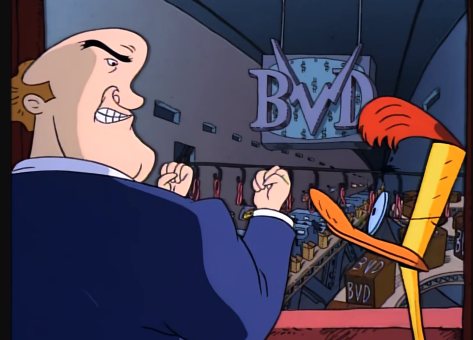
“That some of the best minds of our time,” Duckman cracks, “are wasting their lives making it easier for people to shop?” Moloch Moloch Moloch
For those who don't know, the title references a famous Bill Hicks screed about how marketing and advertising are the devil’s work and the source of unending unhappiness. His solution: Kill Yourself.
Bill felt that if you sunk so low as to work in marketing, there was no redemption possible. “You are the ruiner of all things good,” he says. “Seriously. There is no joke… you are Satan’s spawn filling the world with bile and garbage. You are fucked and you are fucking us, kill yourself. It’s the only way to save your fucking soul.”
For years it was the basis of cultural value – authenticity over fraudulence – and why we have four beer companies operating a hundred different brands, hoping to disguise their singular origin. They want to escape the corporate image their innate rapacity, inadequacy and indifference naturally fertilizes.
Of course, this was before Branding™ became the ubiquitous currency of the realm. Now living and representing are one-in-the-same, and somehow we persist trying to be “on” far more than any human can or should. But it’s all contextual in a way.
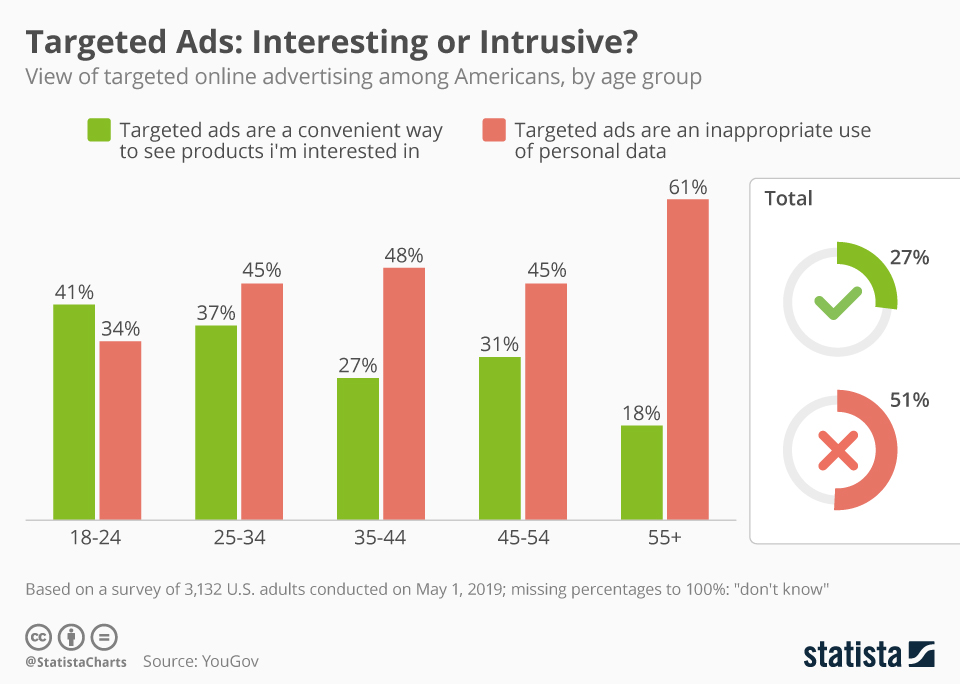
I doubt that advertising itself becomes the abhorrent menace it is without the super-charged YOLO, grift-til-you-drop ethos of 21st century America. Obviously people of the late 19th/early 20th century found Billboards to be a blight and they have only become more useless in the digital age, but they seem pretty innocuous compared to targeted advertising that sidles up to us with inside information on our particular needs and desires.
Just wait until they wed this to Turing Tested-AI bots, loosing autonomous internet grifters to negotiate the uncanny valley like high-altitude drones.
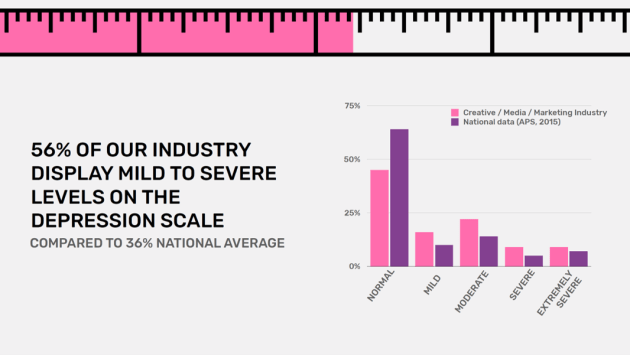
Yet at the core is this ridiculous social norm that targeting an individual’s psychic weakness like a leopard stalking a gazelle is an appropriate social behavior. Manipulation is a flavor of control by any name and we should be able to have a culture where products rise or fall on quality, not on how capable/likely they are of mind-fucking you. ChatGPT is incepting suicides right and left, while I remember when song lyrics got you called before Congress!
(This fraudulence complaint applies equally to our present meritocracy where who you know/where you went to college determines your life. TL;DR: As much as 80% of jobs are acquired through personal contacts, aka networking. Sorry, loners! Better self-actualize.)
Advertising as Abuser
Whatever laws there are about product propaganda (let’s avoid the elephant in this room), none concern the primary advertising gambit of making you feel inadequate without their product. Often this involves creating unrealistic, unattainable expectations and activating fears about social rejection.
Somewhat amazingly, the modern father of commercial propaganda, Edward Bernays, saw this manipulation as the key to a democratic society: “The conscious and intelligent manipulation of the organised [sic] habits and opinions of the masses is an important element in a democratic society.” To be fair, Plato was also into limning political rhetoric, but this is a particularly contested corner of his legacy.
This parochial attitude does not seem dissimilar from that of our present tech lords, for whom the masses are chattel that must be shuttled to and fro for their own good, which they can’t be trusted to safeguard themselves. But what do you expect from the type of people rebranding propaganda as public relations. What dark wits!
Now, to be fair, there is an entire policy-making approach built around incentivizing good behavior (nudges), and regulatory chaff (sludges) to discourage bad ones, built on this as well and popularized by former Obama regulatory czar Cass Sunstein.
But corporations unlike government, aren’t owned by the people and as such have very different incentives that are increasingly not consumer-friendly so much as walls to keep you in as much as others out. (Difficult switching, long contracts, fees for early termination, no interoperability, network effects, etc.) These are known as “walled gardens,” and the approach is becoming ubiquitous. (The opposite of the easy interoperability that helped launch Eli Whitney's cotton gin and the personal computer.)
Do you trust anyone these days in a for-profit business to put your safety and health ahead of their bottom-line? Caveat Emptor is an old saying for a reason.
They create glamorous irrealities that breed insecurity then prey upon it for a price, whether it’s the beauty myth, get-rich-quick/self-help, vitamins, personal hygiene products, the list goes on and on.
Advertising takes advantage of how we process information (and ethical boundaries).
The Low Attention Processing Model suggests we are so accustomed to seeing ads that our minds stop processing them consciously leaving the subconscious to parse them, which goes a long way in describing the collage of familiar, feel-good-images alongside any brand/product. It’s a halo-effect of trust secured at a subconscious level. Similarly, there are tomes of literature on how the Beauty Myth has screwed with women’s self-concept. Other campaigns will exploit the FOMO or fear-of-missing-out effect.
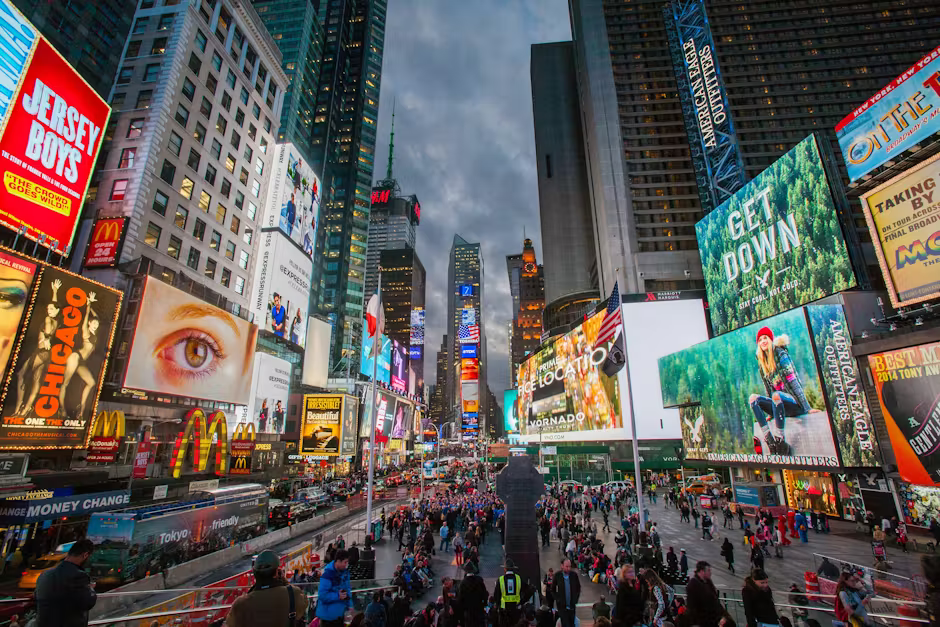
We’re basically inhaling mental poison every day. A clever University of Warwick study in 2020 compared spending on advertising in 27 nations and survey reports of life satisfaction from 1980 to 2011 and found an inverse relationship. The more advertising, the less satisfaction, separated by a couple years. Endless research has connected low self-esteem and unrealistic standards. This is what they’re selling us, so we feel shitty enough to accept their offer of “help.”
Planned & Dictated Obsolescence
Even beyond this, is advertising power as manifested consumerism, the keeping-up-with-the-Joneses competitive-acquisitive social epidemic. Buying stuff, even experiences will not fill that hole. Soon the chase becomes an end in itself. In Generation Wealth, Lauren Greenfield’s exploration of extreme wealth, she talks to one woman who explains that while having a personal jet might seem decadent, she knows several people with much more opulent jets. Mic drop, right?
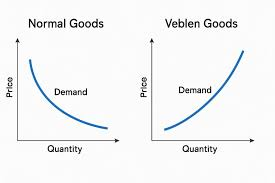
This is what Thorstein Veblen was talking about in 1899 – conspicuous consumption/leisure, social signaling and Veblen Goods – things whose cost is entirely bound up in how they are perceived as opposed to actual value – like a Birkin bag.
What’s even more pernicious is that these effects happen beyond our awareness. A 2010 study in the Journal of Consumer Research paired a demonstrably better pen with an inferior one, that was bolstered by quick nearly subliminal positive brand associations. Despite having information confirming the first pen’s superiority, 70%-80% chose the inferior pen.
While the Cambridge Analytica / Facebook scandal of 2016 brought personality profiling into the light, the idea of profiling users and gearing the propaganda to suit their profile was already rampant, just not as ambitious nor as performative. (It remains unclear how dramatic the effect was, but given the already demonstrable effect of advertising, the targeted variety is potentially far more timely and potent by mining the person’s recent communications.)
This is the central issue of the personal data debate. Nobody needs to make their personality a better target for salesmen, especially those unethical enough to seek you out like that, since that absence of scruples can’t say much for their product. A good product wouldn’t need to surveil you data to catch you off guard! Our thoughts aren’t so far removed from bananas to need every whim instantly indulged.
This long-festering problem only accelerated with the advent of smartphones, which was the killer app to defeat the cord-cutters. For a minute immediate before, advertising was under fire, nobody wanted any. Then social media provided another conduit, and the wild west nature of this unregulated communications hub has only amplified the inherent negativity of advertisers perceiving every human being as an NPC money-purse, an attitude that filtered down.
Is ‘Take a Damn Step Back,’ a Thing?
When another human being intrudes upon our personal space, the reaction is immediate if not always communicated. There was at least a time when one could simply say, “close talker,” and instantly invoke Judge Reinhold’s overly intimate character on Seinfeld. Yet many are complicit in putting ads right up in our business or willing to let those
Frankly, I don’t mind a little captive entertainment. Ads above the urinal seems like a good idea as there’s very little vibrant creativity in the present scrawl. But it goes beyond targeted ads. The hunger to sell us has seeded an industry to sweep up every one of our digital droppings and publicly available information. I’m not angry they used cellphone data to track who’s actually been to Epstein’s island, but I won’t say it’s not creepy.
Some of it is also that the entire software industry gave exactly half a fuck about security for decades while rolling in the cash before less organized criminals started cleaning their clocks, and our security has been so piss-poor for so long it’s gonna take a while to create the kinds of standards and safeguards need to lock down all this buggy AF software. Nor do I think AI – however fast – is the tool to make software airtight, thank you very much. Nobody flies in a plane that's 95% safe if there's a 99.9% alternative. (According to a 2025 Veracode survey, 45% of AI code has a security flaw, and by one metric is almost three-times as vulnerable as human code.)
Now we’re not only fighting off people trying to steal our identities, but making deep-fakes, or impersonating us online. The sheer Wild West status of all these elements of our digital identity is made doubly so by the fact that these bot farms, credit card mills and so forth are all overseas, beyond the arms of our laws. We have to put up with them because we can’t stop them – and the people we purchase legitimate services from are helping out by making our information available. One issue is young people don’t appreciate the danger/weirdness in the same way having known nothing else.
I am tempted to go into a long bit about how easily it is to backward engineer snippets of information into a dossier on a human being. If you’ve ever been sucked into trying to find an old acquaintance or lost friend’s phone number you’ve spied the tip of that data broker iceberg. But I suppose/hope by now people are pretty aware of how much information is out there, and some of the ways it can be weaponized. The whole laissez-faire thing doesn’t do much good if they’re sneaking up in our blind spots. As of present, the government can and does buy this information for its own tracking uses.
Raw Sewage
There’s an old line about how low standards and no standards quickly converge to be functionally the same. Nothing is impermeable, none less so than negligible or vague regulation. The race to the bottom is a one-way though its not sold a such.
Similarly, we’ve made personal privacy and sanctity a low-priority and it reflects a lot of elite attitudes. The same kind of societal ethics that was perfectly fine with companies that knowingly sold a product whose only real use was to get cancer. No societal bonus, just the graft of a company that made poison taste good enough and take long enough that they could get away with a purely profitable homicide device that they knowingly hid and lied about for decades.
So I guess the idea isn’t so much that advertising is so bad, it’s just that it has all the inherent ethics of the Manhattan Project. Yes you can convince yourself you’re doing science, but really you’re building more efficient murder devices.
Not everybody is selling chronic disease, whatever the hot thalidomide is, or negging the audience into buying their product, but the fact that nobody blinks much of an eye that this occurs speaks to the danger. Especially here, where we allow advertising most other countries won’t, from Sister Cleo to lifestyle pharmaceuticals betting on lay versions of Medical Student Syndrome, to gambling.
It’s fucking sick. We let people prey on addictions and make others believe they aren’t enough. That’s the main message: You Aren’t Enough (without our product).
If someone you didn’t know came up to you and said that, would you (want to) smack them?
How did this become an acceptable way to court a sale? Don’t tell me it’s a Mystery!

Obviously this was a subtext of Mad Men, though as a product of the medium it got a bit tangled in the message. However I think in the end it came through pretty clearly that people without much morality or ethical grounding can rationalize just about any kind of behavior, particularly men.
Back After This Commercial Break
The answers beyond fuck advertising are in short supply. In 2017 France passed a law requiring all edited images to be labeled as such. However studies suggest knowing images have been altered and are therefore unrealistic don’t dissuade the consumer from aspiring to the idealized image. (Barbie Dolls are evidence enough of this.) Similarly, other research suggests a preference for the unrealistic, as consumers find attractiveness more trustworthy, whether or not we are told it’s a fantasy.
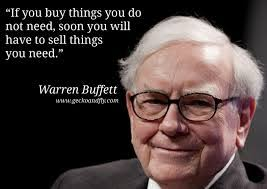
If there’s any lesson in America these days it’s that regulation can never last against an onslaught of money. It’s not designed to be tough, it only holds things together already yoked by consensus, like democratic liberalism. Certainly with the prevalence of branding as the medium of every message, it seems naive to expect disarmament.
What hope there is lies in the fact that branding was just an attempt to get around the stink of sales and the TIVO’d / screened out world of television commercials. We stopped them once. They jumped to our internet and then the phones. Advertising is like Kudzu – cute maybe on a fence, but wait until it chokes out every plant for miles.
I have another piece on fake ads that will run or has. All around us are those without our best interests at heart. They donate to people complicit in restricting our freedoms and shooting us dead in the street. Advertising might strive to be apolitical, and certainly sometimes is, but at the heart of the industry is the same patronizing, diminishing, humiliating, embarrassing, failing-finding bastards that abetted our Golden Age of Grift from Amway to Enron to Theranos.
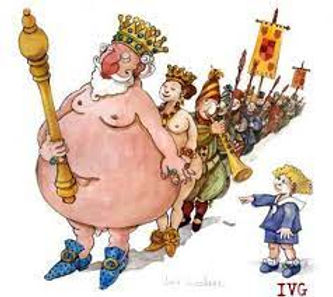
What’s the old line? If it was any good, it wouldn’t need your help selling it.
While that’s certainly not true at this moment, with our information streams choked with a red-tide of destructive agit-prop (whether overtly or by proxy) that makes it hard to find anything. We’ll have to drain the news bog once we take back our country, then limit the power and reach of those that would bamboozle us with their empty promises. Then we’ll have to do something about advertising too.