Who Sucked Out the Feeling? Ask the Greedy Middle Men
Youth Travel Leagues Are Sapping the Recreational Commons
It’s hard for good to survive in this world. Everyone is so busy trying to turn everything into a buck that nothing authentic or honest survives long without compromising what made it great. I am speaking today specifically about youth athletic teams.
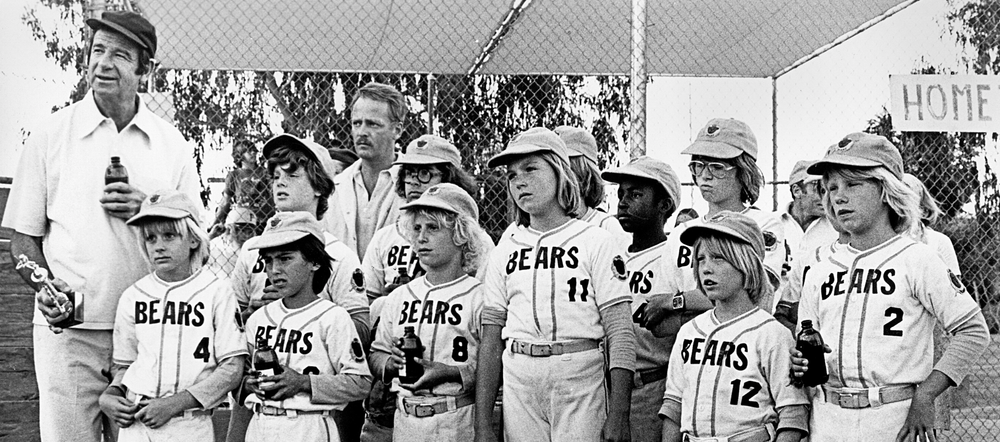
Youngsters may not know this but you used to gather in neighborhoods and compete with other teams of highly variable talent coached by people of exceedingly variable dedication and sketchiness. (Walter Matthau's charater Morris Buttermaker, was close to cinema verite. My 5th grade basketball coach, Rodboroogh, a life insurance broker, was a Santini-like character.)
This was basically the entire premise of BNB, with a divorced dad and teenage hood subplot thrown in. Nothing strong enough to survive even one sequel, let alone a horrific money grab with Kelly Leak, the bad boy phenom, and a bunch of stringers in Japan, a bad TV series and an embarrassing modern day regurgitation with Billy Bob Thornton channeling Bad Santa & Friday Night Lights like a string of Christmas tree lights.
But youth rec sports was at its core about community-building, and was very low-intensity other than the crazy parents. So naturally we focused only on that last bit and making the fun part more like a job.
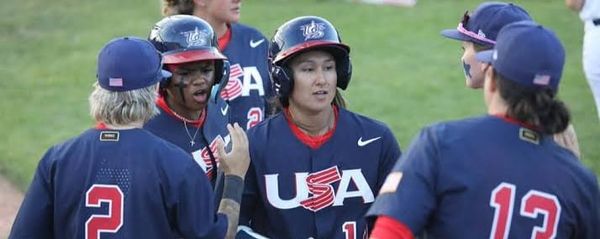
They sucked out the feeling, in true capitalist fashion turning youth baseball into a minors’ minor leagues complete with long bus rides and the kind of single-minded focus that works out so well for child prodigies.* I mean, the handful you hear about for their accomplishments and not their self-destructive crimes. We need look no further than how we've overloaded those children with expectations to wonder if it’s something we want to export to the broader population.
(*Only about 10% of high-performing youths go on to become top performers as adults. One reason is that prodigies often master a single skill in an adult framework, but world-class talent also transforms material. Similarly, most prodigies seem to have narrower palettes, so to speak. A Journal of Creative Behavior article suggested child prodigies had strict early learning where adult geniuses had less rule-based upbringings and more multi-disciplinary exposure early on. Beyond that, gifted children often struggle with perfectionism leaving them unable to negotiate the defeat necessary to advance creatively and personally. Also, those for whom early success came easily may not assign value or take the necessary ownership of their work to sweat out further improvement. Note: Promise to master coding of footnotes going forward.)
Hey, this is America, so the proper response is, “Fuck It, We’ll Fix It In Post.”

Jump on an Athletic Hamster Wheel
While I am speaking specifically about youth baseball, which seems to be the most afflicted in this way, all sports are suffering this sort of social rot. What used to be a collective low-key effort that cost parents maybe $100-$300 tops has evolved into a money machine that cost parents as much as $15,000 a year, in the rather vain hope of a college scholarship.
The nut graf is this: Youth sports is falling prey to the same hyper-competitive, helicopter-parent, Better-than-the-Jones, any-advantage-possible, #GrindLife approach to living, where our emotional/social needs are reduced to min/max attainment/clout-chasing. (A psychologist somewhere will be able to afford some wings.)
It almost seems weird after 50 years or more of this crap more people aren’t echoing the achievements-are-empty-medals-that-won’t-make-others-love-you gospel or getting their consciousness dry cleaned, but modern parenting is in full-on Survivor mode these days. (Pro Tip: Driving them harder won’t make them love you more, down the road! Tough Love™ is a two-way street, people.)
I grew up at that moment before recreational baseball took off. Where you would find some buddies to play. But already we’d shifted to touch street football and a tackling game with a homophobic name. I played youth baseball, and the parents were definitely a drag, and the long bus rides to rural mud diamonds wasn’t great. But it was the first time I really did something collective and organized. For those of us without sibling or extended family it was quite a thing, though I understand that’s a small cohort. When we moved to Maryland I stopped playing altogether because there wasn't a rec option, you had to join a club league which cost more than my parents were willing to consider.
They Could’ve Learned to Play the Piano
The two-tiered economy now demands a bigger down-payment on your child’s (and/or parent) athletic ladder climb to see how high they might get. You’re familiar with the bell curve, right?
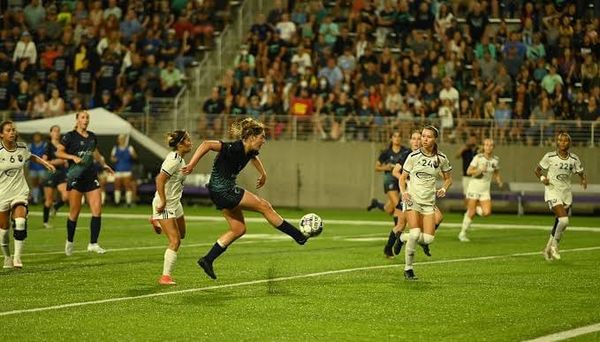
Now what used to be a broad recreational sports situation where everyone played with everyone and even untalented players could rub shoulders with better ones has become a gated system much like the public/private school system where people with talented kids feel they can’t play recreational sports because they won’t face good enough competition to reach the higher levels.
So they invest thousands of dollars in team and equipment costs, league and tournament fees, lodging, food & traveling, not to mention all the time lost carting kids to the weekend tournaments.
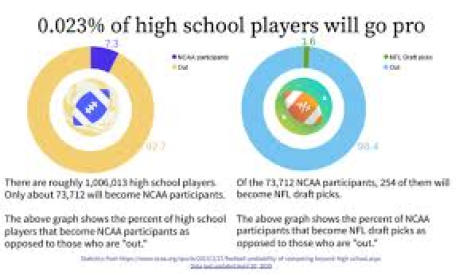
All to chase a very small chance that your kid might play college sports. Perish the thought they make a professional league. There’s less than a 0.05% chance (1 in 1600) that a high school player will make the majors. I suppose it’s great that parents can spend that much on their kids but it’s awfully hard on those that can’t. And if these parents didn’t all sign their kids up for travel leagues, the competition in the rec leagues would (mostly) be sufficient.
Even the chances of a scholarship are especially slim. Around 2% of high school athletes receive a scholarship to an NCAA school. Even those that do receive scholarships are usually only receiving a partial scholarship. Of the roughly 8 million high school athletes only about 480,000 compete in the NCAA and only 180,000 of those are on scholarships, with most scholarships averaging about $11,000.
That’s if your child even decides to pursue the sport in college.
Transiting from smaller to bigger ponds weeds out a lot of people who pursued athletics in high school because they were successful at it, not because they loved it. Indeed, most kids start dropping out around middle school at the age of 13, as their attentions are seized by impending young adulthood.
Hyper-specialization is a big cause. Studies have consistently shown kids who play any organized sport have mostly quit by high school. A recent study found 70% of those playing a single sport that quit, cited burnout as the leading reason. The number one reason for quitting was the time commitment (45%), followed by costs (40%), and travel/team pressures (35%).
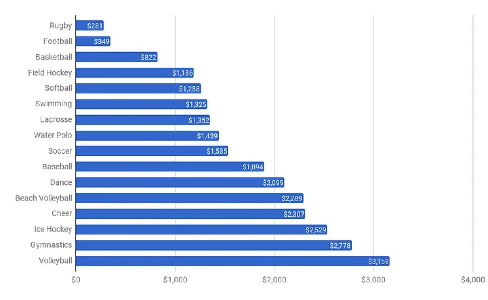
We’ve already alluded to the costs, which varies widely by sport. According a Groundwork study a decade ago, the participation costs range from under $2000 for field hockey ($1186), football ($300), basketball ($822), soccer ($1535), swimming ($1325) and baseball ($1894) to quite a bit more for cheer ($2307), gymnastics ($2778), dance ($2099), ice hockey ($2529) and volleyball ($3159). (Volleyball is one of the few college women’s offering full-rides, making the competition fiercer, it would seem.)
That doesn’t include the cost of travel and lodging for weekend tournaments, nor equipment and clothing costs. A 2019 survey by Harris Poll found that 1 in 3 parents take fewer vacations to fund their kids’ sports, and 1 in 5 has considered taking on a second job or delaying retirement.
Huge Price Tag on What Used to be Fundamental
In the beginning, travel leagues were just a way for the truly elite to compete with denser areas or with parts of the because of the weather can play year around. But that quickly spiraled into a $40 Billion business. Like everything, we can’t have nice things without someone turning it into a rent-seeking opportunity or trying stealing only the most lucrative market segments. (And yes, I am looking at you United Parcel & Federal Express.)
In the case of baseball, the draw is the Little League World Series which has grown into an unmatched amateur sports juggernaut, whose year culminates in an international competition in Williamsport, PA that pumps $40 million into the local economy and is televised on ESPN. What began as a three-team league in 1939 has become the largest sports organization in the world, with nearly 200,000 teams in 80 countries and 2 million competitors, with different age levels and a softball component. Its revenues exceed $30M.
These elite travel teams and big tournaments are considered the best way to be seen by college recruiters, even more than high school teams. (This is especially true of smaller sports.) The Perfect Game tournaments bill themselves as the World’s Largest Baseball Scouting Service, making it hard to refuse the $600-$800 team entry fees, which doesn’t include annual membership or special showcase tournament fees.

It’s expensive and that’s by design. The key to the business is scaling up. Just 20 teams of 12 players paying $2500/year is $600,000, and coaches make but a few thousands dollars, making it relatively easy for club owners to make several hundred thousand a year. Then factor in the additional instruction. Since there’s far more traveling and tournaments and a focus on winning over development, many parents pay additional sums for the kind of one-on-one training/instruction they don’t get from travel coaches.
In the end, all this year-round playing and training only hastens burnout and injury. Multi-sport athletes were three times less likely to get injured, in part because other sports emphasize different muscle groups minimizing overuse. In the end, pushing to specialize and commit full-time as though an olympic athlete only seems to be counter-productive and echo the excesses of parents trying to get their kids into the best college.
Like Most Skills, Early Diversification’s Better
For one thing, pro athletes disproportionately come from smaller towns. According to Canadian researcher Jean Côté, while more than half the country resides in cities of at least a half-million people, they produce far less athletes – approximately 13% of the players in the NHL, 29% of the NBA, 15% of the MLB, and 13% of the PGA. Further, the odds ratio of becoming a professional athlete increase linearly as the population decreased, indicating better odds in cities that have a population smaller than 250,000.
One sensible conclusion is they were able to experience a more natural athletic progression. Given that three-in-five pro athletes were multi-sport as youth, the kind of specialization expected in the year-around travel league structure seems a detriment. Further, the demanding schedule of most travel programs, which includes weekday practices and weekend tournaments can be grueling and courts burnout, if not now, later, when they meet the bigger pool.
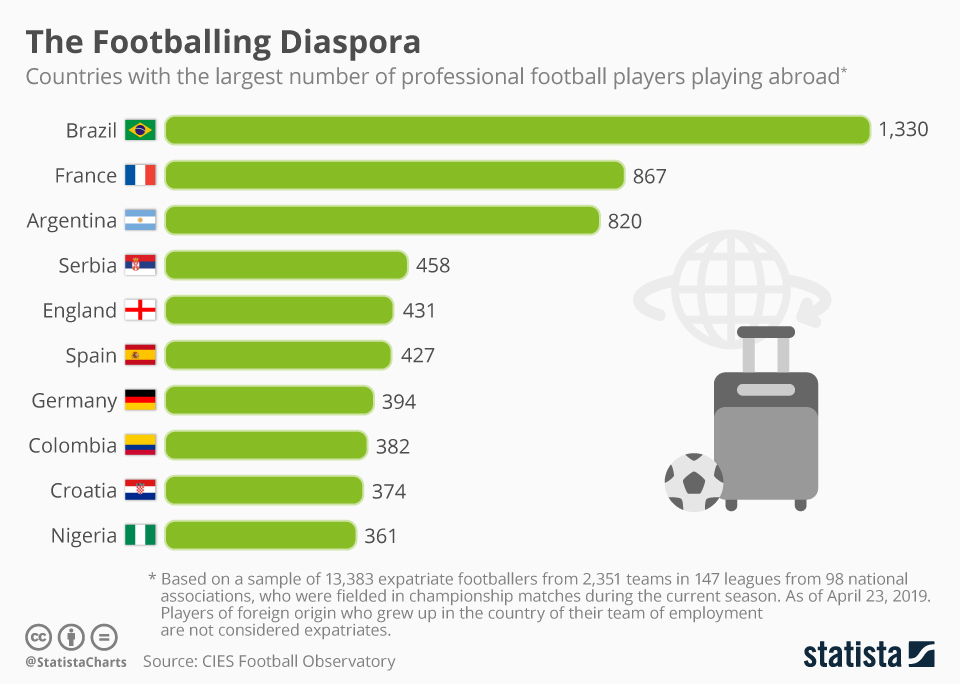
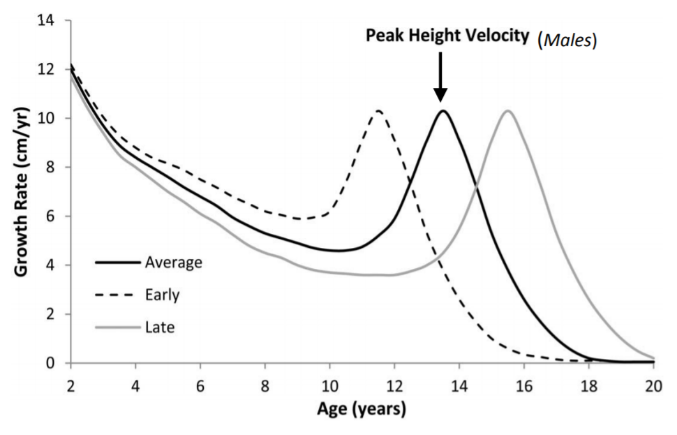
It’s worth noting that three times as many American children (3.9 million) play soccer as in Brazil or France. But participation peaks here at nine, when most Brazilian kids are just starting organized soccer. Kids in America are often pursuing sports before they’ve matured physically. Indeed, many kids early success is built on early physical maturity, that they will soon surrender. Is that momentary advantage really worth all that investment?
Richard Caldwell, who spent two years laying college baseball at University of Arkansas, wrote, “When I walked-on and made the Razorbacks, the sport I loved to play became a year-round job. A job is not a game… the daily grind not only sapped the joy of the game, it was physically punishing.”
Blogger McKenna Pringle, who played soccer for much of her youth, recounts the sense of waste: “During my last six months of playing, I was really sad that I became resentful towards something I had dedicated my whole life to.”
How’re you going to feel when your child bails on the activity in which you invested so much money and time? Indeed, Caldwell felt relieved he didn’t follow the path of his friends who were drafted and toiled for years in the minors for a pittance before finally giving up the dream and finding a work-a-day job.
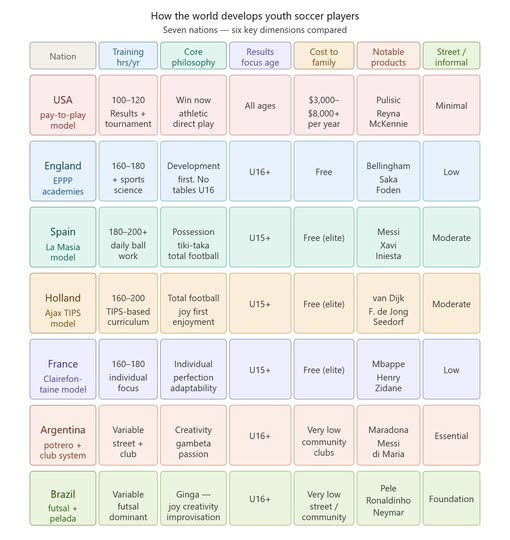
"The countries producing the world's best players — England, Spain, Holland, France, Argentina, Brazil — all have one thing in common at the youth level," writes one blogger. "They do not care if the twelve-year-olds win.Not a little less. Not somewhat less. They have deliberately removed winning as a measure of success at youth level and replaced it with something else entirely. And they have been doing it for decades."
Some of the best advice I've ever heard about chasing elite levels - obviously describes great skills and determination, but also notes how much you have to be a full person to fully succeed, as expressed by Will Poulter's character of Luca in the second season of The Bear.
What’s Left is Degraded
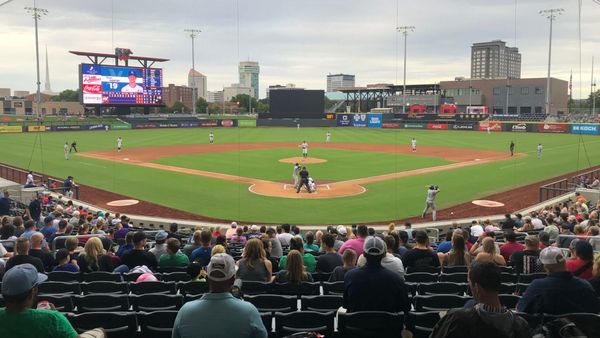
What’s worse than what travel sports do to those that play it is what siphoning off the top level of talent does to recreational play. The uneven play and mismatched teams sap the joy. Nowhere is this more apparent than in baseball where not having kids who can pitch makes the games all but unwatchable walkfests, and balls thrown to the backstop. Where do kids learn to hit the ball to the outfield if he pitcher is never around the plate?
It’s a similar issue in basketball, where AAU teams have become even more important than high school. Feeder basketball high schools like Oak Hill, Monteverde or Finlay Prep recruit and play nationally with school but an afterthought. How will that work out if they don't make it? Not everyone gets to make money as a human cautionary tale, i.e. ambassador of Hoop Dreams!
The intense competition and scrambling for talent tends to shortchange fundamental skills, making even the winners worse in many ways for the experience. It’s all the more cut-throat since most star hoops players only player the single required year of college before bolting, making those AAU tourneys important simply for the constant level of competition.
Yet for all but the very best this is a detour, and perhaps an expensive one. Most kids are better off developing a fuller personality and what it is they truly enjoy while the cost is low in time and opportunity.
While there are lots of friends made and the sense of belonging to a team, these wonderful facets can and should be available to kids of all economic and social backgrounds, and it feels like we are losing that. Participation in sports by those 6-12 has slid from over 60% pre-pandemic to the low-fifties, and one part of that is the emphasis on travel teams and competition as opposed to the game aspect.
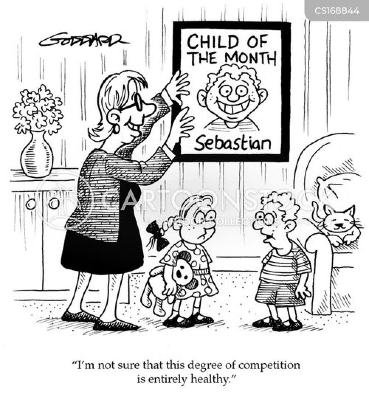
Perhaps this is just fashion, like the nineties when everyone thought they were going to be a musician or a screenwriter. But it also feels like a continuation of this min/max grind life rhetoric that is just another scam perpetrated on the unsuspecting to bifurcate our society into the Ambassadors Club and everyone else.
Youth sports are great way for kids to socialize and discover new people. It shouldn’t be a pipeline to parents’ pocketbooks because we all lose in that transaction. Nor is it a replacement for minor leagues. Yet given the pressure parents are under, and the norm that indulging your kids’ whims is how you demonstrate you’re a good parent, it's a lucrative grift. What's worse, travel teams is one of those ideas that seems to support the outliers at the cost of everyone else.
I don’t know. That’s not my world. But it seems weird and counter-productive, like putting your young child into beauty pageants. It’s just not clear that travel leagues are benefiting anyone but the most elite athletes and everyone is bearing the cost. Unfortunately this isn’t a trend that shows signs of abating soon.