On Failure
(The Road Much Avoided)
I fucked up. I must’ve fucked up or I wouldn’t be here. This isn’t where I’m supposed to be. I have more talent than this! I’m smarter than this! And, alas, here I am.
I may have skipped some Kubler-Ross stages, but the underlying idea is that failure can be the springboard to greater things. Failure is traumatic on an almost cellular level, creating the kind of abiding inner dissatisfaction/inspiration to persevere through the challenge.
Of course, I may not be able to best any particular challenge. Maybe I’m not as talented and smart as I think. Or the field of play might be tilted too heavily against me. Maybe I’ve bitten off more than I can chew (UK, mid-19th century), like one of those fools that rush in where angels fear to tread (est. 1711). (Is it notable that the two separate aphorisms counseling patience & forebearance retain social currency hundreds of years later?)
Maybe I’m just not committed enough to the goal to take the actions necessary. Or maybe I don’t even begin to know how to tackle the goal. (Getting my first play actually produced falls into this category.) There may be lack, there may be personal insufficiency, but the only real way to find out is to put it on the line.
I have no reason to do a website/blog/newsletter/podcast. It’s unlikely to be successful. It’s a lot of work. I have no clue what I’m doing. But then failure really isn’t that scary. My expectations aren’t really tied up in how this performs because I’m actually exploring the confines of a process I enjoy.
I don’t get to report stories anymore, and I miss it. I still follow all the news but it just builds up in my mind, seeping out to strangers in beer-drenched conversation. My responsibilities (personal, economic) are meagre enough that it’s a risk I can afford to take.
I throw my line into the water unsure if I’m using the proper lure, if I’m in the right place at the right time of day, because whether I catch the fish or how big it is just isn’t the purpose of what I’m doing, and (spaghetti) god forbid it ever becomes more a job than a place to indulge the impulse to strut the stage in the way I feel most comfortable – behind a keyboard.
But this is a hard-earned victory.
Success is in the Eye of the Beholder
I have achieved on some level tremendous success. I’ve appeared in top tier entertainment magazines (Variety, Billboard, Hollywood Reporter), general interest (The Daily Beast, The Guardian, The Jerusalem Post) done a high level consumer science piece in MIT’s publication Undark, spent three years covering the best basketball player ever bringing a championship to his home region, and then self-published the book when no agents bit.
I’ve done a couple dozen alt-weekly cover stories syndicated across the New Times/Village Voice chain in at least a dozen of cities including Los Angeles, New York, San Francisco, Dallas, Phoenix, Minneapolis, Denver and St. Louis, among others. I’ve gotten some written feedback on a couple short story submissions to Conjunctions. I have a third of a novel I’m pretty satisfied with and a completed book on Americana and the 80s/90s underground roots-punk that’s in edits right now.
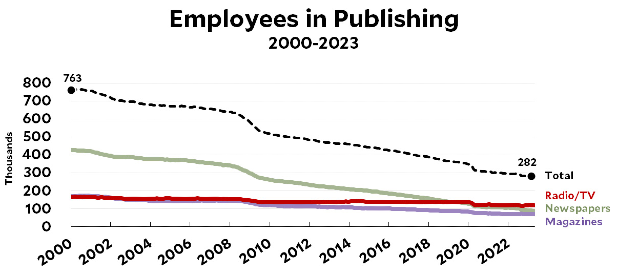
I’ve seen all kinds of great live music performances, accrued some surreal experiences, and interviewed some tremendous artists. I went on to interview senators, nobel prize winners, basketball stars and a couple actors slumming it in music. It’s been a pretty good run. But journalism died before I was done with it. I spent a lot of time getting here to just leave because the party is over and nobody is hiring.
Despite all these accomplishments, I always felt capable taking on bigger challenges, and wound up a little disappointed I couldn’t finagle the connections to get further. But I was also a little intimidated. As a gifted child in my youth, I was told I could do anything I set my mind to. It’s a pernicious thing to teach a kid, only for them to learn how many environmental factors can be aligned against them, even beyond the necessary “timing.”
A lot of bright kids grow up addicted to the “attaboys” and struggle when they're not readily available. For my own part I was afflicted with a perfectionism that often limned by horizons. I was for the longest time hesitant to try anything I hadn’t tried before or wasn’t fairly assured of being competent from the start. To suck at something felt like an embarrassing crime. I didn’t want anybody I knew having evidence. (Moving somewhere you don’t know anybody is a decent tonic.)
I’ve been told this isn’t uncommon. A lot of gifted kids weren’t properly prepared for failure, or worse, indifference. I remember interviewing a pair of brother musicians who’d been fed a similar gruel of “what you do creatively is great and people will like you.” When they first started performing out it was a huge shock. People kept talking, paid them no mind. People didn’t clap or herald them. He told me he wanted to yell at them, “hey, listen up, I’m important! (My parents told me so.)” It was a rude awakening.
However it’s absolutely essential. Success is sort of boring. I’m not joking. Success is for after failure built your appetite. You don’t learn that much from success because it oftentimes doesn’t merit further study. Failure is the mother of a brood of explanations that must be entertained and pored over.
We learn what works from what doesn’t work. Most (but not all) are not going to fiddle to much with success (especially given the long road most took to arrive). So it feels like a, well, a huge societal failure that we’ve gotten so hung up on perfection when that’s more like the end of a process that begins with failure.
That’s the other thing. When something comes too easy, it’s hard for most to take ownership of the process. If you don’t sweat to get it, don’t have to scheme a bit to acquire it, the value is necessarily diminished. This is obviously a spectrum, but it’s far too easy to take the easily earned for granted. (Our youthful good looks are a good example; I’m glad I finally decided to find myself attractive before I lost all my hair. #Gratitude.)
Focus? Let Me Get Back to You
I believe to some extent I was guided by my neuro-divergence without really realizing it. I was pretty aware early on that I while I could do almost anything, I didn’t have the patience to continue to do things. After an extended period of mastery of the job’s elements I grew bored. I also didn’t like oversight much, preferring to be left to do the job I was hired to do and expect me to do it well. (For these reasons, being the dessert chef was a great job, if I didn’t have to get up so early. Nobody is in the restaurant when you are working.)
This is how I came to chase rabbits. I was so curious with all the little elements of life. As a kid I was very into astrophysics and how the world began and what it was made of. After my teens that transitioned from a physical world preoccupation into a social one, and I began to change from a math guy to a verbal guy, moving into drama and creative writing.
My imposter syndrome definitely held me back, but I also had a sense that as a largely middle class white(ish) boy, no matter how strange and rebellious I was also pretty mundane. I felt I needed more “lived life” to have anything to say, and thought I spent two decades educating myself before I got married. Only to discover that this was another decade of learning.
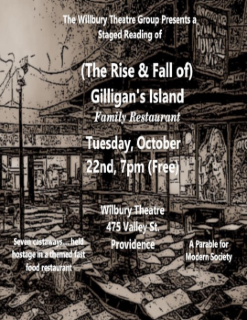
I will say by the end of that I felt quite prepared to write. (In fact, I rewrote the ending to the aforementioned play, and eventually got a staged reading.) But only now I was old (er?) and nobody really cared what an old man had to say. They want you young so they can market you or something.
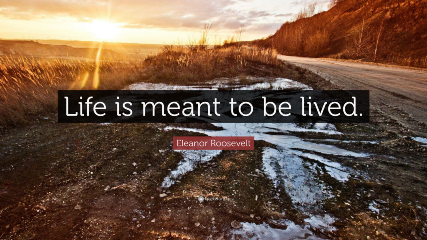
At some point, I saw something about this ideal where an artist lived a life and then began their artistic career after they had reached middle age and were ready to sit and reflect. I thought it was My Dinner with Andre or something Wallace Shawn had written, but I can’t find it, and it’s not worth further search beyond the initial point. There’s something sensible about making your mark after your ht bloods’ cooled, your perspective’s widened and you have a better idea what it is you want to say. How can you write it properly, if you’re still living it?
I don’t feel this is for everyone, mind you, but that’s what I felt for myself. I felt I would only have so much time to gather experiences and that at some point you stopped, reflected and started creating. Of course a certain amount of that is based in my early conception of art as a morality play. While that’s often true, great art often transcends simple morality and great stories are about competing desires more than right or wrong.
But there’s nothing wrong with making your first step later, when you know where you’re going. It’s just that it’s a hard road to begin with and you’re best to leave early if you ever want to get there.
In that bargain, I’ve given up the desire to make there some grand, monumental place. I want to do something I'm proud of, but I gave up the pretense of writing something someone calls genius. (People say a lot of things; take it from a semi-retired critic.)
My only goal is to get better. And in my thinking the only way to do that is to do things risky enough that you might completely fall on your face. Without worthy stakes, how can you expect a worthy effort?