
MovingMovingMoving
Keep Those Doggies Moving
Sometimes I feel moving is something you’re born into. Our natural instinct is, I suspect, to stay in one place and forge community with those with whom you share geographical (and familial) proximity. Home is where the heart is and all that.
On some level moving is luxury. People move for jobs, to care for family, for educational opportunities, but for the sake of long-term bonds and providing a stable environment for kids, people tend to stay in one place.
This can be a weakness as well. This isn’t the place to go into how regional monopolies control many professions, but this desire to root also limits one mental horizons. Sure, there aren’t as many jobs as other places, but maybe what’s closer to home isn’t so bad as you think. There’s untapped value in that community you’re fleeing.
There’s this great Jerry Jeff Walker line, “some people will travel halfway around the world to discover something other people discovered in their backyard.”
High Cost of Home
There’s been a steady decline in American mobility. In the sixties, 20% of the population moved, compared to 11% (by some estimates and as low as 8%) the lowest since 1948, and 14% just a decade ago. Of those that moved just 19% are leaving the state.
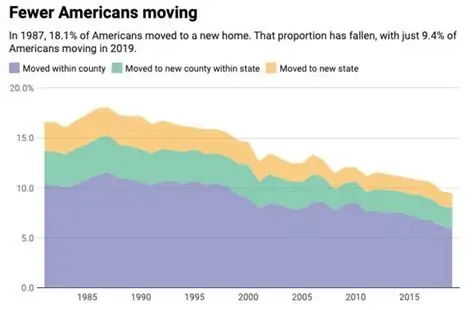
Housing costs are a huge culprit, and that’s a subject far to expansive for one of these shorter posts – I’ll unpack it at some point – but suffice to say, whether it’s a low mortgage rate, or the expense of a new house, many people feel shackled by their housing decision. Housing sales are at their lowest rate in nearly three decades. While this may seem somewhat innocuous, it’s anything but.
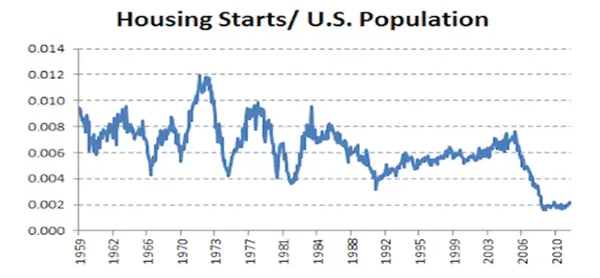
For starters, the relative static state of housing stock pressures apartment prices, and less willingness to move depresses wages.
Then there’s the deteriorating cost/value proposition. According to Wall Street Journal/Redfin housing costs are 39% of budgets, up from 30% just a decade ago! Rapidly increasing rates of college debt are another factor in lower mobility. In his book Stuck, Yoni Appelbaum also cites secondary housing factors such as discriminatory zoning and gatekeeping (modern redlining).
A final, underrated suspect, is health insurance, with roughly one in six citing that reason. Those earning less than $48,000 were three times as likely to say they stayed for the health insurance.
This is especially troubling because at any point in history, those who moved fared better economically than those that stayed in place. Mobility is a big part in leveraging better salary.
A 2014 Forbes study found staying in the same company for more than two years could reduce your lifetime earnings by over 50% in just a decade. This is based on data that shows people can expect a 10%-20% average raise for take another job. It quickly adds up.

Without getting too far afield, let’s also note that this stagnation has turned into a political malaise that seems to have struck Generation X – Trump’s strongest supporters, apparently – particularly hard. They have watched their boomer parents accumulate great wealth and live longer, failing to pass on their largesse, and holding on to homes that would’ve entered the housing stock much earlier, a fact further exacerbated by the apparent inequity in health care, now as much as 7-15 years.
They’ve recognized that while 90% of those born in the forties earned more than their parents, a kid born by the eighties only had a fifty-fifty chance. Gen X has watched it happen. Several economists have explored the high & drug addiction suicide rate of this cohort, termed “deaths of despair,” at the highest rates seen in a middle-aged cohort, and particular to Americans this age.
The data suggests that “neighborhoods with high mobility tend to have lower poverty rates, more stable family structures, better school quality, and greater social capital, meaning the strength of the community and social networks.”
Hate the Game
To be fair, in 2022 the Federal Reserve of Chicago released a paper on intergenerational mobility that noted how new numbers suggest it’s always been lower than imagined, and that “the U.S. has one of the lower rates of mobility among advanced economies.”
Hold on, let me find my surprised face. While we’re grabbing that, this feels like an appropriate time to note that everything post-Nixon was for all intents and purposes, war on Democrat constituencies, on orders of hatched contemporaneouslyby Supreme Court Justice Lewis Powell.
Obviously it has a huge racial component: “Black families experience much lower rates of upward mobility from the bottom of the income distribution, and much higher rates of downward mobility from the top of the income distribution, than similarly situated White families.”
Not only that but this is part of a long-standing right-wing pogrom to create a permanent, option-less lower class that only seem to accelerate after what amounted to a UBI experiment of COVID, which seriously freaked the owner class TF out. They realized people with choices might not grin & bear their shitty offer and it scared them good.
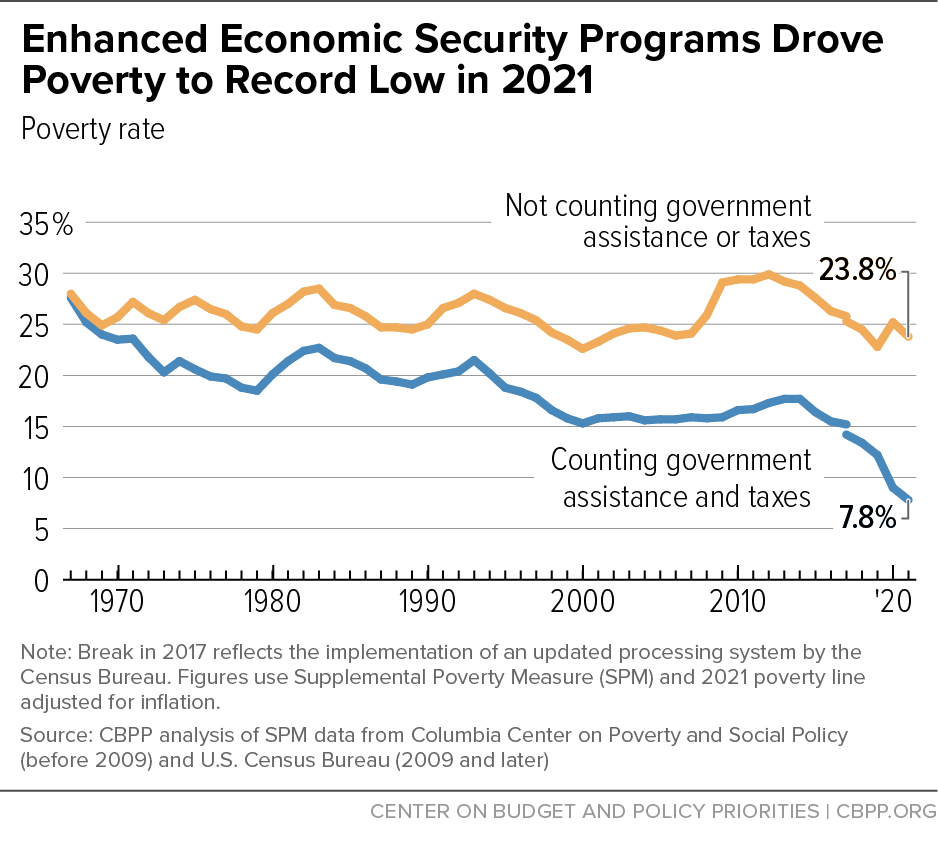
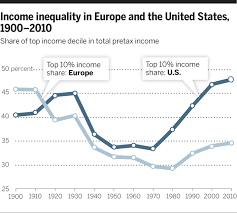
“New research has also highlighted that inter-generational mobility appears to have taken a turn for the worse right around 1980, when there was a sharp increase in various measures of cross-sectional inequality measured at a point in time,” according to the Fed report.
This inaugurated a four-decade war by capital on labor, seen most clearly in the falling capital gains rate, favoring accrued money over that earned from work. This would only grow in intensity and dramatically increased inequality until now we have surpassed the Gilded Age.
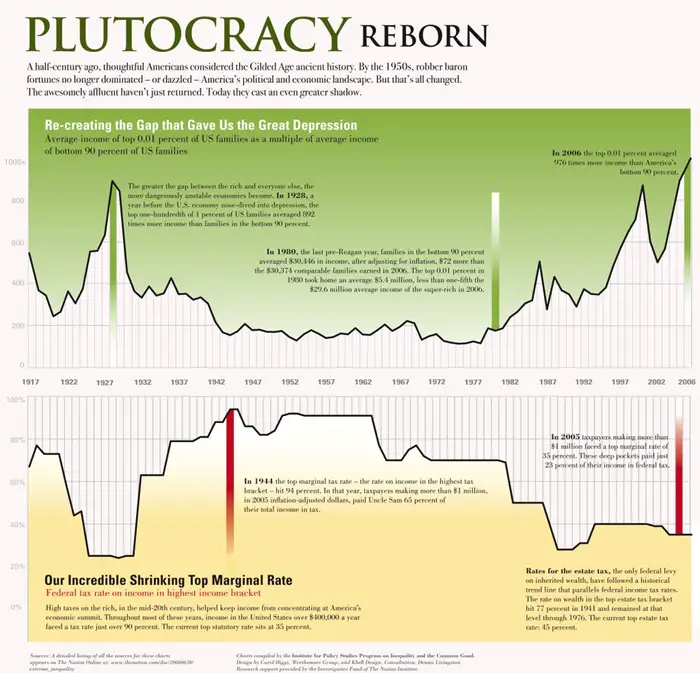
The feting of Thomas Pikketty and proteges like Gabriel Zucman also seems relevant, as the world’s growing awareness of the level of extreme wealth capture seemed to catalyze the crisis (of awareness?) for rich elites. Why not trash democracy when all your kids are woke and blaming you?
But I fear we are straying a bit in what is obviously a subject with a lot of related socio-global feedback loops. (We are all so very interconnected anymore with oligarchs on parade.)
As For Me
My family moved quite a bit growing up. It forced some dramatic personality quirks upon me, being an only child that moved every two-to-three years until high school. While my mom was around a good bit, foregoing the beginning of her own educational pursuits, I was very much a latch-key kid, responsible for my own entertainment and expected to stay out of my parents’ hair until dinner time.
So I have been lonely pretty much my entire life, and made the best of it. I learned by necessity how to meet new people, and I am able to give good face, but on some level it’s tiring.

I like meeting and talking to people, but also need recharge time unless it’s someone I’m close to. That was one of the greatest things about my ex-wife, she was very good socially but also very much a solitary person that needed alone time after excessive socializing. I could relate.
But I have also always been drawn to people. They fascinate me, and, aware of my own, um, idiosyncrasy?, I am forever curious what makes other tick, why they do as they do, and so forth.

As you may know by now, the answers are often depressingly mundane but there’s also a beauty and relatedness to that. And the truth is you never know because you just aren’t privileged enough to know the truth. On the other hand, life is…. Life. We are all bailing our sinking rowboat, at least emotionally, if you aren’t sharing a life, and oftentimes even when you are. (Fortune blesses those who married well.)
I read something on Slate the other day, a site I rarely more than glance at. S particular story caught my attention, and inside it had a revelatory line I couldn’t stop thinking about
“Some loves stay with us not because they were meant to become something else, but because they teach us, slowly and quietly, the difference between being close and being chosen.” That, my friends, is the twinkle of insight. True value is forged by its absence and weighed by its alternative.
I have had to adapt to a rootlessness that was thrust upon me. It has served me well at times, making me more like a cat – somehow mostly landing on my feet, if spraining my knee – and quick to adapt, though there’s always some emotional toll to pay.
It takes me a long-time to truly attach, especially romantically, and as I grow older it gets harder to meet and connect. Admittedly a bit easier for me than most, as those without many connections have less stuff planned, literally and figuratively. I try to roll with situations to see where they lead because, well, I guess I’m just curious and under-stimulated. Entertaining yourself gets old in time.
It’s always a journey, amirite? I think of the Only Ones’ “Another Girl, Another Planet” and its couplet, “Long journeys wear me out, but I know, I can’t live without it, oh no.” This may indeed be a heroin reference, but it’s also a metaphor for time’s unquenched march. If you can’t take a long journey, this life is not for you.
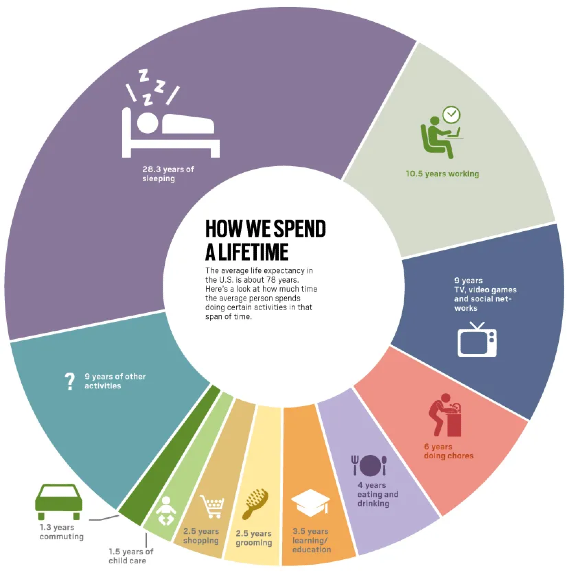
Travel, of course, is similar to moving and even more luxurious because it implies a home from which to return. It definitely expands your horizons, but the Jerry Jeff Walker line applies here as well.
Shaggy Dog Story
Those into narrative tropes are probably familiar with the “Shaggy Dog” story, but for those that aren’t, it’s a narrative that travels but goes nowhere. The dog may wander the entire neighborhood, but will wind up right back where it started. On some level it plays with the audience expectation that a story have a satisfying tie-up.
Almost by definition, all sitcoms are shaggy dog stories because nothing important has changed. South Park lampooned that for a while by repeatedly killing Kenny, who would always be alive again by the next episode.
To place some interesting context around that, I read a writing book that broke down plots (in part) to stories that travel and present a series of (presumably) escalating encounters with different characters leading, in video game parlance, to a Boss battle. By nature such stories are sort of episodic, but the travel allows you to introduce new characters and locales.
All procedurals, both televised and videogame, are these kinds of traveling stories that make up for the lack of character depth (how deep can adversaries you just met ever be?) with constantly evolving external aspects (and probably spiced with an interior conflict/romance with a colleague that will usually die or leave). On some level it's bound to be unsatisfying.
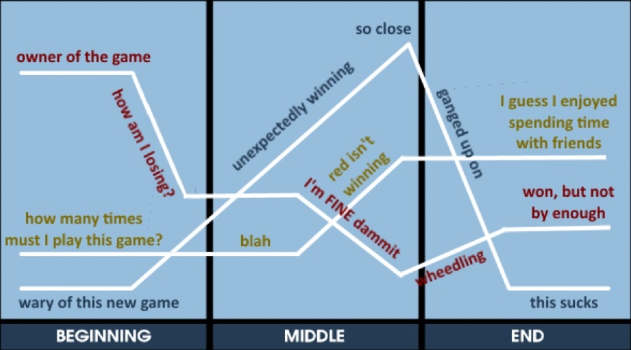
The alternative in this rubric (there is a hybrid, but I’m not getting into it, because I’m more curious about the conceptual duality) is the static locale where nobody travels and the conflict comes from the characters’ complex relationships with each other. Here changing allegiances and hidden motivations are the key drivers of narrative. (You’ll have a lot of enemies who become friends.) Soap Operas are the most obvious corollary. These are familial inasmuch as the characters are largely the same, but our understanding of them evolves as more layers are revealed.
The cardinal issue with the travel story is that all stories are about a change. However the constant circumlocution inhibits the expression of emotional change. All the change is extrinsic, or having to do with exterior elements. Additionally, conflicts tend to be sort of mechanistic roadblocks not emotional challenges, and they’re typically driven more by exterior motivations (changing circumstances, achieving/conquering something). This tends to make the changes feel more superficial and not as engaging.
Emotional stories tend to be built on the character recognizing a personality defect, accepting responsibility/processing trauma, and fixing broken relationships which we typically see from more than the main character’s perspectives. I find gender-based analysis limited, but there’s definitely a bit of male/female energy to this structure.
The shaggy dog is a meme for the status quo. It travels but never gets anywhere. It’s essentially all distraction. It’s Didi and Gogo, waiting for the man. It’s Bobby’s season-long dream. Wait, you spent an entire season, some 20 episodes following the logic of a dream? No, Fuck You!

The Hokey Pokey
This whole post is sort of a shaggy dog story inasmuch as it wanders about and meets some characters but doesn’t go anywhere narratively. There is no character change. It’s a meditation on movement and travel and how change is something that usually requires sacrifice and discomfort that pays off with interest somewhere down the road if things go right.
Arlo Guthrie related to me a story about when he was a child of seven or eight. He woke up in the middle of the night and went to the kitchen for water. On the way he tripped over his father, sleeping on the kitchen floor. Woody sat up, comforted Arlo and explained “If I slept in the bed, I might not leave.”
Some people can find the lack others travel the world seeking there in their neighborhood, but that doesn’t say anything about those who just nurture their lack.
Travel is uncomfortable in some way. It changes how you relate to the world. It ousts you from your familiarity. It opens new vistas which can tear prior perspectives to bits. Moving is hard but gets easier mostly in the knowledge you’ve circumnavigated that crucible before. It’s not easy but it’s manageable, and forces us back on our greatest virtue/weakness: our adaptability.
It’s great in that no matter how difficult, we’re built to adapt to a circumstance. It’s awful because no matter how wonderful the experience, we’ll adapt and expect it all the time. This, I think, is one reason moving, not just travel, is a necessary evil in life.
I am not perhaps the most unbiased source, and I have tried to be clear on this, but I feel it’s far too easy to sit back, and our greatest human skills come out best when we must fend in a new environment, explore a new place, find new people and discover ourselves anew. It sucks sometimes, but that’s a great way to remember who and what you really love. Discomfort is the fire that toughens and teaches us far better than satisfaction.
Just get up, put your left leg out and shake it all about. You need it more than you think.