Foxes & Hedgehogs
(On the Importance of) Being Broad
Some of us are better suited to chaos. We read the room, and make plans, noting larger trends. We make up a large portion of those commonly referred to as cranks. We are the swiss army knife, the walking Cliff Claven, bandying wide knowledge while most people hone the one thing they do well. (Or not.)
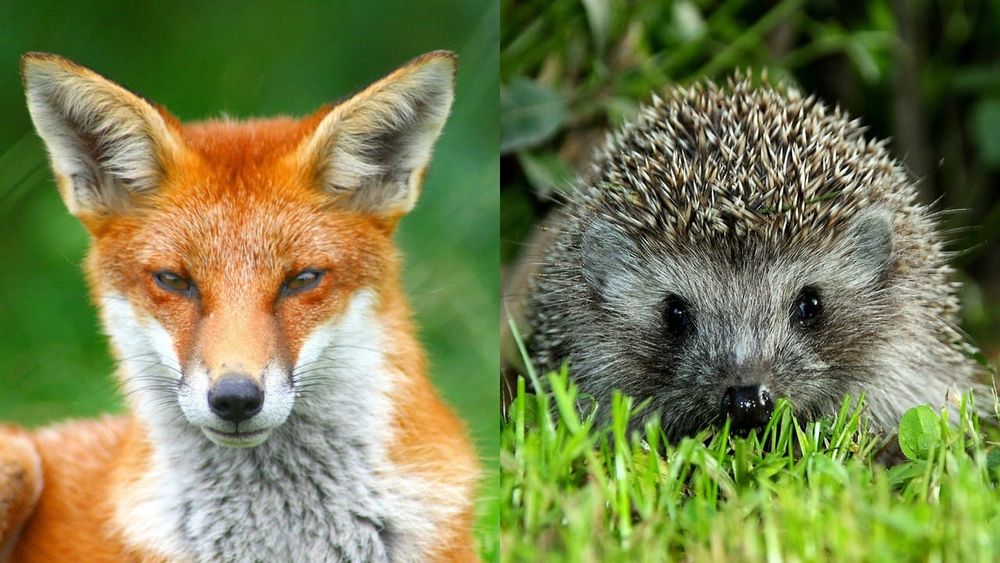
This is the story of the widely-wandering fox, and the deep-digging hedgehog. It's about the generalist versus the expert couched in an animal metaphor/duality, coined by a guy named Philip Telock, and sort of inspired by the idea that nearly all pundits were hedgehogs. And they were wrong sooooo often!
This prompted Tetlock (along with his work managing/analyzing a prediction competition) in 2005 to write Expert Political Judgment: How Good Is It? How Can We Know? I only heard about Tetlock’s work a few years ago, and was blown away by its narrative power. I wasn’t even aware at the time that it built upon a 1953 essay by philosopher Isaiah Berlin, that was popular in his time.
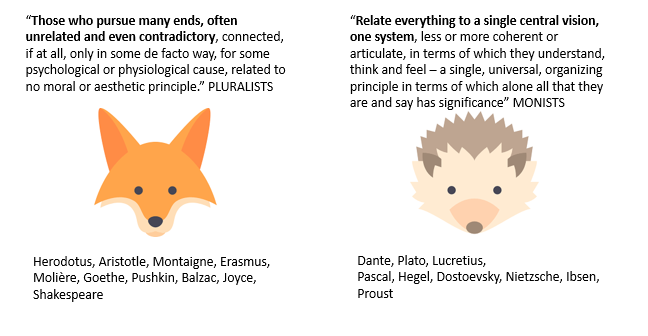
For those as unfamiliar with this idea as I was until recently, The Fox & The Hedgehog is about experiential orientations. Some people hold on to one guiding idea, other people operate from a more ad-hoc, quilted framework.
In some sense, it’s the original, “There are two types of people”concept before it devolved into an overly simplistic joke. Indeed Berlin himself described it as a sort of intellectual game.
The conceit itself is cadged from Greek poet Archilochus: “The fox knows many things, but the hedgehog knows one big thing.” Berlin used the dichotomy to separate philosophers and thinkers who saw the world through a single powerful idea, such as Plato, Pascal, Proust and Lucretius, and those whose views didn’t break down to a controlling concept, in Berlin’s example, Aristotle, Erasmus and Goethe. The latter three were all polymaths, or renaissance men, and it almost comes across as a hierarchy: Having one great idea is not so mean a feat as being DaVinci.
Another way to couch this is as an argument about specialists versus generalists. The phrase, “Jack of All Trades” first appeared in the early 17th century and a hundred years later, “Master of None” was first appended. While some have suggested the original formulation was “Jack of all trades is a master of none, but oftentimes better than a master of one,” this appears to be revisionism. (So to, is the above Schopenhauer "quote.")
Zig When the World Zags
It also feels like a response to a changing world. If you grant that the world obviously needs a mix of experts and generalists in some proportion, you can imagine that as circumstances change so might the optimal ratio. As such, one way of thinking might pass out of fashion, giving way to the other.
For example, Jim Collins wrote a 2001 business book called Good to Great that employed the hedgehog/fox metaphor and encouraged a hedgehog type focus that finds the intersection of what they do best, what they’re passionate about and what drives the economic engine. (No idea how pragmatic it is to believe these circles intersect.) Collins argues in favor of unity of purpose and disciplined culture, classic hedgehog themes.
Many aspirational business tomes are written by hedgehogs in my experience. They all fixate on finding a single skill and leveraging that within an inch of your life. I can’t speak for hedgehogs but as a fox that sounds boring AF.
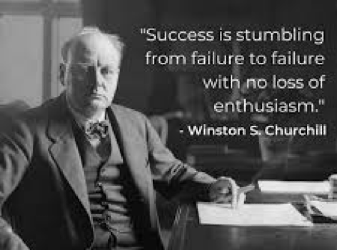
Now before anyone takes Collins to seriously, we should consider his examples of companies that went from good to great, including Circuit City, Fannie Mae, Nucor, Philip Morris, Wells Fargo and Walgreens. (Nothing fails like success, amirite?)
Tetlock’s 2005 paper noted that extensive studies had previously shown that most political pundits were hedgehogs. Tetlock found that problematic in that their hubris about their own expertise blinkered them to their own biases and let them to most frequently double-down on their previous incorrect assessment rather than humbly take in more data and reconsider their position. They are experts, after all.
Tetlock discovered this as part of numerous forecasting tournaments he’d held for two decades prior, generalists were much more successful prognosticators because of both their wide knowledge and continual re-assessments base on their own awareness about the shallow depth of their knowledge. While experts might fear being seen as “inconsistent,” a generalist is more apt to read circumstances adaptively and recognize changes more quickly.
A decade later, with further experiences in this subject, Tetlock published Superforecasting, which is less pessimistic having landed upon a number of principles in the intervening years that improved accuracy. He also discovered when placed in competitive events where their predictions will be rated, hedgehogs showed greater flexibility. This last note I find interesting, especially given that one of Tetlock’s first published papers was on accountability, and it runs like a low tone through a lot of this work.
In 2019, David Epstein extended the metaphor with Range: Why Generalist Triumph in a Specialist World, which made a clever distinction between the domains they might function within. In an ordered, or “kind” domain, the regularity is reinforcing. Patterns repeat, feedback is immediate and unmediated. In such a steady, static state a hedgehog’s expertise can thrive. Their methodical methods and urge to dig deeper will only uncover greater secrets – particularly in regularized scientific fields.
(Obviously no field that is evolving is free of paradigm shifts where a marginalized perspective overcomes outdated thinking and turns the consensus on its head, often with contributions from people or ideas outside the field. One such example is Alex Wegener, a meteorologist and polar researcher who pioneered the long discredited/now accepted theory of continental drift without being a geologist.)
But a hedgehog is prey to the same processes as anyone else, meaning recency and confirmation bias may cloud a hedgehog’s perspective of changing circumstances. If the hedgehog is conservative, they might also suffer from status quo-reaffirming and hierarchy-based trust that may blind them to decay and dishonesty since it runs counter to their needs and beliefs.
A fox, in this construct, is more at home in situations that call for skepticism, evaluating new evidence, and complex, overly dynamic environments, which Epstein called “wicked.” In a “wicked” world, the advantages of adaptability and frequent information reprocessing become pronounced in the Fox’s favor.
This also helps explain why there might be a cyclical quality. When there’s a level of continuity and consistency, the Hedgehog will be advantaged. In a world in the midst of change that stuck-in-the-mud attitude is a huge detriment. Unfortunately it feels like our world has grown more predatory and less predictable. We’re mid-stride of an enormous tech transformation that will cut across every profession.
It’s a Fox Fox Fox Fox World
Being a Fox has never been hotter. It’s just hard anymore to get behind anybody with one epic explanation for everything, a reductionism that feels so very 20th century. Everything being interconnected but at cross-purposes only multiplies complexity, amplified by the global backslide on economic liberalism.
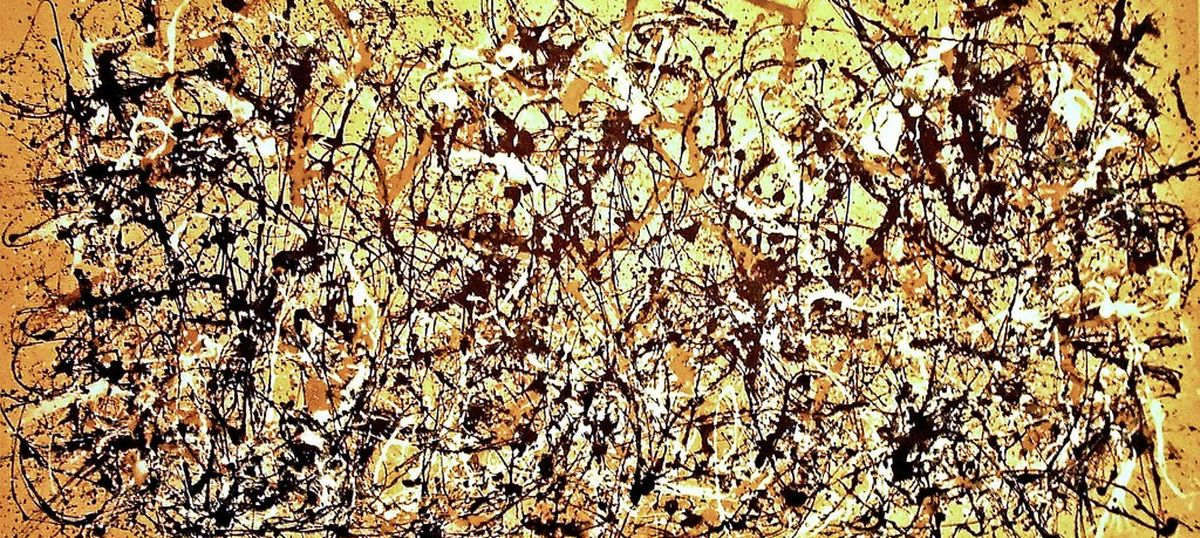
Indeed, it feels like the entire world is on the brink of chrysalis/apocalypse from which we’ll emerge from or not, but what comes after can’t help but be shaped by the chaos of this moment,in the same way that the abstract expressionists were deeply traumatized by the second world world.
However let it be clear, this is pure flattery to the foxes and an odd side-current to the all-but-concluded war on expertise. That’s why I thought Epstein’s clarification about domains is so helpful because it centers the analysis on the nature of the system. In a more static domain, Hedgehogs are key. And even in other situations, foxes rely on hedgehogs for facts, just not analysis.
It’s also relevant to consider how this is situated on the opposite edge of Dunning-Kruger inasmuch as it is the experts who overestimate the explanatory power of their present knowledge, while it is the generalist fox, somewhat lacking in expertise, that is better situated to understand the broader picture and the limits of their knowledge, perhaps responding more to their gut and first order processes less capable to be fully rationalized (e.g. Malcolm Gladwell’s Blink & Daniel Kahneman’s Thinking Fast and Slow.)
In some sad and very real sense, this wicked world has elevated the Fox. Our real experts were exiled and instead we got Docs Oz and Phil. How long before Sibyl the Soothsayer gets her 15 minutes? What I wouldn’t give to live in a world where one’s attention to our personal health, welfare and career opportunities (all receding, check) need be so dogged and frequent.
We’ve given up the kind of community that once enabled a lax approach to good faith, aligned incentives, authenticity and basic humanity. Yet human nature is why nice places have door-people. As Billy Bragg notes in “Great Leap Forward,” “In a perfect world we’d all sing in tune / But this is reality so give me some room.”
We let a lot of bad people without our best interests at heart into the room, and one of the big things they did was pollute the information systems and compromise the elite in our governing ranks. A hedgehog, status quo guy is about as useful as Hudson in a situation like this. (Or Aliens corporate shill Paul “Mad About You” Reiser for that matter.)
What we need are some agile, quick-hitting foxes, while we get everyone back on their feet and aligned against the forces that wish to end liberalism. And I suspect we might need to enlist a few hedgehogs as we devise the best way to recover our republic – once our forces are mobilized and cohesive. Until then we need foxes on the ground, because there’s a lot of chaos, and the available information needs help cohering.
I really long for the day when I stop worrying about tomorrow, let hedgehogs pontificate – because it’s not a matter of life or liberty – and return to chasing prodigious rabbits about the yard.