"We Could Just Party Until We're Rich": Talking Tim Fite
The SewYKnot Podcasts return with an interview & feature on the iconoclastic visual/music artist, Tim Fite.
As we still find our footing here at SewYKnot, there's a lot of discovery and brainstorming going on leading to this new format, where each month a music artist we interview is named the UNSUNG Artist of the Month and we do a feature to kind of familiarize readers with the artist in advance of the podcast.
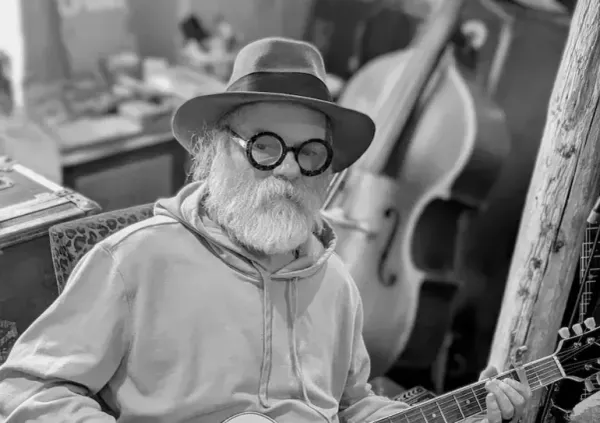
You can read our feature here, but if you just want the Cliff's Notes, Tim Fite (born Timothy Sullivan) was on his way to a career as a printmaker when he landed a viral hit on MTV and spun off as a musical impressario, and eventually a skilled social critic within that guise/platform.
After signing to the Epitaph Records offshoot, Anti- Records, Fite released 2005's Gone Ain't Gone, and in 2007 the masterful Over the Counter Culture, a free release that critiqued war, consumerism and hip-hop. After a seven-year run of six albums culminating with the last of his Ain't trilogy, 2012's Ain't Ain't Ain't, Fite pushed his music career back to the side of the stage that he might make more room for his visual art.
While he's continued to release music, such as the hilarious 2014 release, I've Been Hacked, which was accompanied by artistic homemade glass iPhone replicas to help wean users from their addiction.
He did an album where he and a collaborator responded to different musical or visual stimuli to inspire the music. It was appropriately titled, 2020's Roar Shack.
He's done all kinds of other neat things. In 2011-2012 he worked with the Brooklyn Philharmonic to create a piece of music, entitled Copy Cat.
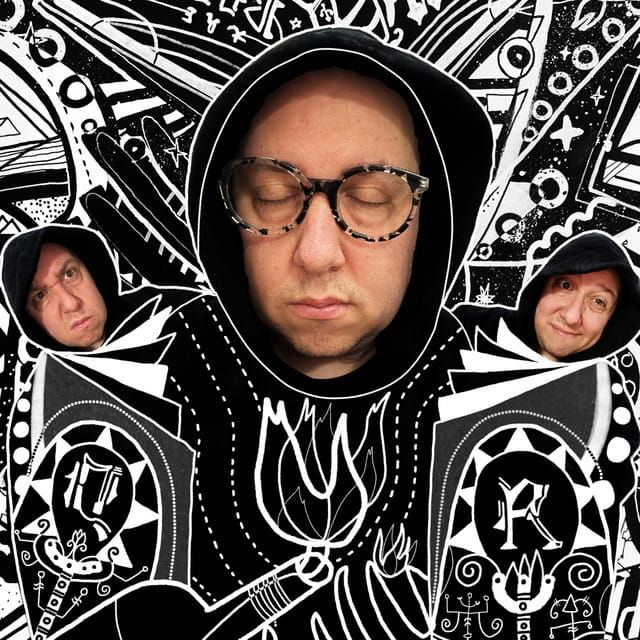
Fite has also comandeered a shop window and used it for art. But by far the most interesting thing he's done in this new guise combining his music and his art is this video he made showcasing his visual work to the music he's made, called Resist. It's extraordinary, and if you watch nothing else, watch this. It's some of Fite's finest work ever.
Anyway, enjoy the podcast! And the feature!
Transcript
SewYKnotPublishing:hello. This is So Why Not?, and I'm your host Chris Parker. With me today is Tim Fite, an artist, musician, social critic who has slowly gravitated towards the role of a multimedia artist after keeping his creative worlds distinct for a long time. He was ready to follow in the path of his parents, into visual arts when silly out of nowhere hit Shaniqua happened.
This inaugurated 15 years or so as a genre-hopping musical artist, mostly - riffing off his apparent first love, hip hop. He's performed , with the Brooklyn Philharmonic, done residencies in storefront shown art in Switzerland, released one of the most talked about albums of 2007, Over the Counter Culture, and done a children's book, A Bucket of Questions. Mostly it seems he does what he likes scratches like the rest of us creatives. Tim, do you still live in Brooklyn?
Tim:Yeah, yeah. I'm, I'm, I'm still here. Same place.
SewYKnotPublishing:Now you grew up though, kind of, near the Pennsylvania, New Jersey border?
Tim:Yeah, I grew up, right outside the Poconos, on the, on the Jersey side of the river and in a very tiny town called Knowlton, and in, in a little valley with a stream and, some, you know, nice trees and some mud and a little bit of a barn and a lot of gasoline
SewYKnotPublishing:Now, I don't know that you were necessarily literally a latchkey kid, but from the sounds of what I've heard, you were certainly left to fend for yourself - in your childhood with your brother. And, from the perspective I get, you're a little bit of a wanderer, so you grew up, you know, playing in creeks and, getting your hands dirty?
Tim:Yeah, we had the run of the place. You know, there wasn't a no trespassing sign that we didn't tear down and, disobey.
SewYKnotPublishing:Well, I can see how that led you into music. But you gave up the piano, and I'm curious then 'cause, at a fairly young age, six years old, gave up the piano. You said the piano teacher was crestfallen. But I'm curious how that happened and how you found your way back into music. Though I could see where hip hop kind of offered bravado and a role to play for a shy kid.
Tim:Yeah, I mean, I always listened to rap music and, when when I stopped playing the piano, it was just 'cause I was like any other kid. I would rather be outside instead of, you know, drilling in scales. And then ultimately, when I found my way, back into music, it was because I had a guitar teacher who realized the drills and the scales and the theory and all that stuff wasn't necessarily gonna, get me to where I needed to be.
That, musicality was a means to an end. Which is a very hip hop kind of thing where, you know, by any means necessary, we make the song happen. So I had this great guitar teacher who, his technique was to just teach me a chord at every lesson. And by the next lesson I had to write a new song using that chord and that got me really writing songs my primary motivation is always the song and the words and, you know, , getting some gunk, out of the carburetor
SewYKnotPublishing:Now, do you have a process that's particular to the medium you're working in? 'Cause I've seen you say that you're not a planner, but you are also a control freak and a person who will spend 12, 14, 16 hours straight on something. So I'm curious what the process looks like for you.
Tim:I mean, it really depends on what I'm making. If it's for making a song, it's always music first. So I'll make a beat, and then, work on the words after I've got enough music to create an emotion. It can depends on, you know, what kind of song it is. I'll either start with the guitar or, or I'll start with, like, drums or, you know, I'll steal something.
If I hear a cool loop, I'll loop it up and figure out how to, how to make it into something, something else. But it's always music first for a song , 'cause I think that's the yellow brick road for me to, to get to the words and the vibes
SewYKnotPublishing:I was interested in the fact that your process, I think it was the third one, the third, one where you just got a whole bunch of instruments, and sampled those. You bought budget albums for one.
You went inside a school and used their instruments for one. I'm curious about both the idea that what you do in this particular medium anyway, music, is pastiche. And especially because, growing up, a little bit like you, I loved the use of, clips, whether that was, Consolidated or, Dillinger Four or Dead Kennedys or whatever.
The, incorporation of these really cleverly chosen ... obviously Public Enemy and De La Soul, cleverly chosen clips and audio clips and that. But obviously you work with a pen too. \ You have these different mediums. But what is it, about you that leads you in this pastiche and how is it that was an early way to work for you?
Tim:I mean, stealing is the fastest way to get something. So If you don't really believe in the lie of ownership, stealing , is totally acceptable and expected, you know? But, it's a lot more honest to just say, " I'm fucking taking this," than to play the same shitty riff that some other guy played a million years ago and pretend it's your own.
You know? I'll just take the real thing because they did a good job. Why not? You know, copying and, flattery and all that stuff is... it's a pretty old bag For me, it's not even that, quite that interesting. I just wanna get it done
SewYKnotPublishing:No, I get that. It's interesting though, There's this, dance with creativity, you know? Whether we're talking about the cliff illusion that, you're gonna run out of things or new ideas or all of that, and that's why you stop when, when actually it seems to be, from the science, that the more time you spend brainstorming or working or walking around your problem, the more creative your ideas become.
These other things that stop us from freely, experiencing the art, like shortcuts, you know? And so one of the things I was writing about the other day I wanted to ask you about, because, obviously pastiche is about deciding what you use and what you steal.
Steal the artistry, as in what you choose to steal, really, obviously. So I was fooling around and discovering and reading and learning about the Gen, Alpha melody. Are you familiar with this?
Tim:Oh, what's the Jen Alf- oh, the Jen Alfamen of Melody. Yeah, yeah. It's like the oh, yo, yo kind of thing, right?
SewYKnotPublishing:yeah, the diatonic before it resolves into the sixth or whatever I'm not a theory guy either. But I understand totally how, because I'm a narrative person. I totally understand how you create this really frustrating, emotionally fraught musical moment so that you can resolve it.
That's why you put your character through some horrible thing, so that he can come out on top. That feels really good. The thing that was interesting about that was that some of these people who work in narrative came out and were like, "Well, this is just structure." You know? Of course, because you only have so many choices on how you can structure a narrative or how you can create an emotion.
You're gonna end up at the same places of structure. But just because you're using the hero- heroic return or whatever, hero's journey, does not mean that you're going to have the same thing. And that's the very interesting thing about especially working in hip hop, because you're stealing. Always stealing.
But it's part homage, and it's also part a continuing cultural conversation that is riffing a little bit on the idea that came before it,
Tim:Yeah. If You're limited in the scope of instruments that you can play, you want to still be the arranger, right? What better way to arrange your music than, you know, like playing Legos and just building it up and being the selector and figuring out how it can all fit together again and become something new.
What was always challenging for me in hip hop was that you had to generally choose one emotion or one dynamic, right? Like, it's the flow or the beat, and that you don't get a lot of, things to resolve. You have your message, and you have your music, and that's that.
And I always wanted more, right? I wanted to be able to put them pieces together to create dynamics and create something that could be resolved or be left unresolved or be completely, painful to listen to. You know, not just really good words and a dope-ass beat, right? So figuring out how to use the process of rap music to create the fluency of all other music was really an exciting challenge for me and one that I think is what keeps me coming back to making songs, is that
SewYKnotPublishing:Is that part of the purpose of the tight thematic, topics for the album so that you can more readily have an arc, and you can use these skits and these other interstitial elements to, control the tone and the movement?
Tim:Yeah. I like having a theme because it, 'cause it keeps my brain g- goes a lot of places. It goes too far all the time. So if there's a road or there, there's limitations that are created by a theme or a idea, it kinda locks things in so that it doesn't get too complicated.
It's usually every d-
SewYKnotPublishing:get it. Well, both as a neurodivergent and, I did this interview with Joe Henry and I reference it all the time, so I feel bad for listeners, though I don't have a lot yet, so I don't feel that bad for him. But I can always bring this up, but he had this great thing. I asked him, "What's the difference between being in a band and being a solo artist?"
And he said, "Well, being in a band is like being a wheel. Everybody's a spoke and it has to move to the center." sounds great, right? I said, "So what's being a solo artist like?" He said, "Oh, it's like chasing a rabbit around the yard."
Tim:Yep. A rabbit soaked in grease.
SewYKnotPublishing:The rabbit knows something though, I swear to you.
Tim:They don't say much, but they know a lot
SewYKnotPublishing:Kind of like that green shirt that didn't get you. Anyway, tell me what happened with Shaniqua
Tim:I mean, that was a moment when I was young and I made a silly song and, and It kind of sucked me and my friends into a world that was a little more complicated than I think we were ready for. It's really hard sometimes , when you're funny, and also very serious, to reconcile those aspects of who you are and what you do.
So I, you know, I made a really, really silly song. Singing it was fun for a minute because it was just about getting the wrong number in my dorm room and then, singing it started to hurt because I didn't think it was funny anymore. I kind of spent the rest of my days, trying to get away from it as a song, and as an idea of, who I am as an artist.
And I wouldn't trade it for the world because me and my friends got to do some really cool stuff and enjoy a really wild ride. But at the end of the day, there isn't anything that I've made that- I regret more.
SewYKnotPublishing:It's also the interesting thing, especially that we perceive more or less, being the main character, you were a main character before there were main characters all that often, and a milkshake duck of sorts or it was a milkshake, or, you know what, I don't know how all of it worked. But you know what I'm saying, and there's an aspect where you think the world is bigger than it really is.
Tim:I actually didn't, I didn't think the world was very big back then. That was why I was just writing jokey songs. I was going to college. I thought that being in a band was just a way to get over, social anxiety and enjoy some camaraderie , with guys who were a lot of fun , and really liked rap music.
Then when that small thing that was just sort of us having fun was being broadcast on MTV or, you know, in this huge way, and I had to maintain that joke that was a blip, for m- You know, there was me not thinking, and then to have to pretend to be that was, it was tricky, you know?
I think a lot of what I've done since is an effort to elegantly dance away from that, you know? And find a voice that's well beyond it
SewYKnotPublishing:I think it's a really difficult subject to touch on, and I was, I wouldn't normally put these things in some kind of stupid chronological order, 'cause we can just talk about anything. But since it's a show instead of just talking, it's all weird, the performative aspect.
Which as I say, is new for me. But in any case you had this really good idea about talking about how identity is this disguise that we can use to pretend that we're not all of the things that we actually are. And that's just a really difficult subject. One, because, how do you narratively, conceptualize, explain that, if you're not Faulkner doing, like, a thousand different voices or whatever, you know?
And then beyond that, just the idea that people very averse to challenges to their senses of identity, because that's the thing that kind of holds it together for them. And the idea that we don't have some kind of discrete self is there a little bit as an alternative to the alternative,
Tim:Yeah.
SewYKnotPublishing:Do you hear what I'm saying?
Tim:Yeah, no, totally. I was talking to my friend, who was in, Little T in One Track Mind, uh, Shankbone. He played the keyboards. And I was talking to him the other day, and , he had listened to that album for the first time in probably 15 years, right?
He was just like, "Oh, I'm gonna d- I'm gonna listen back." And he said, a really nice thing that, kind of changed my perspective on it, and it's similar to what you're talking about. He said, "You know, when I listen to it, , without all the gobbledygook of time changing my mind about it, as a album, Shaniqua aside, as an album, it's clearly something created by someone who's deeply thoughtful, highly sensitive, trying his best to get across really complicated messages in a way that as many people as possible could soak it up because it is so s- so candy," right?
Like, it's a sweet record. The sounds are good. It's all very, pop, right? But the feelings and ideas are very not pop they're very intense, and I think that's always been a double-edged sword that I've contended with, 'cause I want to be liked.
I want to make songs that are liked. But I'm not a very likable character. I'm complicated , and a little bit, you know, there's a lot of dirt under my fucking nails.
SewYKnotPublishing:There's also we'll just go straight at it. There's also the fundamental aspect that somebody who is a artist is also a performer, and if they're a performer, they are in some sense inauthentic. then additionally, you literally were living in two worlds for a time. Some of it was just because, you know, you were probably on some level bifurcated.
I'm curious about that aspect. I just I wanna put it in the context, because this also seems to be about an idea about, how do you do art, and how do you fit it into these different things? And I was curious if you'd seen the Johnnie Walker red, black, and blue bit in American Fiction?
Tim:See me. I can't, uh,
SewYKnotPublishing:I'll just do it really quickly, but I think it's in the context of what we're talking . It's about, this Black author who is a really good author, but he's a literary fiction author, and somebody comes around and does this kind of very hot more natural language, we'll say it like that.
He wants to make , a book like that because he thinks it's ridiculous, and he makes it, and it is huge. but he's worried about his reputation, and the, the literary agent stops him and says, "L- listen, dude, it's like this. Johnnie Walker Red. It's cheap, it does the job, right? Johnnie Walker Black. Okay, if you wanna have some little airs, it's cheap, too, just a little bit more. It also does the job." And then, you know, some people want Johnnie Walker Blue because they're a connoisseur of liquors. You don't sell much of it. It's $60 a thing. Not many people really want it. It's really good, but you have to have the taste to appreciate it. Otherwise, you'd just be drinking Johnnie Walker Red, right?
Tim:There you go. And what will really , prove the point of me not being able to connect with any of that shit is that I've spent a lifetime being sober. So I can't even fuck with Johnnie Walker Red. I...
SewYKnotPublishing:well, I mean how do you conceive it? Because obviously, choosing a platform and how you utilize your medium is a lot about how you craft your message and what the message is and all that. And obviously across time, you've, changed on how you wanted to do it. You stopped doing music so you could give some space to the art and in a backdoor way, find a way to integrate them, in some sense actually integrate, I suppose, on some philosophical, figurative level, these kinds of two impulses in your life
Tim:Yeah, I mean, music was a lark that, that turned into a job and a career. I always wanted to draw pictures. That is the thing that grounds me. That is the thing that I think, you know, if I have a natural language, it's visual. Music is like what you're talking about.
It's the persona or the, the alter ego that can make some of the other things a little bit more palatable, a little more commercial. I was able to sell that easier, right? But- At the end of the day, it all comes back to the first thing you said, which is I do what I want.
And if I wanna stop, I could stop. If I wanna go, I could go. The way that things have evened out as my anger has dissipated with old age is really kind of beautiful because I don't need to beat up myself, you know? Or like, I don't need to have these like just fucking insane fights between myself and myself and myself and myself and myself.
It's like it, nobody's throwing fists, nobody's body slamming. There's no folding chairs and motherfuckers falling out of the ring, right? It's just a nice old man , trying to think his way through a world that is still not nice and not getting any nicer anytime soon.
You know? For me, it's kind of exciting to not be at war with myself in a world that's at war with itself.
SewYKnotPublishing:It's funny because on some level, I thought that resist was a great kind of what do you call it? Um, apotheosis or whatever of these kinds of instincts, this great combination. And interestingly aggressive and dark. It starts out, it's just drawing, and it grows in intensity.
It's a very good kind of a narrative effect. I wanna congratulate you on that. But I also felt like it was a neat combination of the vision. It reminded me of the fact that there are a number of, artists these days who will make, play, or perform music and create art at the same time, and there's something wonderfully demystifying about seeing somebody creating art while they're creating art.
Tim:Yeah. Resist is probably one of the things I'm most proud of. It came together , in the most natural way, and, rage against injustice i- is my default in terms of the creative. That's like if I wanna get it, get there fast, it's just like, "Ah." But to do that with no holds at all because the music was so angry, because the message was so urgent, and the pain, across the board for our society was so, visceral and, immediate after you know, centuries of immediacy. You know? Things don't change, don't change, don't change, don't change, don't change, and people keep dying. Well, how do you sing that in a song? You know?
SewYKnotPublishing:I,
Tim:And, and
SewYKnotPublishing:I was gonna compliment you on, no good here. Just because I think you have my original thought is like Elvis Costello, but you have a real gift for turning a common phrase and picking out, as Archer would say, "Phrasing." Or Andy Gill might say, "Change that will do you good." So I do think that there's this aspect that you pick out is one of the things I love your Social Security, the malevolence is already hidden inside the name of the thing itself.
Tim:Yeah. Yeah. I mean, I really like words and, and how, malleable they are that, you know, meaning is meaningless is meaningful.
So like being able to twist things and turn things i- in a song is, it's really, really, you know, it's fun
SewYKnotPublishing:Well, I also think that you made a really nice strategic choice because a lot of your and milieu, i- if you will, is about how things don't work. So to choose this, vaguely naifish persona to perform this, I thought that was really great. And, that isn't really a question.
It was leading towards this idea. I saw somebody wrote that you were about the social and economic complexities of surviving under capitalism, and I thought, "Wow, well, that, that actually does fit a lot of the things that he sings about." And then I thought about it and I thought, " no, he's just doing The Good Place."
Tim:Amen
I don't think you can exist in this world without being hypocritical.
SewYKnotPublishing:Yeah.
Tim:Right? And-
SewYKnotPublishing:Small problem, right?
Tim:Right. Well, it's no problem. That's the thing. The problem is, that people are so, so narrow fucking minded that they get that words start to only have one meaning, right? It's, the trouble of these machines that we're connected to now is that they've, distilled language down into yes and no. That's wild, you know? It's beautiful, and maybe it, and maybe it's God, right? We'll see after all the machines have taken over.
But, but to distill language down to,, an absolute binary, that ultimately is , the simplest nuance. I don't know It's exciting and, and depressing all at the same time.
SewYKnotPublishing:Yes, it is.
Tim:It's yes and it... It's yes and it's no, which means that they're really...
SewYKnotPublishing:is.
Tim:Okay, then we have no answer.
, We have two. Yes and. And if... And you won't catch me dead at a, at an improv show, that's for sure.
SewYKnotPublishing:That's the human thing too. There is whatever reason, there is a Thanatos instinct. We are terribly self-destructive for reasons that don't seem really very rational, and they may not be rational, may not need to be rational. We certainly aren't all the time or even necessarily a lot of the time.
So maybe there's that whole team spirit aspect of this where, one day or another, as you say, these kinds of, poor i- instincts are gonna rise to the surface if, we don't as a culture kind of enforce some of the social norms that have kept them suppressed for, some years to some degree.
Tim:Yeah. Or if we just all embrace compassion.
That is,
SewYKnotPublishing:look like?
Tim:That would be pretty nice because then we would be okay with whatever somebody else is doing, even if they're doing wrong. You know? I think that's also something that's built into a lot of the things that I make is, the way that- I can look at what's wrong with the world, and I can look at the people who are doing wrong.
I can look at the system that is so wrong, and I can still love it because it's w- why I'm here, or it's why my family is here. It's why anybody is here. It's 'cause we're existing, even if our existence is flawed. And if you can love your way through that or you can try to... You just make an effort to understand, you, you...
SewYKnotPublishing:with that.
Tim:It's, it's
SewYKnotPublishing:of the whole pension thing, from V. The, jazz guy talks about, walking that line. You gotta keep cool
Tim:Yeah
SewYKnotPublishing:In keeping cool but care, they're obviously antithetical ideas, but it is also kind of what you have to do. There has to be a sort of distance.
There has to be some psychological, emotional distance, but at the same time, you can't be distant. That's why we have these people, these rich people who gate themselves off so that they don't have to feel a part of our culture because they're destroying it.
Tim:Sometimes the best way to say I love you is to, to give your best friend a bloody nose, you know? And it,
SewYKnotPublishing:I
Tim:it- so yeah, it's a funny, funny bag of chips
SewYKnotPublishing:Oh, so why felt tips?
Tim:'Cause they're fast.
SewYKnotPublishing:That they're fast. Okay. Is it, do you have to keep up with the way you're visualizing the work while you're doing it sometimes? Do, how much do you plan it when you're doing one of these complex, visual effects?
Tim:I know where I wanna go. That's about it... when you type into Google Maps, you just type your destination and it gives you directions. So I know what my destination is and then I draw the map
SewYKnotPublishing:That map drawing is part of the joy for you
Tim:It's part of the thinking, and thinking is joyful. And idea generation or idea development is joyful
SewYKnotPublishing:Is it stressful when you're doing it or is it a flow state?
Tim:Depends on if there's a deadline.
And who created the deadline. If I created the deadline for myself, I'm probably, yeah, probably really stressed. But if, some mean, mean person with money created the deadline for me, I'm just looking forward to taking their money
SewYKnotPublishing:I was a kid who moved around a lot, so I was always a little bit of an outsider kid, and, I know that you were a bullied kid at some point. You've done the song and whatnot. I was curious 'cause a- as this whole Trump administration has happened, , there's been a, I don't wanna say PTSD or whatever, but it certainly reminds me of a lot of the emotions and thoughts , and early formative gut reactions I have to things, and I was thinking how much being bullied on some level formed some of the environment or the way I viewed the world, and I was curious, if that was the case for you.
Tim:For me, a lot of times I didn't necessarily feel picked on. I saw a lot of people getting picked on worse. So the instances in which I was, left out or, or called out, they paled in comparison to what was happening to others. If I created a way of looking at the world or, you know, c- coming correct, it wasn't necessarily because of anything that happened to me.
It was because I was able to be compassionate, based on what was happening to others, possibly because of what happened to me
SewYKnotPublishing:today in these kinds of times
Tim:how I can feel compassion
SewYKnotPublishing:age felt compassionate. Yeah, sometimes it seems like something we have, we should start asking people.
Tim:I think rap music played a large role in it.
SewYKnotPublishing:Interesting
Tim:because so much of it for me was about voyeurism you know, I didn't know it at the time. I was just like, "That's cool, man." Right? But then It was also at the height of consciousness in rap music, right? And being able to really see how a system can can annihilate humanity, can annihilate selfhood , for people who I was looking up to, right?
Like, I looked up to Black and brown people, period. That was it. And I was just politically conscious enough based on the music that I was listening to, to realize that, that this voice that I loved so much was a voice that was, based on our system meant to be annihilated, and it was surviving nonetheless.
And for me, that, lit a fire. You know? It made me aware of a pain that we ignore as a society. Even when we call it out, right? Like, even when it's all we think about because the internet has created a polarity that harks on the nastiest of nasties, right?
But the thing that we really ignore is just how evil we all are inside. And I know that evil, both sides of it And I recognize it and I love it And I sing it. I think it's a weird thing to talk about, right? Because there's so much wrapped up in all of it, you know?
And you could say that me rapping is wrong, and I've always known it was wrong. But I don't know any other way to sing
SewYKnotPublishing:Well, when I read the, like, last couple lines, don't get me wrong, I really enjoyed Ellison's, Invisible Man. It was a really well-written book. But it was one of the few, one of, there's not a lot of them. One of the handful of books I got to the end, and the last two, three lines sealed the deal, and he goes, "Who's to say at some frequency I'm not speaking for you?" And that was, that was like punk rock to my brain. Like, oh, whoa, that's what this all is. The creation of art is trying to take on a different kind of, voice, persona, clothing. It's theater to try and bring you to understand something about yourself. Holy moly.
Tim:Yeah. And then it's also I think as, as the people who make things, it can also be the part that really breaks your heart because it's a lot easier to sell a pair of jeans. You know?
SewYKnotPublishing:Or 200,000 T-shirts.
Tim:Or 200,000 T-shirts, exactly. Or is it worth selling, your soul to bolster the soul of another? I don't know.
SewYKnotPublishing:I think as you would appreciate, I think it's always kind of just about asking the question. So
Tim:That's true
SewYKnotPublishing:the kind of asking the question, that's what we should be doing. Don't worry so much about the answer. But that's something, I wanna really congratulate you.
You know, as my third eye has opened, I guess you would say, I've really come to appreciate people who are doing things for their intrinsic value. I saw you talking about the fact that your parents had, alerted you, I suppose you might say, to the idea of doing things just to continue to get better because you love to do them, and you just like to see yourself continually, gradually learn to perfect that craft
Tim:Yeah, it's, I mean, it's a nice... and if my craft is asking questions, I'm getting pretty good at it. But, it's funny that you brought that up because the last, the most recent, big thing that I've put out into the world was a book for children about asking questions where all of the answers, were right and wrong at the same time.
So as a result of them being right and wrong, they elicit more questions, right? So, you know, that is very similar to what you just said about trying to get better, right? If each question begets another question, you can't help but improve your questions over time.
And then your brain gets a little bigger and your heart maybe expands some. And if you meet the right people along the way, you're not that lonely.
SewYKnotPublishing:I fully endorse that. The lonely ones are hard, but there's an asp- I'm an only child, so I'm pretty used to the lone wolf. There's a value to that. You know, everything has values and detriments. darn it, I lost my thought though. But I, I do think that there is this aspect where, the things that you do as an artist, and especially, you do as an artist, is you raise people's tolerance for ambiguity. A lot of these things don't have answers and that's a problem and part of the thing that you talked about, that is just really disturbing, about identity.
It's such a hard thing to get at too, but the idea that some people are good and some people are bad, that kind of absolves people from taking responsibility, and then things don't really change. So the more you can deal with the ambiguity that there aren't a lot of answers and that people can be both good and bad, and at any moment things could happen that can change how people behave, that's a scary world, but it's a good place to know that you live, right?
Tim:And also If you have creativity and you can manifest the devil, it gives you something to bounce your evil off of, right? Like, it's great that we're all things all at once. But what is beautiful about being human is our ability to imagine beyond that.
And if we can imagine a greater hate, we can imagine a greater beauty, or we can, personify these greater hates and greater beauties, it can give us that mirror towards the things that we're struggling with reconciling inside our hearts.
SewYKnotPublishing:Oh, I think that's like you're talking about dreams in some sense. The idea that we live through these experiences again in our dreams so that we learn how to better, deal with them in the future
Tim:That's right. I didn't eat a whole sleeve of Oreos in my dream. I ate them in real life, and I haven't learned my lesson yet.
SewYKnotPublishing:You got to start having them hop over a fence.
Tim:That's true. With the cream on the outside
SewYKnotPublishing:So, another thing, you said, you had this great quote. You said, "It's another thing altogether to be a disappointing person. I fear that I'm capable of both. Perhaps that's what keeps me under the radar." It just sparked a thought in me that there may be an aspect where for certain individuals, imposter syndrome is a creative circuit breaker
Tim:Yeah. I mean, I was thinking about that a little bit today. But hold on, let me think about this
Imposter syndrome is a very funny, funny thing to me, right? Because I, I've always believed that everyone is the genuine article. And, it's just the system that, creates our doubt. But for me Most of the time the things that keep me you know, from moving forward are because I really like to make things.
I really don't like to promote things.
SewYKnotPublishing:Yeah
Tim:And, all of the spaces where promoting happens to me , are problematic. You know, I love playing concerts. Concerts happen i- in beer halls Beer is sapping people of their money and their brain cells. And at the end of the day, the band only takes, 1% of the money from the club that night, and the beer man takes the rest, right?
You know, so
SewYKnotPublishing:you're traveling beer merchants, it's true
Tim:it's things like that where it's like, well, if I didn't look so closely at all of the little fucking minutiae and then wanna write a song about it, maybe I could just, you know, enjoy myself and go around and party until I'm rich.
You know, Party 'Til I'm Rich, that's a real... ooh, we could sell the shit outta that song.
SewYKnotPublishing:You already did Big Mac
Tim:Yeah.
SewYKnotPublishing:I, I don't
Tim:That's right. That's right.
SewYKnotPublishing:Well, I
Tim:So
SewYKnotPublishing:That's the impulse, because there's some kind of idea that there has to be some, off-ramp from existential angst that I just don't think it's actually there. It's always this coyote painted wall in this, the canyon mountain.
Tim:It's true. But if, but like, if you enjoy what you're doing, I don't think... One of the reasons why, why I wrote back to you, 'cause I'm not in the mood of writing back to anybody right now. One of the reasons I wrote back to you specifically is that you said that what you're doing with your podcast and the blog, you're just fucking doing it for you.
And I really, I really like that. I was like, "This guy's being really honest with me." And I understand that, right? Like, why am I doing this? Well, there's no other choice. This is what I do.
SewYKnotPublishing:Well,
Tim:And I really like that. And I was like, "I, I think, I think that this...
i'm gonna write back 'cause I'm the,
SewYKnotPublishing:appreciate that. I
Tim:I'm the"
SewYKnotPublishing:of the thing that we're trying to do is, that's why I did the sew, the S-E-W. Because, like, the idea was it's not that hard for us to create the community. It's like that thing like, oh, you're so close. You guys are so close, but people don't turn and make that extra little step.
I feel like, maybe they just need to be encouraged that it's a good thing, you know? Maybe if we put it on a watch or, make a catchy jingle, people'd be like, "Oh, yeah, actually take that one extra step and try and be nice to that person. And maybe they'll be nice back, and who knows what happens next?"
Tim:And, if one person is honest about the fact that they're doing it for themselves, someone else who's doing it for themselves will, come out of their little hidey-hole to say hello. Hello.
SewYKnotPublishing:I do love how many different things and ways that you, you pushed yourself in all of that. I was curious, I love the printmaking aspect too that you talked about in a way. That was the other thing that made me think about the puzzles and the pieces and the sampling, was because you didn't do like people do with these woodcuts, in that you made, , repeatable glyphs like you might do if you were a musical, writer, or a soundtrack, musical motifs.
You've got these, uh, printmaking motifs that you use in your creation, and again, it's, putting together all these different instruments to create your art. I thought that was really fascinating. I was curious how much they bleed into each other. Obviously you sometimes are, you've talked about the music , and you did the, the whole Rorschach where you were working off of and he was working off of, visual and that. How much do they, does, writing, spark the other part? Do you let them bleed into each other? Do you make a song separately or do how is, especially now that they're a lot more symbiotic
Tim:I mean, it, I think it varies from project to project, but, but at the end of the day, it's all
You went to the... I shouldn't say that. I'm notoriously scatological, so I was gonna say at the end of the day it's all the same diarrhea, right?
SewYKnotPublishing:It is. It's all just self-expression. I get that. But I'm always curious about the cross-pollination. I just write, and I've wanted to fool around with oils, but I'm a little frightened just because, I don't know anything. On the other hand, on my wall, I have a saying I stole from The Bear that's like, "You have no idea what you're doing. That makes you invincible." And I truly believe that
Tim:I mean, I think one of the things that's really nice about, uh, about drawing and song making for me, and the reason why I'm so attracted to sampling and building and p- putting things together out of other things, is that it, it really does create, parameters by which problem-solving is your primary, medium, right?
So you're making problems for yourself. Everywhere, every move you make Like the song goes the wrong place, the thing's in the wrong key, it's not the right, BPM. How do you get that? How do you slam it back into what you want, right? Or you're drawing a picture and you make a mark and it throws off the composition, drastically so that the eye is no longer moving in the proper way.
What's the next mark that you can make , to reconcile that and keep things moving forward? And, it's very much like life where you're just kind of dancing through it and, and problem-solving and fixing things, But you don't have the option of saying, , "This is where it ends," you don't wanna take that option because it's a shitty thing to do, right?
But with a song or with a picture, you could say, "Wow, I solved the problem," right? Or, "I found my way to an acceptable ending point," or an acceptable presentation point where now it's somebody else's problem. It's like, "Okay."
SewYKnotPublishing:way to another question.
Tim:Right. Exactly. Now, now you take a look at it and ask , why I did this.
But yeah, so I really like problem-solving , in everything that I do, I think it may be, you know, that and questions , and immediacy are sort of ... those three things really do drive the bus.
SewYKnotPublishing:Yeah, the immediacy of what you do is a really interesting thing, especially seeing you work. but obviously I'm sure you have things which aren't, done in the same manner. What is the collaborative... I mean, obviously when you were younger, you did a lot more collaborative art. As you've become more established, I would assume that you've had more opportunity to do, more solitary work and probably have the option of doing less collaborative.
What is your attitude now? Do you seek out and make space for trying to put different people that might mess things up and give you a different perspective into your work?
Tim:things with other people as long as I know those people are ride or die I think when there's a chance , that the creative process can result in, in actual pain, I will always shy away and move back. But the people who I make music with or I make art with, I love them beyond mistakes, beyond, you know, it's unconditional.
And I think when unconditional love is possible, you know, hell yeah, let's make a song.
SewYKnotPublishing:Do you have trouble knowing when something is done?
Tim:No, I mean, when I was younger, I was so bold and brazen that I was just like, "It's done," you know? And now as I'm getting older and I think I'm closer to being done. I'm in less of a hurry to be done, you know?
SewYKnotPublishing:I get that. I get that. I sometimes tell this one too. When I was an editor, I had somebody interview Eddie Money, and made him swear to ask this question. How does it feel to go from the top of the pops to playing the county fair? And he had a Money answer. He said, "I'm just so happy that there's anybody that still cares to listen to me." Yeah, if you're an artist, that's actually the thing. You're just happy there's anybody out there who appreciates what you're doing. It's not necessary because obviously you love the process, you love what you're doing. You clearly, \ Tim, are deeply, passionately involved in what you're doing. But, without the communication, I, I can't help but feel that there's a sort of emptiness without some kind of, praxis or connection there.
Tim:And I think, yes and no
to imagine an audience
That may seem crazy, but s- some of the biggest crowds I've played for, they don't exist on any plane that anyone but me can look at. You know? But holy shit, what a show. You know? And the applause was d- deafening, you know? The hecklers, oh God,
They,
SewYKnotPublishing:uh.
Tim:they know so much about me, they can really hit it close to the bone
SewYKnotPublishing:If you're gonna have a great show, have great hecklers too. I think it's... I like your aesthetic.
Tim:Oh, you gotta, somebody's gotta throw quarters at your teeth
SewYKnotPublishing:I really loved how much effort and, pre-production that must have gone into solo shows, after you went solo really kind of nuts. I was just curious if you could tell me about, like, that process, I mean, you're essentially auditioning with yourself and with the computer and the timing, you've gotta be doing fiddling all the time. God, how, how long did that take? Plus the kind of just the weird evil professor in the tower, you know, existing with four copies of himself or three copies of himself.
Tim:It takes a long time to make things that work
But I don't think it took any more time than it would have to practice with a band, right? Like, you got, you gotta go to the practice room and get the songs tight, or you don't, you just practice on the road. But I think it was, , it's very similar to that for me.
But, I can do it by myself and create a show that is, um I think people just wanna look at a screen, that's all they want.
SewYKnotPublishing:I wish it wasn't true.
Tim:So why, not provide them with one, you know? And then sing a song. And so, when I first started going out touring the Tim Fite songs, my brother would come with me and, he would kind of run the visuals and sing backup and just, I don't know, just we were together.
We were brothers. And I used to joke about , the triangle is really this extremely powerful shape. And Greg was on one side of the screen, I was on the other side of the screen, and the screen formed you know, the point of the triangle. Everybody's just not looking at us, they're just looking at the screen, and we get to sing our songs without being worried about anybody paying attention to what we're doing,
SewYKnotPublishing:Yep
Tim:because they're just looking at the screen. I think that for me that was always a really powerful thing to, to have the freedom to be as human, as humanly possible while backed up by something, so, unnatural
SewYKnotPublishing:So deeply adapted. What, it, it's such a funny thing because, one of my favorite musicians, David Dondero has a song, line in it goes, "Singing his song or a replication of a song." I think about that 'cause like, the real performance happens before you take it on the road, and then it's just you karaoke-ing with yourself. Not literally, but on some level, you're just up there to perform with the the Country Bear Jamboree. But the kind of work and craftsmanship that went into the front end, I definitely... I wanted a, the making of the Tim Feit roadshow movie, you know?
Tim:It would be hours and hours of watching me hit Command+Z, Command+Z, Command+Z, Command+Z. But I think what I like most about being on stage is be- being emotionally, unchained. Really just letting go in front of a crowd. When your band is a machine that you've meticulously planned, that clock is a very, very well...
You know, it's Swiss. That's a Swiss one. You know? That opens me up as a performer to be able to lose control. I think it's the same with, front people who have a really good band, right? So, like, the reason H.R. could be such a, just wild performer is that he had a really good band, you know, and that they would play the songs and, and knock it out of the park, and then he could just light the fuse and see which way the sparks flew.
You know? And so I would, I always really did like the way that the screen acted as that anchor So I knew that the music would always be the same. I knew that as long as either Greg or me was clicking the advance button, that it would advance to the next thing and the emotions could, uh, prevail
SewYKnotPublishing:One of the things I always really appreciate because music is ... Well, obviously you can perform it, and it's being recorded and meticulously reproduced or sometimes cut up. But the idea is that to a certain extent, when you see them live, they're performing live, it's a live happening. But with you, that was happening, but that also wasn't happening. And for me, there was the aspect of just being impressed with the, like the guy who goes into the studio, the old Prince, anecdote about he goes into the studio and sits there poring over the knobs for 20 hours, and it seems like just the grindiest work in the world.
But when he's done to his satisfaction, when it's pleased him, then that's the performance in a way. And so to see the performance and meticulousness and pride in your work and wanting to create a show kind of aesthetic that came out of that, that was always as impressive as what you were doing.
So I, I don't want to detract from it, but I also just wanted to give a kudo because I think that, the background noise sometimes get lost because somebody's in the foreground. But all that background noise is part of the performance and part of creating the scene.
Tim:Yeah. No, thank you. I'm glad that you saw it and, and, after a lifetime of going to just terrible, terrible rap shows and terrible punk shows, rap music is, oh man, when they don't do a good job, they really don't do a good job. You know, the sound is off, they're cuffing the mic, you know, it's a beautiful spectacle of humanity but the sound and just the enjoyment of watching it is, it's just, you know, they're switching songs halfway through the song.
You know, it's a funny thing. But that was what I loved, but then I could also react to it and be like, "I really wanna give people a show , that they can go home and feel like they were at the circus, the karaoke circus."
SewYKnotPublishing:I think that there's a thing that as you get on, when you're young, you're easily impressed, but the more you go along, the more you appreciate somebody who is really gonna put on a performance for you. Especially if that performance isn't something cliche and cloying that is just made to very overtly pl- pluck your heartstrings or in some way beguile you.
But where somebody's actually doing some tap dance for you, and they're, leaving a little, sweat and blood on the stage. The longer you go, the more you start to really notice that. For me, and I think for a lot of people, that's really the expression of the craft.
It's the John Wooden thing, "It takes talent to get there. It takes character to stay there." So anyway, I think it's fantastic that you've really followed your muse too. That was part of also why I wanted to talk to you, I like to talk to people who see expression as not like this kind of unipolar kind of plug, but the idea that there might be something or some way, just in terms of, people listening, that you haven't thought of expressing yourself.
There's really no reason not to try it. Why not learn a new skill, do something you haven't done? W- what's the harm?
Tim:That's right. I, I haven't tried, I haven't tried drugs yet
SewYKnotPublishing:Do you pick holes in every argument you hear? Is, is this what you do?
Tim:And I don't realize that they're even arguments.
SewYKnotPublishing:Just more questions, Tim Fine.
Tim:Just, just more questions. That's right. Fill up the bucket
SewYKnotPublishing:As I said, I think it's really important that people understand I n- just for myself, I, I know I went through life, even a pretty bright guy, feeling like life had to be a lot more regimented than it was, and You know, help people understand there's a lot more room to color outside the lines. They aren't actually gonna put it on your permanent record.
Tim:Yep. It's okay to cry in public. , It's really okay.
SewYKnotPublishing:But doubly so if it's a really good song. You might wanna choose, you might wanna be a little discerning, you know? But, you can't go wrong with Character Flaw
Tim:That's a good one. That's a good one to cry to.
SewYKnotPublishing:What is the artist life like? , Do you tour shows? How does one do art in the art world these days?
Tim:gallery in Switzerland that is where I show the most regularly, so like maybe once every two years. I make work with a master printer there named Tom Bless, and we, collaborate on pictures, and then he shows them and sells them. Then I was drawing a little bit, but, , I've created another human and, I really, really wanna spend time with him.
So, right now, my life is, much quieter and I spend most of my, , day times, hanging out with my guy, and
SewYKnotPublishing:printmaking
Tim:doing other kinds of printmaking, printing on diapers. It's kind of beautiful 'cause I've always maintained my, sanity with constant production.
And now I've taken a step back and I'm maintaining my sanity through constant care. And I feel that urge for constant production building, right? There's a pressure there, and I know that that valve is gonna release and, you know, look out.
SewYKnotPublishing:Yeah, no, uh Joe Pernice went through a period where he stopped, touring. One of my favorite, singer-songwriters, and he stopped. He kinda had the kid and all of a sudden... And then he started up, , and one of the things that he talks about is how, the time with the kid and learning how to make time more precious.
You already kinda seem like you do that a little bit, but he was like, " I learned that, those two hours I had were precious, and I got work done." And I think that there is an aspect where the twin drives for care and to creatively express, they will work out a time between themselves.
Tim:There's a lot of irons in the fire still. So, right as Gus was, was born, I released , an album that I don't know if you've heard, 'cause I promoted it very poorly. But I collaborated with, my lifelong drummer, Justin Riddle. And we made a band called Knife Work, which you can check out, and we released an album, but you know, I didn't tell anybody about it 'cause it was mostly for our hearts.
So Knife Work is out there, and I hope to make another record with him. And, I have another book, being published by, Simon & Schuster.
SewYKnotPublishing:So you're third, right?
Tim:a second, second children's book.
SewYKnotPublishing:To follow that up though. , It's always I think a challenge the first time do it, but then the second time to go through all the things to do it again. Good for you
Tim:Yeah, and to do it again in the midst of new fatherhood.
SewYKnotPublishing:Yeah.
Tim:Really, really, a lot of late, late nights, drawing cute pictures. But, totally worth it because, I know who's gonna read it, you know?
SewYKnotPublishing:Well, great. I love how, this whole, arc's worked for you, I don't think either of us is concerned that you're gonna do something creative again, so, e- enjoy your time kind of resettling yourself. A little time away is sometimes good for the, creative, juices and muscles
Tim:Yep. Absence makes the fart go yonder.
SewYKnotPublishing:All right, you Brooklynite. Have yourself a good night, and, uh, thanks again for your time
Tim:All right. Peace, man