Todd Snider's My Second Rodeo
The bliss-led folk troubadour's final, posthumous recording evokes the ersatz spiritual sherpa-hood, always in plain sight.
Background / Thoughts
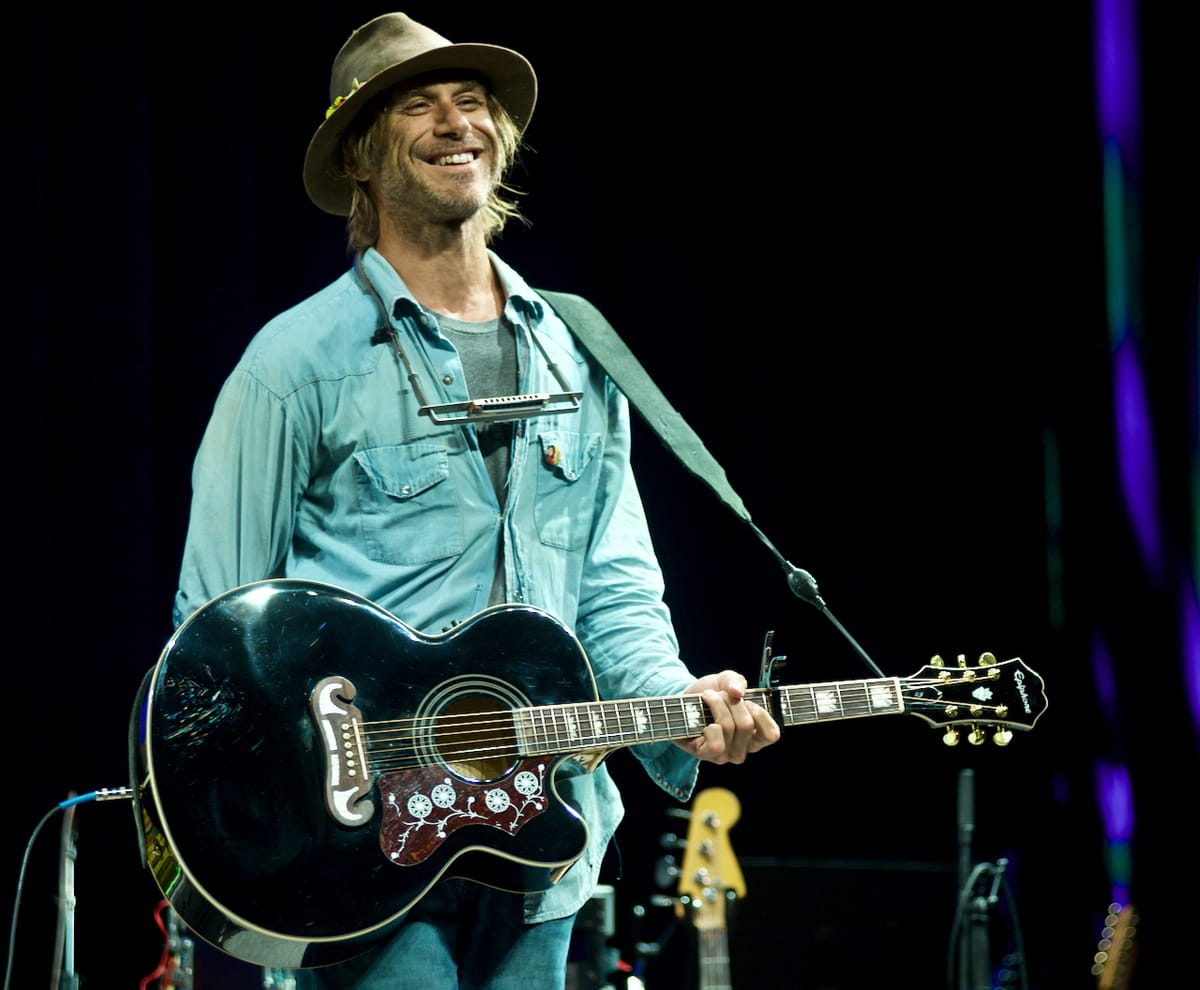
It’s with great sadness that we undertake the task of reviewing Todd Snider’s last (posthumous) album, the material he was working on when he passed under strange and unfortunate circumstances in Salt Lake City. To be fair, if you told Snider that this would be how his death would be described he probably wouldn’t be unhappy. His entire career was an exercise in strange and unfortunate circumstances. He was always the square peg to Nashville circular aperture and that his death should occur in some weird, desperate circumstances suits the legend if being horseshit for the rest of us.
For those in need of a synopsis/refresher, Todd Snider was a hippy provocateur, lackadaisical stoner, and clever AF songwriter that sort epitomized, at least my idea of “quick with a joke or to light up your smoke” but there was never anyplace that he really needed to be. That’s part of why he didn’t carry a cellphone. His tour manager/sidekick “Elvis” Hixx, like his personal Silent Bob, was hired for his proficiency rolling joints while in motion. And like Michael Franti, he preferred his feet unfettered. He was a lot of fun, and seemed very much like the guy who did mushrooms, quit the football team and started making music like he sings in the song.
For more on those times, there’s a nice remembrance from one of his high school friends who was at that first open mike.
We first caught up to him around the time of 2004’s East Nashville Skyline, highlighted for some by the fine, political folk ode that seems prescient now, “Conservative Christian, Right Wing, Republican Straight White American Males,” with its clear delineation of the sides, but my favorite was always the self-deprecating opening track, “Age Like Wine,” which hits a bit different today. But that was his wheelhouse. Snider never took anyone any more seriously than he took himself, which was “not very.”
That pretense-less attitude oozed from his pores. He was what Matthew McConaughey could only affect. Snider was the real, stoner indolent, smart-alecky cutup and incorrigible troublemaker.

But back to “Age Like Wine.” It features a chorus that confesses he’s old, and trying to find a way, to age like wine. It ends with the kind of “ne’er-do-well, so fuck it” attitude Mike Muir (Suicidal Tendencies) can only affect.
I've met every fool that ever signed their name up on these walls
In the backs of all these beer joints and concert halls
I been through seven managers, five labels
A thousand picks and patch cables
Three vans, a band, a bunch of guitar stands
And cans and cans and cans of beer
And bottles of boozes and bags of pot
And a thousand other things I forgot
I thought that I'd be dead by now….. But I'm not
We next met up in 2010 for a High Times shoot. It was such a natural, in that nobody that we ever interviewed was as excited to be in the pages as Snider was. We had the idea to take him to the caves around Hocking Hills, Ohio, near where he was headlining the Nelsonville Musicfest on Sunday night. A year later, I did another interview with him for Charleston.
In 2012 he released the album he was telling me about in that story, Agnostic Hymns and Stoner Tales, with its great comment on fatalism: “It’s not the despair that gets you, it’s the hope.” Both Rolling Stone and Paste named it one a top 50 album of the year. By all accounts things were going well.
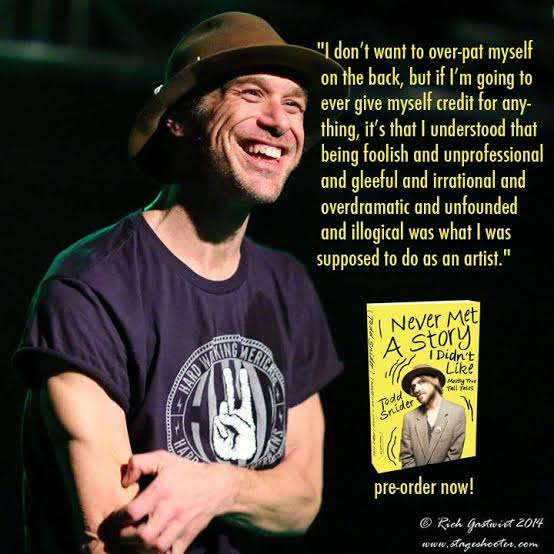
His attitude and predilections had made him a fan of the jam band crowd and he formed the band Hard Working Americans with Duane Trucks and Neal Casal (Chris Robinson Brotherhood), releasing two studio and live albums, while Snider put out the memoir, I Never Met a Story I Didn't Like: Mostly True Tall Tales.
It’s actually not odd that things were going well professionally as his marriage fell apart. He divorced in 2015 and the next decade he seemed to be on a downswing. He was open about his struggles with depression and drugs, which had been a big problem in the early stages of his career.
Facing Butt-End of the Back Half
During the tour press for 2025’s High, Lonesome and Then Some, he admitted to struggling with the deaths of John Prine, Jerry Jeff Walker, Billy Joe Shaver and Jimmy Buffet. Shaver’s son was Snider’s best friend before his overdose death in 2000. In an interview in late 2024, Snider confessed a long simmering stomach problem and serious back issues may have sidelined him permanently (after canceling a 2023 tour shortly before it started).
But he was excited about his new album. He wrote an entire album of material and imagined making a second album. He had a lot of nerve pain, and couldn’t use opiates because of his prior abuse. It had limited his ability to tour, and he had given up the road before setting up this 14-city tour to support the album.
What exactly happened is a bit unclear. Snider suffered a head injury of some sort a day before the tour was scheduled to begin in Salt Lake City. There were initially reports that Snider had been attacked and assaulted outside their hotel, but the cops suggest via camera footage that there was no such assault and the injury occurred on the bus. It was a real injury, requiring 22 staples to his skull.
In the wake of whatever actually happened the tour was canceled and the band left town. It appears that Snider, who often walks around without a cellphone, wound up returning to the hospital that gave him the staples and there is enough of a disturbance that the police are called and Snider is refused admission and instead taken to jail. In the heartbreaking footage, he begs for mercy and explains he needs his meds. On Klonopin and Bacloven he was perhaps suffering from withdrawals, or maybe it’s the head injury. He says he feels terrible and can be heard coughing piteously.
Yet when he got home to Nashville, Snider waited three days before going to the hospital at his friend Otis Gibbs insistence. He went later that night. It was too late. He had double pneumonia and sepsis, dying a day later.
It’s a sad strange and untimely conclusion to an artists whose three-plus decade career was festooned with critical favor and commercial struggle, though in time he found his audience. His wit never slackened, nor did his wry black humor soften. The world was very much the dark place he sometimes painted but that never stopped him from being himself and singing his songs his way, chasing the muse wherever it led. Living like that is often its own triumph, whatever the struggles on the way. But it's hard to let go of that thing that helped make you you.
There’s something to be said for not caring too mightily where you, the lost/mismatched sock, land so long as you do. Best to leave the things you can’t control to other worriers.
The Review
Snider did something unusual inasmuch as he laid down all his tracks before the rest of the band, so they would have to follow his lead. He left copious notes on the sound and production such that the album could be completed in his absence by producer/engineer Joe Bisirri and co-producer Robbie Crowell. They really do a beautiful job in abetting Snider's tasteful (read: somewhat spare) deployment of horns and gospel backup singers.
What he forges is a country-folk/blues with a bit of swagger. He called it the sound of Nashville ten years from now, and while that is clearly a far more authentic direction than country has recently charted, we wouldn't put it past Snider to have left us with a simmering prognostication like a time capsule to open years from now.
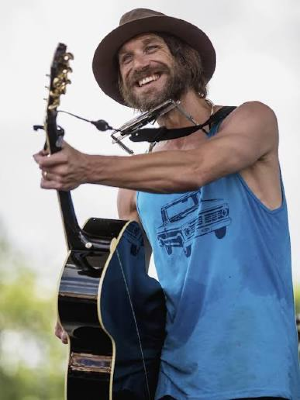
For a fellow that always felt too country for rock and too rock for country, Snider tries to split the difference through a rustic blues backdoor. His success is not mine to determine, though it mostly worked for me. It's a vibe album, and it's relatively quick at 10 songs and 35 minutes.
It starts off with, "Freewheelin' (Every Day at a Time)," one of the finest songs Snider has every written, like "Age Like Wine," it's a powerful epitaph for a career, he was clearly aware might be drawing to a close at the tender age of 59. It's as clear a statement of purpose as you'll get from him, explaining his transition from a jock like his brother and his dad to a burn-out freak who made a mark others dream of and befriended his heroes: "Fought my way from just another likely story, to a cautionary tale."
It opens spare, exterior noises challenging the weathered delivery a capella but for an intermittent soft strum, and as he compares himself to a tide, "crashing up as high as I can climb, over and over, without ending or beginning, I'm freewheelin, every day at a time," as southern soul horns enter giving it that stax emo shiver. And as he reprises the verse again you can't help but feel making that circuit, living his way, what better chord could you strike?
Just a beautiful song about taking it as it comes and not selling yourself short because you don't write the future, you participate in it.
There's something inherently goofy about syllabic-nonsense spouting swamp boogie "Solid Country Gold," which seems to draw sustenance from the very idea of hearing a gutbucket honky tonk shimmying shuffle on the radio. It feels hatched in a foreign bog with more grime than a college bong. Snider's syncopated delivery suggests backwoods voodoo, the strum as much percussion as melody.
It has a loose shambling gait and in content seems as pie-eyed and self-satisfied as the guy on "Have a Cigar" asking which one is Pink, but in a good way! It's got a great raw percussive thing going on that like a street jam feels very live and in the moment. Suddenly the girls step in and help and as the song goes on gets bigger and more like a big old country song.
We also really enjoy the 82-second "Can Your Monkey Do the Splits," arriving quick on the heels of the somewhat indulgent blues-vamp "(I Got That) Deja Vu." It's concerning punk concept of performative exploitation, to cocktail jazz/exotica swing, which situates Snider as a beat daddy-O, complete with toms, as he implores, "Can your monkey do it, make it do it?" which is frankly hilarious and essentially the history modern media boiled into a walnut. Just a hoot.
"Stoner Yodel Number 3 (Give me a D for Gym Class)" is a joyous burst of stoner humor as Snider offers his plan to shove Fritos in his mouth and take the bad grade, in a note-perfect expression of teenage defiance and indifference over an ambling rhythmic blues beat, as hanging out with all those jam band acts manifests in a crunchy little excursion that captures his devil-may-care insouciance. The bleats of horns against the smooth guitar groove is very tasty.
"The Manifesto" also bears the imprint of his jam band tenure, working a spare blues guitar figure and subtle coloring around it and more of those great backing singers. What is nice about this a-bit-too-long five-minute meditative blues jam is that it leads into a sort of reprise of the refrain, "One Nation Under Fire," in a more rocked out millieu, and it's a far better mesh of style, as Snider assails our political crisis over a sumptuous but suitable concise (2:42) soul-funk jam that functions much better in this length.
"My Second Rodeo" skewers the self-reflexive nature of country radio:
"Here comes a cowboy in a pickup track with a kickass country song jacked up / About a cowboy in a pickup trick with a kickass country song jacked up"
It's fun if a bit of a throwaway, devolving into distant peals of chaotic, decaying jazz skronk, like a party running out of juice, which could describe country radio, now that we think about.
The final track is the 60-second or so largely a capella, "Moon Tonight," which Snider finds looking even bigger than ever before, and the girls look more gorgeous and he even finds delight in the way the beer drips onto the floor.
"Oh the moon tonight is just enormous, even bigger than ever before."
It's a great ending, full of the kind of sad, but strangely upbeat in-the-moment spirit of an eternal trickster, reminding us the wonder and the humor that pain and misery would distract us from. Thank all the weirdos and burnouts and freaks living imaginatively so that we might imagine living at all. On Sunday, October 11, Snider would've turned 60.
There is no "deserves" there's what you get, so try to wring the joy from inside if you can. If the moon tonight looks bigger than ever before... maybe if you reached urgently enough.....