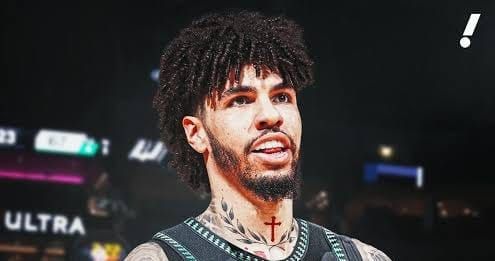
Wolves' Ball addition signals renewed focus on transition, pick'n'roll and movement
Preamble / Background
Since this is my site, there’s a tendency toward long introductions and plenty of contextual personal world-building. We live here together, we here like to share, and give the reader some idea of my priors and previous experience. Not that any such scraps matter much when it comes to NBA analysis. Take Stephen A. Smith. Do you accept credit? Old jokes are like old generals, they never die, just fade
So the relevant context here is that we covered the Cleveland Cavaliers for three years for the Cleveland Scene, and while the relationship was initially good, when Coach David Blatt was fired, the communications office turned and made it unpleasant for another year and a half. We could go into it, but it serves nobody. Just understand that if LeBron James has a beef, the press team instantly gets a hard-on, it’s the NBA version of quantum entanglement.
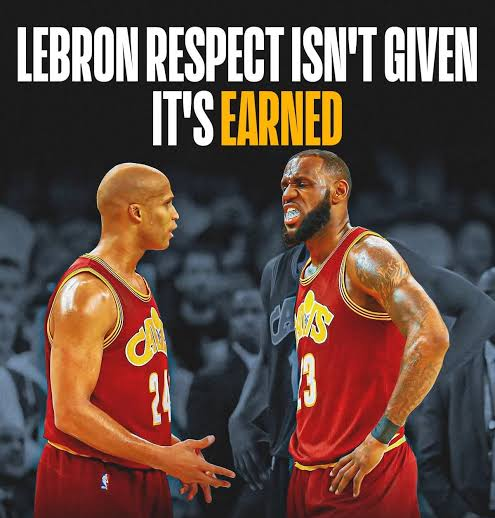
You should probably just be careful asking The King if respect for the coach “is given or earned” in the weeks prior to getting the coach fired. Pro tip for you. (Not like we knew what was coming.... well, if Rich Paul isn't in your ear, like he presumably was Windy's.)
The NBA beat is unforgiving, probably a lot like touring. Days and weeks blur, particularly that first playoffs, before they added the extra off-day between road-games. But the travel and the grind wouldn’t have been so bad at the time if it wasn’t so unrelentingly dumb. One reporter, Joe Vardon, actually wanted to query James on the meaning of the accounts he had recently unfollowed on Twitter. We shit you not.
Just the most trifling, non-basketball, vibe-based reporting you’ve ever heard. Vardon – an unrequited morom that the PD had exiled from writing on politics so he wound up on sports – once asked if the coach had noticed that LeBron did better with his headband off. Dave McMenamen was not an idiot like Vardon, but did ask some fawning ass bullshit questions, like if Kevin Love being on the bench, injured (in 2015) was going to be a boost to the team. In the playoffs? Professional ballplayers? The Biggest Stage? And, not even to go there but, “fit-in or fit-out, Kevin Love?” Yeah, that’s gonna really boost fucking moral. What the fuck is this, win one for the Gipper? Do you need to be pumped up to do your job? (Don't answer that.)
So hopefully you’re getting that we don’t give a fuck about people’s feelings; we’re here to do a job and not blow smoke up people’s asses. But, you know, the former is much appreciated so reporters persist and often wind up as conduits for their agents’ “scoops.” It’s fucking boring and disgusting at the same time and we tried to stay the hell away. No interest in the politics, just want to talk the sport (which also made them picking me out, ignoring me at pressers, etc, the more annoying; all we want to ask about is icing the ballhandler or drop coverage).
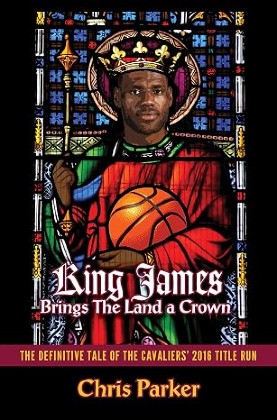
So when we finished the book and the season was over, we were done with basketball for a while. Did we mention the grind? But we still love hoops. FFS we referee hoops because it’s great exercise and barely like working most of the time. Just like watching good or even mediocre basketball anywhere, and love supporting kids doing it.
So, when we wound up in Minnesota, and decided to start doing this ‘zine, focused on the things that we enjoy doing and writing about, it seemed inevitable we would start doing some Timberwolves coverage. It’s something we love writing and analyzing, even more than we loved analyzing baseball stats as a kid because hoops stats have gotten so good!
That’s the other thing. When I started doing this for the Cleveland Scene in 2014, most media hoops coverage was BASIC AF. The idea of doing video with game coverage was pretty new. We were using a Slingbox to revisit the game afterwards and use in our (long, 3-4K) post-gamers. It was truly a labor of love and we did it pretty much 100-plus times a year for three years.
Now, the landscape is much different. There are great youtube video analyses all over the place breaking down players, their tendencies etc. Local hoops shops are all over as well. Besides the corporate fan sites, almost every team has 2-3 people doing solo gigs covering the team. It’s great stuff. In our mind, we’re not competing with anyone, we just want to contribute to the community. Besides, we don’t have the time, capacity or interest in such a narrow window of work. We are here to cover what we love, not sell a narrow product.
Not sure how much Wolves coverage we will do. Everything about the site is a work-in-progress feeling-it-out. But we want plan on doing podcasts and trying to provide at least a slice of coverage, and probably at least monthly columns, but we will have to see how it goes. Indeed we hope to have a podcast on Friday to welcome in the season next week, opening in Miami a week from tomorrow, October 21.
Analysis
Trading Frontcourt For Backcourt
We’ve been watching primarily East Coast basketball for the last couple decades, so last year was mostly spent acclimating to the teams and the Wolves personnel. We covered the Cavs then spent several years in New England and saw a lot of the Celtics on television. These days the styles of play aren’t that much different though the West is still a bit more free-flowing, the distinction has diminished over the years.
In looking at the season ahead, the thing we are most interested in is the idea that the team felt pairing a big next to Gobert wasn’t the most effective way to go. They jettisoned both their 4s without even a plan so much in place. That to me says the Wolves felt that pairing Naz and Randle with either Gobert or Edwards wasn’t going to get them where they want to be.
Both those guys are skilled scorers who can create their own shots. We aren’t going to go into whether or not the Wolves were correct in that decision. Seems moot at this point. However it does feel important that they unloaded two frontcourt players to add to an already fairly populated backcourt.
Bones Hyland and Ayo Dosunmu are fine backups, as each offer a different option. Dosunmu has top combo guard skills allowing him to do damage in transition or spot-up, as well as in pick and roll, while guarding 1 thru 3s. Hyland is your standard chance-of-pace guard whose at his best getting downhill and forcing the action. Both Hyland, who is only 6’2” and Dosunmu, who is two inches taller, have 6’10 arm spans, making them potentially strong defenders in the passing lanes.
Neither Dosunmu or Hyland is a very good perimeter defender. Dosunmu had never posted a positive defensive win share in his career, before his half-season in Minnesota. His DBPM (a pretty trash stat, tbh) was -0.9 in Chicago then 0.8 in Minnesota.
We wouldn’t trust it, but looking at his NBA tracking data, Dosunmu for the first time in since 2022-23 (-0.8) reduced defender shooting percentages on threes – and by a lot, 7.2% to be precise. Indeed a lot of it came in Chicago (he did play more games there) where in 45 games he reduced 3pt% 8.7% below league average. (He added 2.7% to 2pt shots, though that’s arguably even more dependent on team D than 3s.) He was -4.0 defending 3pts, and -2.4 on 2pts in 24 games with the Wolves.
This suggests that Dosunmu suddenly got religion about defense last year, and even turned it up a little more when he started playing in games that matter. He was even better during the playoffs on two-pointers reducing the percentage by 10.2% (while adding to 3pt by 0.8%).
As for Hyland, he’s a bit of a mystery on some level, having played more minutes last year than in the last three seasons combined. In that time he’s become a deadly little scorer – shooting a career high 39% from 3 and a sizzling 58% on midrange shots, while finishing at nearly 70% despite his small size. He makes some steals, though nowhere as much as in the first years of his career. He's posted small, positive defensive stats across his career though the small samples make it a bit questionable, but he's more athletic than his size indicates.
That’s a fair amount of talent in the backcourt already to decide to add LaMelo Ball while dumping both of your 4s, and in the process your backup center too.
Moving the Offense
As we mentioned, Ayo and Bones are both very long, and in concert with their physical gifts are very good rebounders for their size. Ball is also a very good rebounder for his size, while Randle’s once profound rebounding ability has slipped with the rest of his game, perhaps faster. While Reid was not a bad rebounder his 5-6 boards was pretty average.
Reid is an excellent scorer at all three levels, he’s mostly excelled as an offensive focal point for second squads and as a solid three-point spacer. That’s obviously very useful, but unloading a sixth man whose top skills are all offensive (if very team-complementary in general) and an increasingly grumpy and limited big on a big contract for someone 25 years old and at the top of their game is not bad. Obviously there are picks involved and what not.
What seems to me to be happening is the Wolves decided to move away from such a heavily isolation-oriented offense toward a faster pace that played more into athleticism and open court opportunities. Transition opportunities are harder to come by in the playoffs and you really need to rebound, as the Knicks demonstrated on the offensive boards.
This will clearly be the challenge, especially as they replaced their bigs with two floor-running athletes neither of which is particularly physical or necessarily gifted from beyond that arc. (In this way Trey Lyles has become the break-the-glass power forward option if the gambits fail.)
On the other hand, Edwards, Dosunmu, Hyland and Ball are all excellent rebounders and the guys you want leading the break anyway. Let everyone else fill the lanes and let’s go. Already one of the interesting emanations is that while Ball played at a relatively slow pace in Charlotte, he’s pushed that up going from 96.70 last year with the Hornets to 104.76, thru the SSS of three games.
We have yet to make it thru a full game so far, but have watched parts of the first three. The team is doing a lot more movement and without a big in the lane other than Rudy in the dunker spot, the floor feels much more wide open. There seems to be more off-the-ball movement as well. This, it should be noted, seems to be across the league. Watching other games, there’s a lot more movement all over and teams are becoming more diligent about reversing the ball and cutting off-the-ball. (At the same time, the number of grifters hanging out in toss-it-back-out passing lanes these days rivals the White House.)
Play |
Pos/Gm (rank) |
PPP rank |
Playoff Poss/Gm |
Playoff PPP |
Spot Up |
26.1 (19) |
1.12 (3) |
27.6 (5) |
0.98 (11) |
Transition |
21.6 (13) |
1.17 (8) |
19.1 (7) |
1.05 (9) |
Pnr Handler |
14.9 (24) |
0.88 (12) |
18.4 (9) |
0.77 (12) |
Pnr Roller |
4.8 (26) |
1.16 (9) |
3.5 (16) |
0.79 (15) |
Iso |
11 (3) |
0.96 (6) |
11.8 (3) |
1.03 (2) |
Handoff |
6.6 (7) |
0.98 (6) |
7.8 (5) |
0.96 (7) |
Putbacks |
6.4 (10) |
1.16 (12) |
7.1 (2) |
1.25 (4) |
Cuts |
6 (27) |
1.18 (30) |
5.9 (11) |
1.04 (15) |
Screen |
5.7 (5) |
0.95 (20) |
4.0 (4) |
0.82 (12) |
Postup |
4.7 (8) |
0.99 (15) |
3.3 (7) |
0.80 (12) |
Misc |
6.2 (17) |
6.2 (17) |
6.1 (14) |
0.48 (13) |
As you can see from the above chart, the Timberwolves ran a very efficient offense, highlighted by their skill at Isolation, Spot Up, and to a less extent Transition.
What’s also interesting to note is how much more the team tried to utilize other lower-frequency attacks (cutting, screens, postup, dribble handoff) compared to other teams. Together the four account for 23 possessions/game yet with the exception of the dribble-handoff, they’re mostly middling-to-bad, which is kind of a bad thing considering how efficient the offense otherwise is.
Now look at the playoff side. First thing to notice is that the Wolves did more Isolation and were even MORE efficient than in the regular season. But every other major manner of scoring was in the bottom-half of the league, with the exception of putbacks (unplanned) and the dribble handoff. Their efficiency as a spot-up shooting team plummets, and they have a hard time creating as many transition possessions as they did in the regular season.
They also wound up with 3.5 more possessions/game of pick & roll ballhandler possessions – more than every other increase combined.
Just a quick perusal and what has happened this off-season it would appear the Wolves decided to continue to diversify their offense by going away from isolation and finding players that are good at cutting and moving without the ball (such as Cody Williams), good in transition (Kuminga) and going toward the basket.
The other key to increasing the movement off-the-ball, in the end, was moving Edwards off the ball. There has been a whole movement across the NBA as part of the stats-led revolution to funnel more and more possessions through the team’s most efficient scorers. While this sounds good on paper, it makes teams much easier to defend and wears out the Alphas when all the Betas could do more, reducing rather than enhancing efficiency.
You can always force-feed them down the stretch, but in the whole of the season, a point guard can really help ease the situation. Suddenly Edwards doesn’t have to expend all this energy both mental and physical involving everyone. For the Wolves there’s and aspect where Ball fits better because he’s more of a 27-30 minute/night player like Reid, and therefore doesn’t upset the rotation of Hyland and Dosunmu as much. Plus the whole league is pushing more and more to long quick lineups that look like 4 wings and a big. Viola!
We suspect the team will be able to be much more efficient in these cutting, screening and pick-and-roll plays with Ball on the floor. When he’s not on the floor, it’s probably going to be about pushing the ball. On the other hand, when Ball is not on the floor – and let’s be clear, it’s not entirely transparent how Fitch is going to time Edwards / Ball rotation – Hyland and Dosunmu are skilled offensive players who can to some extent feed themselves, while McDaniel can get his points in flow and off-the-floor with hustle and Cody Williams is more of a cutter/transition scorer.
(As we noted earlier, Williams lack of a 3 pt shot, even more profound than Kuminga, could keep him off the floor. He’s 2-8 so far. Kuminga is 0-4. Lyles is 5-14.)
Obviously having the creative and offensively explosive Ball on the ball changes the calculus for defenders. Ball is 0.88 PPP as a ballhandler in the PNR, as compared to Edwards who is 0.90. That really eases second ballhandler worries and allows you to spam the PNR from both sides. It remains to be seen how Kuminga and Williams function in the PnR, but they’re definitely tuned into using Beringer as a roll man judging from the preseason.
Adding another PNR threat will also help in the playoffs, where you can see the Wolves’ efficiency suffered. But even more than this, there is a credible hope that a skilled distributor will help the squad improve on their 6th ranked 3pt shooting percentage last season (37.0%) which fell to 10th among the 16 playoff teams, at 33.7%. They also shot the 4th fewest 3pt/gm during the playoffs. That’s not going to cut it. Already this preseason they’re the #1 in the league in pct (they were last preseason as well).
But we looked into Ball’s play in Charlotte and saw consistent improvement for shooters of a type we didn’t see when we looked at Doncic & Cunningham for comparison.
Ball |
3pt/season |
3pt/gm |
3pt pass from |
3pt/gm |
diff |
Bridges |
33% |
5.8 |
38.8 |
1.7 |
5.8 |
24-25 |
31.3 |
7 |
40.7 |
1.7 |
9.4 |
Miller |
38.3 |
8.2 |
40.3 |
2.1 |
2 |
24-25 |
35.5 |
10.9 |
40,0 |
1.5 |
4.5 |
Knueppel; |
42.5 |
7.9 |
49 |
2.1 |
6.5 |
He made Bridges a deadly 3pt shooter a couple times a game, and even improved on Kneuppel’s fine stroke on a quarter of his per game attempts. When he just got there. Looking down on Doncic and James you find such mixed results, nothing like these for the Hornets’ top 3 by volume 3pt shooters. This could really be a boon to McDaniels who shot 41% last year on a relatively low volume (3.4) but around 33% the two prior years, and will not only be expected to maintain the accuracy but pick up the volume in Reid & Randle's absence. Balls' skill may help McDaniels maintain his skill at higher volumes.
DOncic |
3pt % season |
Att/gm |
3pt pass from |
3pt/gm |
DIFF |
James |
31.7 |
4.1 |
34.8 |
0.7 |
3.1 |
24-25 |
37.6 |
5.7 |
31 |
0.8 |
-6 |
Reaves |
36 |
6.4 |
36.2 |
1.1 |
0 |
24-25 |
37.7 |
7.3 |
33 |
||
Hachimura |
44.3 |
3.9 |
39.3 |
1.4 |
-5 |
24-25 |
41.3 |
4.2 |
48 |
0.5 |
6.7 |
Smart |
33.1 |
4.7 |
38.2 |
1.4 |
5.1 |
CADE |
|||||
Robinson |
41 |
7 |
46.2 |
3.1 |
5.2 |
Harris |
36.8 |
3.5 |
38.9 |
1.1 |
2.1 |
24-25 |
34.5 |
3.6 |
35.1 |
1.4 |
0.6 |
Green |
38.1 |
3 |
38.7 |
1 |
0.6 |
Beasley |
41.6 |
9.3 |
41.2 |
2.8 |
-0.4 |
Hardaway |
36.8 |
5.9 |
40.3 |
2.3 |
3.5 |
Defense
The Wolves were a good but short of great defense. One of the big issues, in our opinion, is they are not particularly great at creating possessions. If you check the four-factors, three of them are middling to bad – turnover creation (12th), defensive rebounding (19th) and opponent FT rate (25th). They’re fifth in opponent EFG percentage. They were 2nd in opponent 3pt FGA allowed (34/gm) and 13th in pct (35.5%). There is room for improvement, but the gradiations in FG% are small with .5% separating the Wolves from the #5 team.
When you look at the regular season PPP it’s clear how good they were, especially given how they did so little to limit the offense’s number of possessions.
Play |
Pos/Gm (rank) |
PPP |
playoff freq/gm |
Playoff PPP |
spotup |
23.6 (29) |
1.03 (8) |
18.7 (15) |
1.06 (11) |
Transition |
21.9 (7) |
1.13 (14) |
24.1 (1) |
1.09 (10) |
PNR handler |
20.9 (1) |
0.88 (16) |
19.8 (6) |
0.97 (13) |
PNR roller |
6.6 (5) |
1.09 (13) |
6.8 (6) |
1.17 (6) |
ISO |
8.5 (13) |
0.86 (3) |
6.8 (16) |
0.78 (2) |
handoff |
6.0 (4) |
0.97 (19) |
8.2 (1) |
0.90 (4) |
putbacks |
5.9 (17) |
1.03 (1) |
4.6 (15) |
1.34 (15) |
screen |
4.8 (4) |
0.90 (7) |
6.5 (1) |
0.86 (6) |
postup |
2.6 (30) |
1.12 (30) |
3.0 (10) |
0.69 (3) |
Charlot PNR |
23.2 (1) |
0.86 (17) |
One thing that jumps right out is how much the Wolves basically crush Spot Up and limit anybody’s ability to get those shots. That and Rudy’s presence undoubtedly is why the Wolves face so much pick and roll. It’s pretty much their worst defect on defense and in the playoffs it’s killing them, even if they do manage to trim back its frequency.
The other thing that should jump out is that the team is actually giving up TWO MORE transition possession in the playoffs. How is that even possible!?!? And they aren’t even defending it much better than the regular season, and they’ve gotten worse at handling the roll man. The addition of more athletic players is probably in part a response to this, and the ability to get up and down the court with greater ease from both ends.
Overall
It feels like the Ball trade was a choice made by the Wolves executive staff to go another direction with their offense toward more movement, passing and pick and roll in place of their reliance on isolation and spot up shooting. They also seem to have added a number of players that fit within a slashing, screening, cutting regime, that they might have greater success and diversify their offensive options come the playoffs. This seems like a good strategy if they can execute it.
Similarly the defensive struggles in the pick and roll can at least partly be attributed to the physical limitations of the team’s bigs and as a way to get them away from the basket. The team’s defensive success overall suggests that it wasn’t a failure, but the personnel didn’t seem capable of winning that way in the playoffs.
While Ball is notably at best an average defensive player, his addition opens up the team to a different defensive identity in some degree. Much like Milwaukee a few years ago and Denver when current Wolves GM Tim Connelly was there, there’s an emphasis on supporting/role players with good athleticism, length and the ability to get up and down the court.
Both Kuminga and Williams have 7-foot+ wingspans despite their 6’7”-6’8” size, and that offers the possibility of a flexible, almost position-less squad – which is important because on defense, ideally, you want to be able to switch pick and rolls and have the defender able to handle whomever he gets. With this off-season they got closer, depending on how things wash out with Williams and Kuminga.
The primary issues are two-fold. The first is that the team needs to replace about 40 points of scoring between Reid and Randle. Ball is good for half that, but where do the other points come? McDaniel will be able to contribute more, and perhaps Hyland and/or Dosonmu can make some of it up, but the Wolves really need for the frontcourt to pick up some of the slack and that’s not a given.
Secondly they have a serious rebouding challenge. Neither Williams nor Kuminga nor Lyles is a skilled rebounder. They are clearly very much planning on having the guards doing a major share of the rebounding. What’s interesting is that both Williams and Kuminga have good handles and are very capable of going coast-to-coast themselves. They’re a bit loose, but that flexibility could come in handy as the team appears ready to really push the pace. Without the other bigs, the plan also seems to be to fly around a bit more, perhaps this can also increase the turnover creation, which is so poor.
That’s definitely the way to go to make best use of the personnel. Williams is a former #10 pick but at 6-8 and not 200 lbs wet, it’s unclear if he can make the transition from tweener – not big enough to battle inside, not good enough from 3 to have gravity. He does have a decent handle and pretty solid midrange jumper and we’ve seen so many guys learn to shoot 3s, so it’s certainly worth the flyer, but there’s a helluva lot riding on his ability to figure this out, or Kuminga, and there just aren’t much in other options. They could live-and-die on what they get from the 4.
That said, it also seems clear that the team will slide McDaniels to the 4 as much as possible down the stretch and play with 3 guards given the physicality and athleticism of the Edwards-Ball-Dosunmu/Hyland trios.
Finch has done a spectacular job with the defense, and on some level this feels like a move toward making them capable of being an even more devastatingly quick defensive team, while opening up the floor to two young incredibly talented and quick ballhandlers, giving them young athletes to fill the lane.
But they’re gonna have to grab those boards first, and after Mitchell Robinson’s example, we’re gonna see more teams try to crush teams on the boards after a few years ago when most teams would only send one guy and drop the others back. Game is always changing and adapting.
Connelly has always shown a gift for finding low-round picks and cast-off contributors. Finding someone to fill that 4 spot – assuming it's not Kuminga – is gonna really test his skill. We feel wary that a replacement may be needed in weeks not months. But time will tell, he's done a good job with what he's been given so far. We'll give them the benefit of the doubt.