The Cramps' Gravest Gravy
In a world with too many choices, a good curator and effective gatekeeper can be worth their weight in computer memory. The reasons and problems caused by our abandonment of gatekeepers and expertise is a discussion for another time, but for the moment SewYKnot is doing its part. That’s the reasoning behind the monthly UNSUNG series – to try to spotlight some of those artists a bit more on the fringes that might otherwise be missed.
Listen, nobody needs to help Coke sell soft drinks and nobody needs to help Beyonce move units, so it makes sense to work your way further down the tale. That brings us to today’s premier artist for UNSUNG’s new monthly release of the month. (A similar spirit governs the calendar, in part because one person can only do so much and in part because I have no patience for acts I don’t like that don’t need any publicity.)
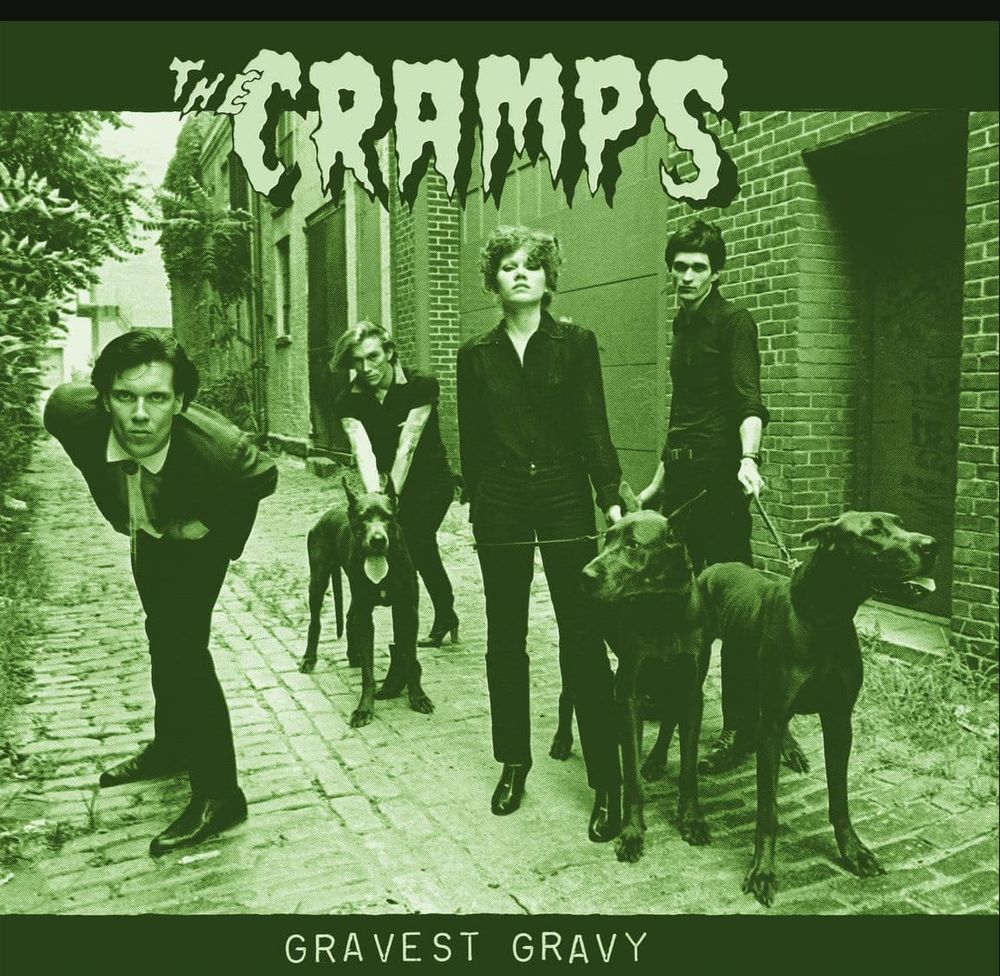
So without further adieu, we bring you Gravest Gravy, the first recordings of the Cramps, done with underground icon Alex Chilton in Memphis’ Ardent Studios in 1977. They recorded everything they had, which turned into their first two singles, “Surfin Bird” and “Human Fly.” Another version(?) of the B-side of the latter, “Domino,” appears here.
The tracks were collected and prepared for release, to the extent where singer Lux Interior (who died in 2009) and guitarist Poison Ivy had chosen cover art for the release in the late eighties but for unclear reasons, never followed through. Ian MacKaye and Henry Rollins heard from a friend about this album and stepped in not only to see it released, but have conspired with the reclusive Ivy to release the entire catalog.
The Cramps were ground floor punk rockers who essentially formed in Sacramento, moved to Akron (where they encountered Peer Ubu and Rocket from the Tombs, eventually enticing the off-shoot Dead Boys to follow them) then to New York where they became a fixture on the CBGBs scene before returning to Los Angeles in the early eighties and recruiting Kid Congo Powers from Gun Club to replace second guitarist Bryan Gregory, who’d grown bored.
(The earliest incarnation of the Cramps was with two guitars, no bass, with Ivy playing the clean channel and Gregory playing fuzzed out distortion to fill out the mid and bottom range.)
The band was white hot, but during the recording of their second album, Psychedelic Jungle, got into a beef over royalties with their label, I.R.S. Records, run by Miles Copeland as a boutique label after his brother Stewart’s band (which he and brother Ian managed), the Police made A&M Records a lot of money. (Later Ian Copeland would prove essential in the careers of R.E.M.’s Peter Buck and Bill Berry, who worked for him, Copeland sold Buck back his rig, which he’d sold Copeland after he’d abandoned music in a fit.
That fight with Copeland would sideline the Cramps from recording for two years, as the rockabilly revival slowly moved aside in favor of cowpunk. They released a six-song live Smell of a Female EP from New York's Peppermint Lounge, but that was the last of Kid Congo, who returned to Gun Club. By the time of 1986’s A Date With Elvis, they added a bassist, signaling a breaking point for a certain brand of Cramps purist.
(The Cramps have evolved a hardcore following that resembles that of The Residents in fervor and mastery of detailed arcana,)
The album, like their 1980 debut, Songs the Lord Taught Us, went to #1 in England, and was only available in America as an import until Enigma released it in 1990, their first American album release since 1981’s Psychedelic Jungle. While they remained beloved in England, they never achieved the same salience in the States, something Rollins and MacKaye, who were initiated into punk by their music and are doing this pro bono, hope to change.
As for the album itself, it’s a true delight that captures the band in its element years later, much like Lone Justice’s Vaught Tapes (or it’s 1983 live show at the Palamino, both released by Omnivore) offered a better glimpse of the band than the album.
This is not to say that this is a more definitive version, as is the case with Lone Justice and it’s deeply marred Jimmy Iovine-helmed debut, but rather that the dozen songs captured in this first session are a crisp and immediate reminder of the Cramps’ raw, feral energy in its most untamed state. However they continued to grow and evolve their sound for another three decades. (Though the studio pickings are relatively slim given that fact, just seven albums and a handful of EPs, though there are loads of bootlegs.)
It’s irradiated rockabilly on the verge of disintegrating or imploding, the perfect soundtrack for Lux Interior’s art-damaged/horror movie camp, like the immortal “TV Set” (“I put you in my Frigidaire / Behind the mayonnaise, way in the back / I'm gonna see you tonight for a midnight snack”).
Among the highlights are early versions of “Can’t Find My Mind” and “Rockin Bones,” and a notably hotter version of “The Natives are Restless” than is found on Psychedelic Jungle, and covers of Paul Revere’s sixties garage-vamp, “Hungry,” a joyous version of Sam Phillips’ “Problem Child,” a properly unhinged take on Charlie Feathers’ “I Can’t Hardly Stand It,” and a rambunctious take on Jimmy Lloyd’s “Rocket in My Pocket.”
It’s not an essential release per se. While there are several unheard tracks (“Twist and Shout,” “Weekend on Mars”) most of the album features songs heard elsewhere or covers. But the document itself is rewarding because it really captures the raw primitive vibe of the band in one of its earliest, most revered eras. Listening to it beginning to end is delightful time travel, and well worth the time, even if it isn’t likely to make the travelogue.