Science September '26: Our two brains, Hitler's First Blood, green filters, stomach batteries, and DNA's role in personality.
Synopsis Stories
Clever washable filter recharged by LED or sunlight for potential cheap long-lasting N95s
New breakthroughs in digestible batteries herald potential for greater medical gastric interventions
Connections between genetics and the Big Five personality traits are not straight-forward
Quick Hitters (No Synopsis)

Researchers convert carbon dioxide to polymers used in recyclable plastic
Longform Science Story of October:
Surfaces & Volumes: How Does Holographic Gravity Encode Space?
Ada Zejun Shen for Quanta Magazine
RELATED BONUS: Emergent gravity theory used to measure central surface density of dark matter
Two Brains
It’s not so much a left/right thing as a low/high thing. While scientists have long appreciated the different functions of the hindbrain, which holds most of the brainstem and is involved in controlling breathing, heart rate, consciousness and body balance, and forebrain, implicated in cognitive functions and aesthetic appreciation, socialization and other “higher” brain functions.
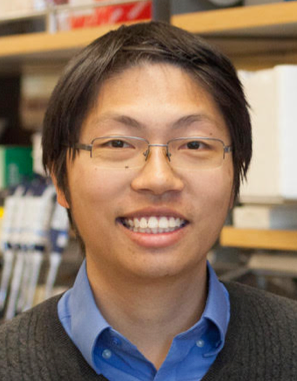
“We’ve shown for the first time that the front of the brain arises from a totally different progenitor cell than the back of the brain,” said Stanford University developmental biologist and study co-author Kyle Loh, in a press release. “Our discovery means that we can now grow neurons from the back of the brain, the hindbrain, in a petri dish and study their functions.”
Treatments for degenerative hindbrain diseases such as spinal muscular atrophy and amyotrophic lateral sclerosis (ALS, or Lou Gehrig’s Disease) have struggled due to the inability to grew mammalian hindbrain cells in vitro. This explains why.
By studying embryonic mice and their brains Stanford researchers demonstrated the existence of different progenitor cells using human pluripotent stem cells which, given the proper growth factors, were able to differentiate into hindbrain motor neurons.
“Previous attempts to make hindbrain neurons likely tried to coax forebrain and midbrain progenitors into hindbrain cells, which our study shows is not possible,” said study coauthor Rayyan Jokhai, a graduate student in Loh’s lab, in the press release.
The study notes chickens, zebrafish and early sea creatures acorn worms have the same progenitor cells, while jellyfish have two nervous systems on different sides of their body. They diverged from the human gene line between 600 and 700 million years ago, about 50-150 million years before the aforementioned worms split from our lineage, suggesting the two brain systems became physically connected sometime between.
Hitler's First Blood
German Nazi Party leader Adolf Hitler was in a very delicate position politically when he may have made his first bold transgression. That the people around him quickly rose to his defense and created a cover-up to shield him, doesn’t prove his guilt, but certainly would have emboldened his activity in either case.
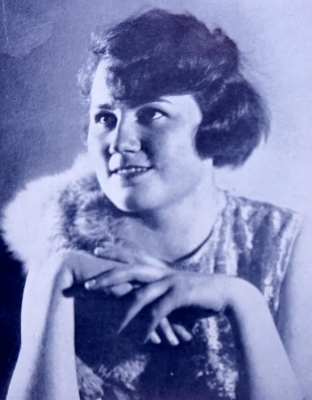
That’s why it feels appropriate to discuss his 23-year old half-niece Geli Raubal, who was found dead in the Munich apartment where they both lived in 1931 from a gunshot wound to the lungs from Hitler’s own Walther pistol.
At the time, Hitler was gathering the German political allies that would make him Chancellor in 1933. He was 41-years old, and apparently involved in an affair with his half-sister’s daughter. The Nazi Party, led by Hitler, had taken 107 seats in the 1930 elections. According to history, Hitler’s servant discovered the body September 19, while Hitler was in Nuremberg for a rally.
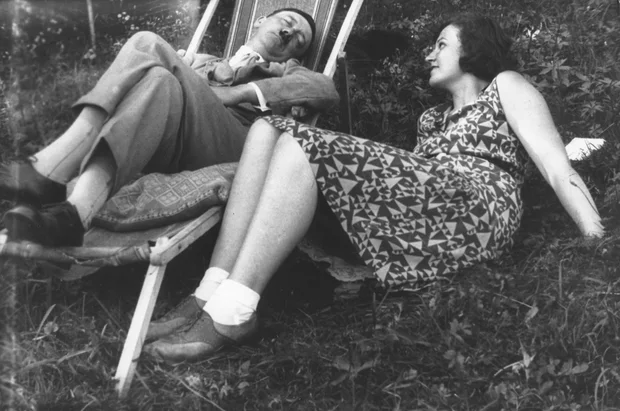
However a report in German outlet Der Spiegel, contradicts the official story, courtesy German historian Harald Sandner, who discovered official death notices on September 18, while Hitler was still in Munich. There were allegations Hitler and his half-niece had been arguing in the days before her death and the corpse had exhibited other injuries such as a broken nose.
In the days following Raubal’s death, a Munich newspaper reported that Nazi officials had met to strategize how to share the news publicly, according to the Telegraph. The relationship has long been a curiosity. Raubel moved to Munich at 19 and into his apartment two years later.
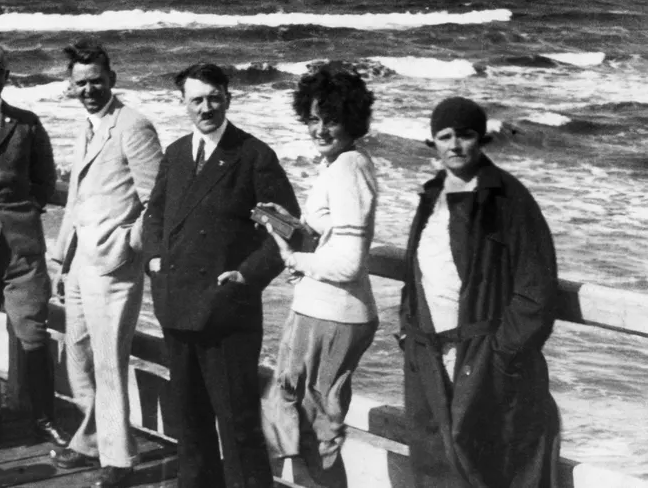
His controlling ways were well-documented almost from the moment she arrived in Munich. A 2017 article in the Guardian referenced a 1939 letter from Hitler’s nephew, William Stuart-Houston, which said “Everyone knew that she and Hitler had long been intimate and that she had been expecting a child – a fact which enraged Hitler.” Biographer Joachim Fest called her “his great love, a tabooed love of Tristan moods and tragic sentimentality.”
Cheap Sturdy Filter
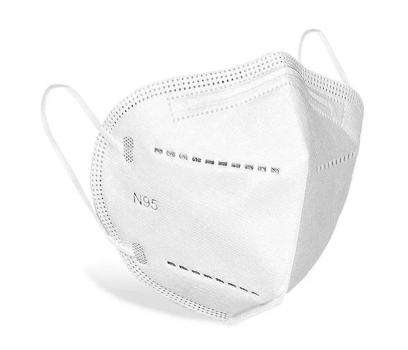
Scientists at Jilin University in Changchun, China have developed an air purifier capable of being cleansed by water and recharged by either sunlight or indoor LED lights, providing an inexpensive, low-maintenance alternative to standard filtration systems. A study , published in the journal Chem, shows the filter maintained 99% maximum filtration efficiency after a month’s use and 95% for the subsequent two months.
Techxplore notes the challenges with present technology:
Most commercial air filters use a high-voltage electrical field called "corona discharge" to give airborne particles static electric charges, which the filters then use to pull the particles from the air. However, these systems require external power sources, limiting their applications. Some alternatives don't require wall plugs, such as triboelectric filters that capture fine dust, pollen and bacteria, but they have their own limitations, including the need for synthetic materials and a charge that degrades over time.
The researchers approach was to develop a light-charged system with a polypropylene membrane coated with a substance that responds to light and heat, generating a continuous surface charge. When is is saturated with particles captured from the air, it can be flushed with water. Light activation then restores its surface electrostatic field. Even low-energy sources such as indoor LEDs or overcast sunlight could generate enough power to charge it.
The device "demonstrates broad applicability in areas such as indoor air protection, dust removal, health and hygiene, and biological apparatus," says study author Jihong Yu, noting that it could be incorporated into face masks similar to N95 masks.
Digestible Battery
It’s difficult to study or monitor the stomach, for a variety of reasons, not the least of which is that anything we put there has to survive a biochemical gauntlet without sickening the patient. Powering such a device is particularly tricky.
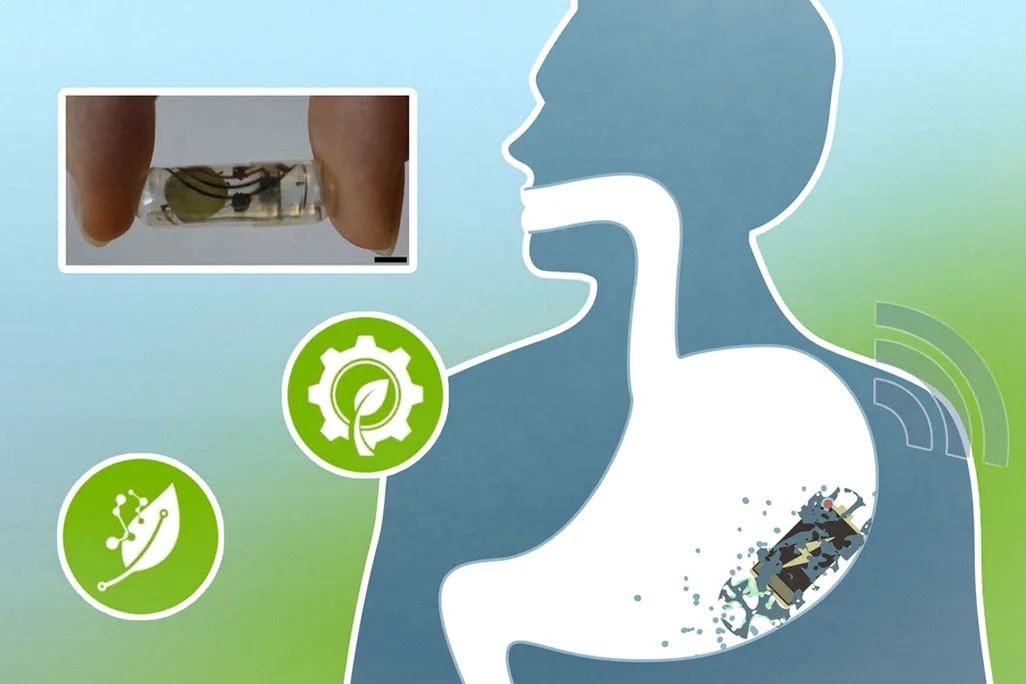
“For many of the systems we’re developing, we need power, and we power the system through different ways,” says study co-author Giovanni Traverso, a mechanical engineer at MIT and gastroenterologist at Brigham and Women’s Hospital, in a statement. “Often, we use batteries, so the question here was: Could we develop a battery that was bioresorbable, and then apply that across a range of application areas?”
Assembling it feels like something as keenly suited to Carmy (The Bear) as someone in a lab coat.
The electrodes are made of metals metals magnesium and molybdenum, safe for consumption in small amounts and actually a vital element for bodily functions. A liquid salt serves as the electrolyte (like lithium in a phone battery) and the cathode is bound with cellulose fibers found in plant cells, i.e. like paper.
Inspiration for the design came from edible rice paper wrappers on certain candies reports Katherine Bourzac for Nature.
So far it has been tested in pigs with two devices, one an RFID tag that transmitted information from the body and a capsule that successful delivered an electrical current to tell the body to make a hunger hormone called ghrelin. Pigs were used because of the similarity of their gastrointestinal tract to humans.
The entire battery is encased in natural waxes to prevent premature degradation in the stomach. “The wax coating is not simply packaging,” Traverso tells Isha Ishtiaq at Live Science. “It is a key design element that controls the functional lifetime.”
Traverso and his team aren’t the only ones pursuing biodegradable batteries. Yin Lan, a materials scientist at Tsinghua University in China, tells Nature that the paper-based battery performs similarly to other digestible ones in development.
“The impressive part” of the new work, she says, “is the convincing integration of a degradable battery into realistic ingestible systems, including multiday gastric operation and large animal demonstrations.”
Genetics and Personality
Long story short, there's less there there than you've been led to believe. If you relied on twin studies you might believe that up to half our personality were determined by our genes. That's pretty clearly too high.
With the advent of gene-sequencing it was possible to more thoroughly explore associations between genes and outcomes, like the Big Five traits, judged to be instrumental to describing personality. Previous genome-wide association studies (GWAS) have put the impact of genes at 5-15%.
The new work has confirmed those low numbers, said study co-author Michel Nivard, a genetic epidemiologist at the University of Bristol in the U.K.
It may be that GWAS do not capture extremely rare variants that might link personality traits in certain families, which means the heritability may be slightly underestimated, Nivard suggested. Additionally, twins are more likely to rate their personalities as similar for reasons unrelated to genetics, so the twin studies may have overestimated the heritability of personality, Nivard noted.
This study employed 46 cohorts who have had their genome sequenced, creating a pool of 600,000 for four of the traits, and a larger 1.1 million for levels of neuroticism, a sort of indicator of its own, ironically enough.
While they explored over 1200 genes linked to the five traits (extraversion, agreeableness, conscientiousness, openness to experience and neuroticism), they found no clear denominators, suggesting a sea of small genetic effects that are likely all but impossible to disentangle for (often strong) environmental factors such as experiences, social status and education. It's a complex interplay.
In the end, it's actually the one thing you sort of can't blame your parents for.
They found that the genetic effects on personality are the same within families as they are among unrelated individuals. "We've basically been able to rule out that there's any straightforward, simple social processes by which your parents directly influence your personality," Nivard said.