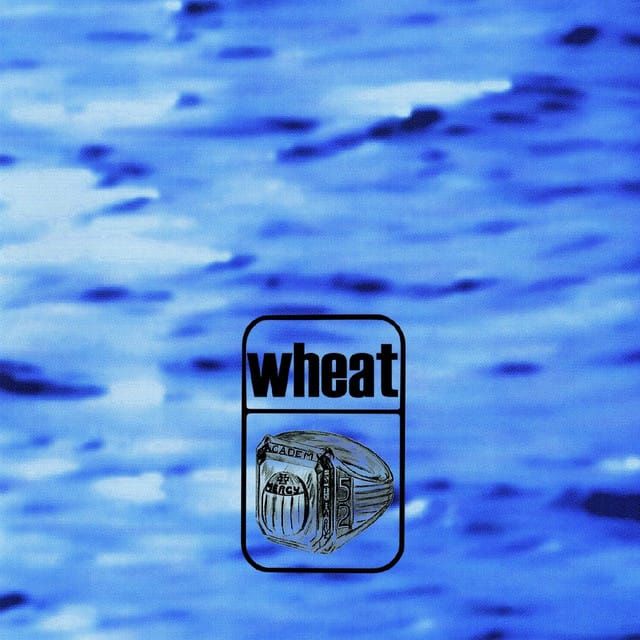
Wheat's Medieros
The 8-song 1997 release by Taunton, MA quartet Wheat
We reviewed this album when it came out thirty years ago for Option, a magazine that would be gone a couple years hence. (Our editor was the terrific Sandy Masuo.) We were pretty struck with it and did one of our first pieces for The Big Takeover with Scott Levesque, who told us an immortal story about the Guess Who we still tell to this day.
(Wheat shared a bill in Boston with them and saw them backstage muffin-topping as they climbed into spandex. Like a cocksure 20-something, Levesque asked, probably regarding the spandex, “What are you guys doing?” and they replied in only the way a lifelong musician can, with utter resignation and humility, “Same thing as you, looking for a record contract.”)
Wheat offered a very spare, art-damaged psych-folk sound before that style had codified. While informed by noise pop/guitar psych (Dream Syndicate, Lush & Galaxie 500; Slumberland ended that year; Swirlies, Drunken Boat were years earlier), it felt equally informed by the burgeoning slacker/songwriter aesthetic of Jason Molinan, Will Oldham, John Darnielle & Bill Callahan. The Weakerthans formed that year.
It certainly wasn’t wholly unique, and yet its synthesis still feels pretty extraordinary today, uniting the folk/Americana, singer/songwriter and distortion-drenched shoegazer and twee rock realms with an album that, much like a Replacements album, close to falling apart, not so much from the playing as the entropic dissipation and emotional trauma underlying the songs.
They were allegedly art school kids and there is this very palpable “project” aspect of collage without it feeling like Beck or pastiche. Instead it was the “project” vibe of living or starting a band, where you have little idea if you’re succeeding or going about this in the right way, and pretty sure you might be fucking up royally. Even the song titles suggest an undercurrent of decay or concern about it, from “Death Car” and “Karmic Episodes” to “Soft Polluted Blacks” and “Working Man’s Manifesto.”
The album is bookended by low key sound collage/experimentation/noise that sets the stage as something off-beat, perhaps to some degree “found,” or thrift-store recovered.
It starts with the smoldering anger of “Death Car,” which appears to be addressed to the father of his paramour to whom he poses a threat – “I'm not the boy he'd like” – and he’s unapologetic, with a threatening chorus: “It's the last docket he'll ever oppose / He'll find it hard I'll trash his yard / Like a mad rocket I'm like a fire / Sent to retire I'll crush his little home.” Like a demon or a leprechaun, Levesque promises to “find his pieces of gold / He'll do what he's told or I'll steal his soul.” The languid pace is nice contrast to the aggression of the lyrics with a nicely executed outro.
“Karmic Episodes” opens with a great spin on that old line about gossip (“My ears are buzzing like a cheap set of speakers / So I guess you’re doing fine”), and while the melody is a bit pedestrian, it has this great break in the middle, that is almost worthy of a song itself. It feels both melancholy and brash, saying something about goodbye, as the chord builds to a resolution, and he says, “I’ve got a ticket, for the last train home today,” and it feels in his mouth like a parole, as he bemoans, “searching for the meaning.” Electronic buzz blows across the ending like a winter Nor’easter, a sort of sonic motif on the album. Guitars swell, and he confesses, “I heard every word you said. I got a one-track ticket.”
Not the biggest fan of “Tubesoft” but the Beatles-esque break/outro is terrific. Medeiros’ songs truly feel like pieces sewn together that could almost exist on their own, like the fragmentary songs of Abbey Road. Also really enjoy how he goes, “When you gonna make up your mind” and it ends with a strum.
Probably my second favorite song, is “Soft Polluted Blacks,” which we always assumed was an allusion/reference to “sfumato,” an art term for the soft gradual transition between colors and lines. It belongs to an entire class of songs we don’t have the energy to catalog but “Jane Says” and “Caroline Says II,” where a sympathetic man notes but can’t/won’t intervene. This idea of perfection or perhaps wholeness – “starting to return / starting to relax” – the black/white metaphor also playing with the moral gray of life, our inability to do much for others.
It’s about dealing with depression, and the way one tries to change their surroundings to escape: “All the lights and smoke / all the mice and men / all her boyfriend’s coke started kicking in.” It drops in this almost flattened-affect manner, emblematic of the album’s underlying vibe of people unable to cope with a society that goes right through them.
I really like “Summer” especially as the centerpiece of the album. Not sure it works outside that context, but the open melody feels like summer after a New England winter – particularly after the downbeat “Soft Polluted Blacks.” It’s an awakening: “You’ve been sleeping all summer long.” But it barely sounds like waking: “Smoking Pot with your train track friends / Close your eyes and let the music carry you / Like some tail gate birthday song.”
There’s a couple minutes of closing guitar wankery. It’s not amazing but it’s not bad and echoes the frivolous self-indulgence of summer, trying to put off deciding to do what maybe needs to be done.
The vibe of “Soft Polluted Blacks” is back for “Girl Singer” about “the kind of girl I like / Girl singer and you can really rock like a boy / And I believe I'm touching you / Especially when I'm fucking you.” Again there’s a great break/outro that really complements the song and in this case doesn’t really resolve satisfactorily at the end.
"Leslie West" is fine. “Working Man’s Manifesto” is pretty good. The harmonies in the middle are great, particularly as they are largely absent from the rest of the album, giving this song a nice unifying aspect in that way.
Medeiros was recorded by Dave Auchenbach, which had somehow eluded my attention all these years. Auchenbach is the guitarist of another potentially UNSUNG band from New England, and a key cog in the burgeoning twee/shoegaze movement, Small Factory. We also reviewed their 1995 compilation, Industrial Evolution, for Pop Narcotic at Option. A very sympathetic choice. Red Red Meat's Brain Deck mixed it.
The band’s last full album was 2009’s more experimental fifth LP White Ink Black Ink, though the band’s tone and approach changed from album to album, a facet they blamed on being easily bored. The success of Medeiros (which sold 30K independently, which was a lot for an indie) and 1999 follow-up Hope and Adams, led to a major label release, which, like its predecessor, was recorded with David Fridmann, and 2003’s Per Second, Per Second, Per Second ... Every Second for Columbia is pretty good. Wheat released Wishing Good Things for the World EP in 2015, which was initially going to be part of a three-part crowdfunded release but fell apart. Co-founding drummer/singer Brendan Harvey died in February of last year.
Everything wheat can be found here.
Here is a collection of B-sides and rarities from the above site: