SewYKnot? Podcast with Author Will Kaufman
American Cultural; Critic living in England, Will Kaufman jumped the pond from New Jersey in the eighies for post-grad and liked it so muchm he didn’t come back. He made fine use of that early education though, when he became a professor on American Lit and an expert on Woody Guthrie.
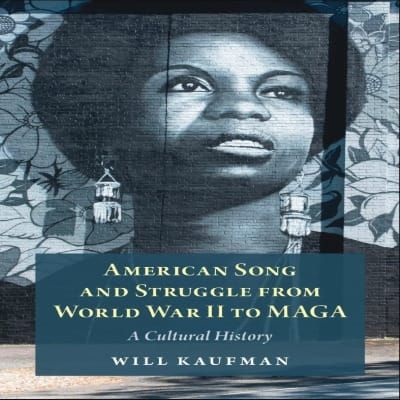
He’s just released his second volume in a series on American songs of protest and struggle, this running from the post-war to the current day. Kaufman’s a sharp, expansive thinker (as well as a guitarist) and the conversation wanders freely around subjects of music, literature and politics.
We discuss how Will became an expert on Woody Guthrie, Woody's aesthetic, the difference between struggle vs. protest songs, and the Mermaid Avenue sessions with Wilco, notably, Jeff Tweedy, and Billy Bragg, We talk a bit about Tom Paxton, Phil Ochs and Pete Seegar, as well as the emergence of bee-bop, Ella Fitzgerald and Sara Vaughn.
We also discuss hip-hop, punk and the Paul Simon/Martin Carthy row over “Scarborough Fair,” and how that illustrates many of the contradictions of the cultural appropriations argument, which at its core is just about acknowledgment in the first place.
We discuss the challenges of describing music no one has ever heard and how one collapses 80 years of modern music history into a single volume. We dig into the challenge of satire and its role as a vehicle of speech and how it dovetails with protest, the question of whether it’s legal to sing your testimony to the court, how protest and satire function to diminish the perceived power of the oppressors and the lessons this might hold for this moment in time.
Transcript
SewYKnotPublishing:hello, this is So Why Not? And I'm your host Chris Parker. I'm here with author-historian Will Kaufman, who moved from New Jersey to England in the '80s and became some kind of emeritus professor on American cultural history. Seems like good work for an American. I've lived here a while. Can I apply? Nod is just as good as a wink to a blind man over the phone.
Anyway, Kaufman got his BA in the '80s, wound up in England for his PhD in American lit, and spent 33 years teaching at the University of Lancashire, where he became, one of the foremost experts on Woody Guthrie, writing three well-regarded books: Woody Guthrie: American Radical in 2011, Woody Guthrie's Modern World Blues, 2017, and Mapping Woody Guthrie in 2019.
He's also published The Comedian as Confidence Man in 1997, Civil War and American Culture, 2006, American Culture in the '70s, 2009, Singing for Peace: Anti-War Songs in American History, co-authored with Richard Cohen. And now the second half of the two-part series of which 2022's American Song and Struggle from Columbus to World War II is the first.
The latest is American Song and Struggle from World War II to MAGA. Thanks, Will, for coming on today. How are you doing?
Will Kaufman:I'm doing fine. Thanks very much, Chris. Thanks for having me
SewYKnotPublishing:Oh, absolutely. So how did you wind up going to England in the early '80s?
Will Kaufman:Oh, golly. I guess, well, when I was an undergraduate ... I went to Montclair s- what was then Montclair State College in New Jersey, my hometown, and they had an exchange program for your junior year, which I took up, and I spent a year in Wales in a small, college in South Wales in a place called Caerleon. And I loved it so much there that after I got back and finished, at Montclair State, I applied for Marshall scholarship which is a british scholarship given I don't know, about 30 Americans maybe a year. It's sort of Britain's gesture of thanks for the Marshall Plan back in the day, and it's pretty competitive, , and I got one.
And originally it was to do Welsh history, but, when I got to the University of Wales in Aberystwyth, I noticed that upstairs, above me there was an American Studies Dept, and I figured "Wow, what an opportunity to study my culture from this distance, from this foreign, perspective, which which I think is really important. And it's really changed the way that I do look at American culture because when you're absorbed in the midst of it. It's almost as though obligation is to is to celebrate it somehow, and what I wanted to do was interrogate American culture, so that distance... a lot of writers have done that when you think of the American expatriot, tradition from, , whether it's Washington or, Mark Twain, Fitzgerald, Gertrude Stein, Henry Miller, all of those who felt that they could get some critical distance by looking back, over their shoulder in a sense. So that's what I did and just so I ended up getting in American literature from the University of Wales, And then that became my first book, The Comedian as Confidence Man.
SewYKnotPublishing:was the interest in- Cause really kind of talked a lot of your writing, obviously, about struggle and protest. I can see where that would lead to Woody Guthrie, but this predates the Guthrie book. So I'm curious, what initially, interested you in this particular, corner of the academic, world?
Will Kaufman:Well, it started out, the reason I wanted to go to a Celtic country, why I wanted to go to, to, Wales, I mean, my interest really was in the kind of music that fed into American country music, 'cause, I grew up playing bluegrass, you know? And, so I was interested in some of the roots there, and everyone hears Ireland and Scotland and everything. But I noticed that I could go to that I believe are important which to my mind was a more unexplored area of the whole Celtic, realm. So that's that's how I up in Wales. how I kicked over into sort of protest music, well, my doctorate was on satire it was on Mark Twain, Lenny Bruce, and Kurt Vonnegut initially, and then after I published it as The Comedian as Confidence Man, I expanded it to consider a lot of other satirists, American satirists. But, , I think that's where the idea of opposition and protest and critique you know really set in first through literature. But I was always a player myself, and I think the Woody Guthrie stuff started because when you're an American abroad during a really rough time, say, the 1980s of, Ronald Reagan, or the 1990s of the Bushes, or at least George, H.W. Bush. then, you know, later on in 2000 with, , george W. Bush. It's a tough time be an American abroad, it really is. And I was looking for some kind of voice that I could broadcast in whatever way I could, a voice of another America, not the belligerent, donald rumsfeld, Dick Cheney- with either you're with us or you're against us, all that kinda crap, you know? So it struck me that I'd been listening to that voice of another america for quite a long time, and that's been Woody Guthrie. So I started putting together these... you know, I was playing Woody songs at folk clubs and things like that and then I got more and more interested in him, and put together these sort of what I called live documentaries, which are, I tell Willie's story -- and rather than push a button on CD player, I play his songs, and in between the songs, a sort of biographical narrative. or critical, , narrative that I would put into it and they really took off, and i ended up taking these live documentaries to British folk clubs and universities and then onto the continent and various clubs and then to the States as well.
SewYKnotPublishing:What a clever idea.
Will Kaufman:Yeah, it was good. And, that it was such a flexible medium for, teaching, you know. I mean, 'cause I felt that what I was doing, these weren't gigs, as such. I mean, they were entertaining, thank God. But, you know, you have to be entertaining if you want to be a decent teacher as well.
SewYKnotPublishing:That's true.
Will Kaufman:I called them live documentaries, and after I did, the first one, which basically was Woody coming out of the Dust Bowl, and becoming Woody Guthrie. So that was called Woody Guthrie: Hard Times and Hard Traveling. and then there was a second one that I did All You Jim Crow Fascists: Woody Guthrie's Freedom Songs, and then that later on became Woody Guthrie, the Long Road to Peekskill, and that was about Woody and race in particular
And then the final one that I did was called Woody Guthrie and Old Man Trump, because I was the fella that discovered Woody's writings in the archives written against his racist landlord Fred Trump And, so I put together a song about, a program about that after donald Trump announced his candidacy for the presidency. And I published my, those songs that I'd found in Woody's notebooks condemning Fred Trump. And then when Donald trump says, he announces his candidacy for the presidency in 2015, and he My,legacy is my father's legacy." And I thought wow, in my computer I have have notes, which are indicative
SewYKnotPublishing:Yep
Will Kaufman:of what Woody Guthrie thought about your father's legacy. So I mean, those notes had been sitting on my computer for like, five years or so. but then I decided-- and because at that when I was doing the research in the archives and I found those songs, it was really nothing more than a curiosity . , "Oh, "oh, isn't that interesting that loudmouthed Apprentice guy that, real estate shuyster isn't that interesting? His dad was Woody Guthrie's landlord in Brooklyn in the 1950s?" But then after Donald Trump announced candidacy for the presidency, and that's when I published my findings, and, it got, picked up and, went viral around the world as Woody Guthrie speaking from beyond the grave,, "be careful of this family. Be careful of these people. Be careful of that legacy of hatred and racism, and corruption, and all that." And so, then, I guested with a fella, Ryan Harvey, who put the fragments that I discovered in the archives. He put them together and, created this song called "Old Man Trump" Which was then recorded by a lot of people, and, he recorded it with Ani Difranco, and Tom Morello so that all came out of the Woody Guthrie scribbling away in my notebook, , finding this stuff, and then s- it's interesting how, how far that traveled Gosh, soon after I published it , people would pick it up like Glenn Hansard the dearly departed, you know, Glen Hansard started
SewYKnotPublishing:Yep
Will Kaufman:singing it in his live performances. I know Lucinda Win- Williams sang some of it in her live performances. Jimmy Fallon started riffing on it on his You know that Woody Guthrie a song fred trump his landlord. It was called, this land is my land, and this land is my land and that land is my land and all this is my land you know and that kind of stuff. So it did, , it did get some legs, and it did, , begin to travel. And so, I was able to make a show. That was my third show, Woody feedback and Old Man Trump, which I guess pretty much got shut down by COVID. And since COVID, , I haven't really picked up too many instruments because i've been so busy writing the Song and Struggle books, that's taken all of my creative energy kind of drooling at the end of the day. I just can't even, you know, I can't even think about doing anything but popping open a bottle of wine, you know?
SewYKnotPublishing:I do love the idea of talking about an i- about these things. Obviously we've all heard Fresh Air, that's, Terry Gross, those types of things, those type of interviews. Often there'll be a little, interstitial part where she'll play some music and then go back to the interview.
I was listening to, , Arthur Brooks talking about happiness and the way that we process and that, and he talks about, having this time. So I love the idea that you give them these nuggets of information, biographical threads that tie the story, the narrative together, and then you give them time to hear the music, but also to kind of ponder the content that you had just given them. So there's this moment for them to synthesize and listen and put this together, and I think that's a really, , a useful way of, disseminating information
Will Kaufman:Yeah, thank you. I do think that it, not only is it giving them, crucial, critical information about the subject, who happens to be Woody Guthrie, but to talk about Woody without hearing the music or without at least you know, seeing the lyrics, I mean that's one of the problems I've got with the song and struggle books is that, you know, they're books. And so you can't hear the music I know I am recording the audio, books for both volumes but I can't sing the songs
SewYKnotPublishing:Yep
Will Kaufman:because, you know, copyright, forget about it. So I can, you know, narrate, within, fair use I can narrate, some of the lyrics. But, I would just encourage people to go listen to the original, recordings if they're available, or performances to sort of get a full sense of what it is that I'm writing about. But with the Woody Guthrie stuff I can play.
It was a good way of getting the word out for a long time and I remember I was playing some place down in, the south of England, Somerset when I began doing the Woody Guthrie show. And there was some guy who came up to me and said, he buttonholed me at the after the show and he said, ", I wanna wanna tell you something. I bloody hated Americans until tonight." You know? Bec- and that's exactly what I was, , hoping for, you know? I wanted the voice of another America to come out... And God knows we need that now. You know, if people are walking around thinking that Donald Trump and Steven Cheung and, and all those monkeys actually represent the voice of America, much as they're claiming to do, then they're being taken for a ride.
, And we need in any way that we can to broadcast that voice of the other America that can live happily and peacefully with the world without trying to blow it to shreds or to rip it off, which is what, is happening at the moment, you know?
SewYKnotPublishing: I wanna get into the, book, but I, have to stop there because it's a beautiful, , moment to segue into, , something I was just thinking about as I, read your stuff and whatnot. I was curious about your thoughts on Man in the Sand
Will Kaufman:oh, Man in the Sand. That was the Billy Bragg thing, wasn't it
SewYKnotPublishing:Yes, and the, kind of insight to, to these two creative people tussling over the Woody,
Will Kaufman:That's right. Yeah, yeah, yeah. Oh, God, I'd forgotten about that, so long since I'd seen it, and really so long since I've been Woody focused. I've kind of broadened out since,
SewYKnotPublishing:Obviously, but it, it also has at its core this idea about the pose versus authenticity, 'cause it was, I don't know how, you know, it was such a well-chosen kind of, uh, subject for a documentary
Will Kaufman:it was great. I loved it, and I loved, , the kind of stuff that, ... and Nora Guthrie, to her great credit has been, at the forefront of wanting to bring out more and more of Woody Guthrie, and as she says, to drag him out of the Dust Bowl. And to, , to show the other aspects of Woody that really were obscured by the pose, and there was a pose. And my second book, Woody Guthrie's Modern World Blues, is precisely about that, about how expansive and how intellectual and how informed and how cosmopolitan and uh, modern he he was. and so I think that's something that comes out in "Man In the Sand," that when Billy Bragg and WIlco got into the archives, and Nora began releasing lyrics for people to record, she was you know she was quite, I think, protective of the lyrics. And so she she chose Billy Bragg and Wilco, because , , well, she chose Billy bragg because she figured-
SewYKnotPublishing:Yeah
Will Kaufman:that he probably was one of the closest people to Woody's kind of, way of thinking.
SewYKnotPublishing:That's a savvy thought
Will Kaufman:yeah, and then I think that he sort of then went on to Wilco. But the other people who she's chosen to record, , Jonathan Brooke, her amazing album , of Woody Guthrie's, , songs called The Works, you know, and other people , who've also done , the recordings, even, you know, Del McCoury
SewYKnotPublishing:Yeah
Will Kaufman:people who have taken Woody's stuff, that really do show, that he was writing about much more than the Dust Bowl. he was writing about much more than protest as well. You know? He was a fully fledged artist, I think, in the way that Dylan is. You know, , ' cause I have gone through the Bob Dylan archives as well as the Woody Guthrie archives. They're both located in Tulsa, Oklahoma. And when you see the expanse of these and Tom Paxton as well I've gone through his, in fact, in fact, I'm writing a book about Paxton now. And, um, going through his papers, going through Woody's papers, going through Dylan's papers, finding out how much more they wrote than what we know about. you know?
SewYKnotPublishing:I just think that the idea of "Made in the Sand," of those people going in there, , gave you a real sense of the breadth. Because you had, Tweety who has his demons and was going at it for a particular reason.
, Honestly, at that particular time, he was kind of running away from roots music, and it was a very uncomfortable thing that J Bennett had kind of thrust upon him, that he felt he couldn't walk away from on some level, I feel. Whereas obviously for Billy Bragg, it was a total act of love and reverence.
And, having these two, what a... I mean, I'm just gonna be brass about it. What a very mercantilist kind of, , how can I commercialize and make this work for my means and career and life? And another person who's like, "How can I broaden this guy, do my little part to amplify as a repeater station of this really incredibly important stuff?"
That not only humanized him by showing, as you say, the breadth of it, but also showed how relevant it continued to remain 30 and 40 and 50 years after he wrote these songs
Will Kaufman:Yeah. When I think back on it, I think it was a very serendipitous, uh, combination because of the tension
SewYKnotPublishing:Yeah
Will Kaufman:You know, because out of that tension between Billy Bragg , and Wilco came some really, , fiery music , and which showed to the extent to which Woody can be taken out of his, initial genre and dropped into others', that was, I think, quite a service that Billy and did and that Nora did. Now, we know that I think one of the first people to record Woody , an unrecorded Woody song, was actually Country Joe McDonald, that when you go to the Woody Guthrie, memorial concerts, which, , were, , performed in New York and, , Hollywood right after his death. And it was an all-star thing, you know. Pete Seeger, Paxton, Dylan, that's the first the first time time Dylan shows up. After his, , motorcycle accident in public. country joe did, uh "Woman at Home," and he rocked it up. I mean, he really rocked it up you know And so you begin to hear you know, year after Woody's death, you begin to see the kind of stuff that ends up culminating in that Billy Bragg and Wilco stuff., and, you know
SewYKnotPublishing:yeah
Will Kaufman:hip-hop people doing Woody and, , Sharon jones and the Dap-Kings doing
SewYKnotPublishing:Yeah.
Will Kaufman:Land is Your Land, you know, things like that. , So I do like going back to, Man in the Sand and,, the Mermaid Avenue projects. I never got a sense that Wilco were really at home with Woody Guthrie.
SewYKnotPublishing:Yeah.
Will Kaufman:But that I think again that tension between two of them and boy you could see the tension, in the documentary as well. I mean,
SewYKnotPublishing:Yeah.
Will Kaufman:The tension between the two of, between those two, camps. You could see that, but often out of tension like that, some really good that stuff emerges and-
SewYKnotPublishing:Absolutely
Will Kaufman:And I think the Mermaid Avenue Project , is one example of that, you know?
SewYKnotPublishing:And I think the subtextually people aren't thinking about it, but Tweedy had just come out of a situation where he had another large character that he had to compete and fight with. And I, feel in the hindsight of it that you can feel with Bragg, him still acting out some of his unresolved animus with Jay Farrar
Will Kaufman:I think that's possible, sure. I mean, I don't know enough about the history of the interaction with these two people beyond, with these
SewYKnotPublishing:Right
Will Kaufman:Groups beyond, um, Mermaid Avenue itself.
SewYKnotPublishing:But that's fine. It's just an interesting subtext because there is this aspect that - Uncle Tupelo was built out of this tension between Tweedy and Farrar. And one of the things that Farrar filled in that duality was he was the traditionalist. So then Tweedy ends up caught in another situation where he's working with this traditionalist that he's only, glancingly authentic to or whatever.
But, this is always, the nature of the, business. And that's the interesting thing. In the beginning of the book, you talk about, in the new book, the struggle. A- and it's all about the struggle. And it's interesting you said how to sing, what to sing, where to sing.
And there is this aspect that it's not just the place of the song, it's the surroundings and the environment. And that connects to me the idea that songs are somewhat, as a work of art, ephemeral. They work in a way that narrative can't. Because they're really more of an expression of a, of an emotion than a mythic tale , with a conclusion.
They're a slice of a moment, an emotion that is time locked. and I think that that's somewhat of why songs are great at capturing the smell or the sense or the spirit of an era.
Will Kaufman:Yeah, absolutely. And we grab for them however we can. I don't know whether you've read the first volume, American Song and Struggle from Columbus to World War II, because how, you know, how do you write about the music of the conquest, the music of Aztecs- the
SewYKnotPublishing:Yeah
Will Kaufman:Responding to the, the Spanish conquest and, the prospect of being wiped out, which is what happened, you know? , How do you write about about that. You can't recover the music. You don't don't know what it sounded like. Yet thought that, you know, those, whatever little little scraps are left- you know,
SewYKnotPublishing:Yeah
Will Kaufman:Music that we read about, , it's interesting, there's a really great book call- uh, by Mark Smith and it was hugely influential on me and it was called listening to 19th
Century America, and that that was the first time that I got a hint of that it is possible to at least imagine listening to something that you can't hear
SewYKnotPublishing:Yeah
Will Kaufman:So what you need then is very good powers of description very good powers of imagination obviously but also whatever little scraps of evidence you can find so that before the age of recording you can still say something about the music that appeared before the age of recording.
SewYKnotPublishing:But this also goes back, back to an idea that as a vehicle for an expression of a, thought that there's no chance you're going to quickly say or convey Marx, a Marxist critique of, of capitalism on the street with people. But you can get everybody to sing a song of protest. You can rally a great bunch of people to express this emotion through song, so that it feels like songs of protest are a peculiar piece of agitprop on some level that, short-circuits the, difficulty of conveying what, David Foster Wallace would call, "This is water." You know,
Will Kaufman:Yeah
SewYKnotPublishing:that kind of idea , in a pithy kind of way
Will Kaufman:Yeah, and that's why I think I also made the distinction in both books between protest music and songs of struggle. And I've always, had problems with the concept of protest music as that what I'm writing about. Protest songs are contained within what I'm writing about, but I think I'm writing about something bigger than protest music. I think struggle, opens up the discussion and opens up the container, to much much broader, dimension than, what protest allows you to do. So yeah, some of the songs, uh, many of the songs that people will encounter in both these volumes are protest songs, but not all of them are protest songs, I don't think. I think struggle is wider than protest.
Protest is a part of struggle, not all struggle is a part of protest, if,
SewYKnotPublishing:yep.
Will Kaufman:you know what I mean.
SewYKnotPublishing:Absolutely
Will Kaufman:That's why I chose those paradigms or whatever you wanna call it. And that's something that I do think that Woody Guthrie also was aware of. I mentioned in the first book that, , he and his producer at Folkways Records Moses Asch , they wanted to write, to compile an album of Woody's that wasn't about protest, it was about struggle. And in fact- posthumously that album came out, called struggle, uh, Woody Guthrie's Struggle. I think it was posthumous. , But, , the the idea that protest was too small Woody, you know?
SewYKnotPublishing:Yeah
Will Kaufman:Protesting, protest is important. Protest songs are important. But they, uh, I mean, like Tom Paxton calls them short shelf-life songs.
SewYKnotPublishing:Yeah
Will Kaufman:and, maybe there is something that, you know, they are generally targeted at a particular situation, , Dylan called them finger-pointing songs, and I think that's probably a bit too narrow as to say what a protest music, , what a protest song is. And protest songs. I think do very good work beyond the moment in which they are written and beyond the uh subject in which they are initially directed at because you can extrapolate from protest songs and say, "Wow, they were protesting about this particular thing in 1915 But hey, the energy that went into that protest is something that I can pick up on in order to protest against this in 2026," you know?
SewYKnotPublishing:Music travels. You know, I was very struck by the fact that Suzanne Vega was deeply impacted by Lou Reed's "Carolyn Says," the second version. And you know the part about "You could hit me, but I'm never gonna love you." The idea that that song is , , that's a protest song, and it made her get up and make music essentially.
And then she wrote her own protest song, "Luka," you know, whi- which
Will Kaufman:Luka, absolutely, about child, brutality, isn't it? Yeah
SewYKnotPublishing:Yeah, and it actually, you know, I, since we're here we might as well s- mention it. I've always thought that the fact that her song and the Natalie Merchant song happened so close upon each other were a part of that kind of rapid and kind of broad change in the way that we approached outside visual child abuse
Will Kaufman:Yeah, absolutely. And that does happen. I think there is often a snowballing of concerns, and the musicians. the songwriters are often the first ones to pick up on it, you know, one step behind the journalists. I think that certainly was the case in the civil rights movement. That certainly was the case with the anti-Vietnam War movement, and it's certainly the case with, the environmental movement. You know, when you think about how quickly no nukes came together, you know. So yeah, there,
SewYKnotPublishing:Live Aid you mentioned too, the Live Aid and the Farm Aid all kind of out of a similar impulse and out of Dylan.
Will Kaufman:Yeah, exactly, out of Dylan's mistake and that ill judgment of his, which, is not the first time, you know. And Farm Aid's still going on now. I mean, how many millions have they raised? And, , as John Mellencamp said, you know, when someone asked him, "You guys still doing that Farm Aid and he said, "You still eating?" You know.
SewYKnotPublishing:I haven't heard that. That's great
Will Kaufman:Yeah, that's what he said when someone said, "You know, Farm Aid, that's, you know, isn't that history?" Said, "If you're still eating, Farm Aid is working," . And I think the same thing and the way that, , even one can do it when you think of, I do write a bit about Sun City. and you know the Steven
SewYKnotPublishing:Oh, yeah
Will Kaufman:Van Zandt, campaign, which I sort of, obviously I'm going to put, I'm going to discuss it up against, , Graceland because it's, , roughly because they do talk to one another. And I know that my friend Ashley Cahn, has just published a wonderful book about Graceland, the his- it's really the, cultural history of what that, of what that project was. I wish it had come out before I wrote my
SewYKnotPublishing:Yeah
Will Kaufman:own, song and struggle book but, I think we can pick up enough from what's out there in the, primary sources anyway.
SewYKnotPublishing:That's a, that's a sticky wicket there.
Will Kaufman:Yeah, no kidding. It's a sticky wicket there, and so is the, actually so is the Sun City thing when you think about how many people, really just ignored that boycott that Van Zandt and many of the, South African activists were calling for. you know, - I dwell a little bit on Linda Ronstadt and her rationale for, not agreeing to the boycott. and I think that that is, you know, it's rationale it's a rationalization. And I have a hard time doing that because I love I Linda Ronstadt as a singer, as a performer. But, , the way that she dug her heels in, , when South Africans are pleading for people not to come and play in South Africa, I thought that was a bit of a stain on her legacy, you know?
SewYKnotPublishing:a little bit uh like the Arab thing, with Saudi Arabia and their behavior in the uh comedy shows and the Riyadh thing and then you know you have these kind of similar repercussions about the golf tour where they tried to kind of essentially create / takeover was that like a hostile takeover of golf on some level I don't know. It failed, but
Will Kaufman:Yeah. , I'm not sure, you know. I think a lot of, , musicians would say, "Why have you got me arguing about state power?"
SewYKnotPublishing:Yeah
Will Kaufman:Why have you got me ... That's not what I deal with," you know? And, well, unfortunately state power is something that we all have to live with and, engage with in some way. By, by rising above it and , not engaging with it, I don't think you're necessarily, projecting yourself as pure as,
SewYKnotPublishing:Yeah
Will Kaufman:as pure as you think you are, you know? And so I've always been happiest with those those writers who do it all, And again I think Woody is like that. I think Tom Paxton is like that. you know Phil Oakes was actually like that you know
SewYKnotPublishing:Yeah.\
Will Kaufman:He knew when it was time to get down and, wrestle in the mud in the, civil rights struggle in the early 1960s. And, you know, Dylan did for a bit until he found out that it wasn't useful to him anymore, and, um,
SewYKnotPublishing:like how you put that.
I think that the women, the country women at that time, right about where, where we are there, you know, like Tammy Wynette and Loretta Lynn, they had their own kind of protest music that started around then
Will Kaufman:Sure. Yeah. The whole country music genre, , vis-a-vis, , struggle and protest is a really fascinating one. , Because country music, , really can project such mixed signals, and its history is one of such mixed signals, you know? It's inherently conservative yet it's also radical. And it comes from, you know, labor's struggle, but also, comes from patriotism,
SewYKnotPublishing:Yep
Will Kaufman:of, in the case of Loretta lynn, the... Yeah, jingoism, all of that. So the fact that you can have someone like Gene Autry, record one of his earliest hits is The Death of Mother Jones, you know, back in the '30s, he calls himself the New Deal cowboy, yet he was a Republican all his life, those kind of mixed signals. The, kind of mixed signals that Johnny Cash was able to really wrestle with, and his refusal to sing,, Welfare Cadillac for nixon at the White House and instead singing "What is Truth" into his face. I think you know, that is a magnificent example because of how wrong nixon got it in, how, how, what he thought country music represented
SewYKnotPublishing:Okie from Muskogee
Will Kaufman:Exactly. Okie from Muskogee. Yeah. I mean, shoot. Arlo Guthrie began singing that almost immediately, you know? uh, it was great for parody. And Waylon Jennings, of course, again, projected his own mixed signals
SewYKnotPublishing:Yeah
Will Kaufman:And became more and more, I think vocal in his opposition to American state power. The older he got.
SewYKnotPublishing:Yep.
Will Kaufman:you know, his defense of the Dixie Chicks, , his contempt for,
SewYKnotPublishing:I like to think that Willie and Billy Joe had an influence on him.
Will Kaufman:I think so, yeah. Probably did. You know, "We don't smoke marijuana in Muskogee," but, we sure but we sure do in Nashville. Always have done, you know?
I think a lot of people don't really see the potential for self-parody and self-mocking in Okie from Muskogee, you know
SewYKnotPublishing:Oh, no, absolutely. And obviously, but I think it's one of those songs like, honestly the Fred Eaglesmith song, , "Time to Get a Gun," - where it, really kind of cuts across that line. You can't really fully tell what the, idea is behind the person who says it, which is intentional. It's to, to raise that ambivalence so you understand the salience of these issues on both sides
Will Kaufman:Yeah. And you don't always have to be that, , inscrutable. There's a time and a place for everything. You know, it's like Phil Ochs said, "I'm gonna say it now." And, a lot of his songs , and Paxton's I think other, other, , if you wanna call it , when they're wearing their protest songwriter hat,
SewYKnotPublishing:Finger-pointing hat.
Will Kaufman:Yeah, yeah. , They can say it straight, but they don't always have to, you know? Yeah. I and I think that's where satire comes in, you know?? And sometimes satire misses its mark. And, you trust your audience you trust your listener to get it, but- sometimes don't get it you know? I think one of the greatest examples heard of that I don't know if you know when we when we were in college, we all read, jonathan Swift's "A Modest Proposal," right?
Which of course was, he was the Dean of St. Patrick's Cathedral in, Dublin in 1700s. And, you know, there were starving children dying in the the streets of Dublin. And, he was, mortified by it, and he didn't know how to get people's attention So he wrote a little modest proposal, "Hey, here's what we can do. We can gather up all these children and fatten them up and then sell them to cannibals as, little sort of dainty, you know, sweet meats and things like that. And we make some money and we , we clean up the streets, and we, and we solve the issue of poverty. We just get rid of them all," right? Now, that was satire, right?
SewYKnotPublishing:Yep.
Will Kaufman:The Nazis missed the satire. And so what they did is decide, "Hey, you know that Jonathan Swift..." Now, I'm not saying they actually looked at Jonathan Swift. But , the kind of insane proposals he was making to make a point, they actually said, "Yes, we can wipe out European Jewry on an industrial scale. We can do it. We're scientists. We have the technology. We can do it. We can rid Europe of the Jews,"
SewYKnotPublishing:It will, and the fact that this, what would be what seemed like for a long time satire, and the same thing now, became reality was an enormous blow to the artists at that time. You look at the abstract expressionists, they could no longer do representationalism anymore because, you know, , all of their ideas of how human beings could be were blown away by how human beings actually were.
- And it, it was interesting because you go into that, you talked about, I thought it was fascinating. I was not aware that jazz and the whole P- Pete Seeger thing, you had that great quote about Pete Seeger being told that, , his songs didn't speak to people, where, a- and that jazz did, which was literally music without words.
Will Kaufman:Exactly. Although I think
SewYKnotPublishing:Though, though it came back, obviously, Sarah Vaughan and the bebop, and I thought that was a really fascinating thing because after the war, it's almost like, you know, the expressionists could not express themselves, and, the jazz musicians had to add words. You know what I'm saying? Something had to change on some level. It was so dramatic
Will Kaufman:It was, and then what happens, of course, with bebop, that's one of the most interesting things that, that I found in my research that I wanted to put into the book was the impact of bebop on singing, on vocal jazz. You know, because the singers now had this higher performative benchmark to match, and that's when you have Sarah Vaughan , and when you have Ella Fitzgerald, and
SewYKnotPublishing:yeah,
Will Kaufman:and you know, Lambert, Hendricks, and Basvone. all of them coming out and, doing that really matching the, the bebop, , improvisers note for note in singing. And that, was a huge leap from what jazz singers had-
SewYKnotPublishing:Yeah
Will Kaufman:been doing, you know? Um, now I'm not sure where, where The more I listen to jazz stations the more now I find that they're kinda slipping back into Uh-
s-
SewYKnotPublishing:Yeah
Will Kaufman:s- stuff that we can understand and it's not as fast as, you know, Lambert, Hendricks, and Ross were doing it,
SewYKnotPublishing:You also told this great story that I was also unaware of about how BMI was this vehicle for this great influx of roots music. I had no idea that this had a tremendous impact on music, and on some level I guess you could say led dramatically to Wolfman Jack , and the whole kind of next subsequent roots revival
Will Kaufman:Yeah. So here we have a labor dispute between ASCAP and, the, , recording companies, and the radio stations, , shutting down a whole neighborhood of music, a whole type of music, popular music effectively, and then opening the door for new upstart, , union, BMI, to come in and start scavenging old catalogs, for all this different kinds of roots music that people had not really known about. that blowing open that , treasure chest of American, , roots music at least, comes down to us because , the stranglehold , on music broadcasting and recording is broken through labor strikes. I think that is a real fascinating, , example of how culture can come out of a particular moment of struggle and be changed forever, you know?
SewYKnotPublishing:Well, plus the fact that these were an opportunity to, what all of art is on some level, go and scavenge the nuggets to steal, , the idea, , o- of another era. , And then take those,, copyrights, that opportunity to make money off of old music, which is, you know, obviously all music is.
Will Kaufman:Sure. Yeah, yeah. And if that's the motivation, the making the money off of the old music, I guess, yeah, pay the players, pay the piper his due, , and the singers and stuff like that. But then you have that thing that, , Izzy Young noticed during the, the great folk scare you know, we're gonna see so many people copywriting traditional , arrangements of traditional songs that, there's gonna be this huge exploitative, uh, gold rush going on and that's when folk music is going to become, , a real sort of, well, like I say, , gold rush.
SewYKnotPublishing:Yeah
Will Kaufman:And that's a shame because when you think of uh golly, you think of how John Lomax treated Lead Belly
SewYKnotPublishing:yeah
Will Kaufman:And how Lead Belly, so many of his songs,, had to be, , down as co-authored. The same thing with people working with Elvis, you know, Otis Blackwell and so many others, who were, sort of forced into giving at least , co-writing credit to Elvis, what money does to music is something that, wow, I don't know anyone's written a book on that. But what money does to musical expression is, I think it's obviously it's done more harm than good and the most
SewYKnotPublishing:That actually leads me right into what I wanted, one of the things. I've written a book, that's still in edits. But it's about how the, '70s, '80s, and '90s roots punk laid the foundations for Americana. And part of one of the subtextual or undercurrents about it is about how they , out of experiences with the labels, realized that they had to create their own DIY situation, their own underground, their own music labels, their own music underground. , And to some level, they have succeeded. And what was really interesting reading the book is this was a spiritual, I didn't realize, a spiritual forefather in the People's Artists Incorporated
Will Kaufman:Yeah. Yeah, it was. , , People's Songs and People's Artists wanted to, provide an outlet for DIY song making , and song of liberation you can make as much music on your front porch as you want but if you can't get it out there
SewYKnotPublishing:Yep
Will Kaufman:, Then that's a big hurdle. And that's what People's Artists and People's songs were devoted to. Broadside magazine was devoted to that as well. And thanks to Broadside, you know, Sis Cunningham and Gordon Friesen, we we have those earlier songs of Bob Dylan, and Paxton phil Ochs,
SewYKnotPublishing:Yeah
Will Kaufman:Janis janis Ian, Just so, so many Len Chandler. So, and that was done on a shoestring, you know? Sis and Gordon Friesen were sitting there broke. They're sitting up in their apartment in New York City churning out on a hand-cranked mimeograph machine one of the most important music magazines ever to be published, and one of the most influential ever to be published. When you think of, Blowin' in the Wind makes its first appearance on the cover of Broadside Magazine, you know? So,
SewYKnotPublishing:can see though how this relates though too, because it's the idea that, , when it becomes about the commerce, , something gets lost. And that's why artists need to own their own, masters. They need to control how the music is disseminated. It's this important, aspect of the music because, , the role of these other people is basically exploitive.
The people who are going to get you to all of these other people are usually, history shows. I mean, if you're not dealing with, , Sun Records, they're usually exploitive
Will Kaufman:Yeah. Yeah, and it's not only the managers, and it's not only the A&R people, and it's not only the publishers as well. I mean, that was one of the great arguments. There was a bit of a conflict for some time, wasn't there, if I recall, between Paul Simon and the English guitarist Martin Carthy, because carthy had recorded, and he had found a resurrected Scarborough Fair , early, early, in the 1960s, and he would it at folk clubs and, paul Simon came to England and toured the folk clubs and picked up " Scarborough Fair," then went back and recorded "Scarborough Fair" with the canticle that they'd written and copyrighted it. , And Martin Cathy said, whoa, whoa, whoa, whoa, hold on, .. what are you doing copyrighting a traditional song?"
SewYKnotPublishing:Yeah.
Will Kaufman:And, and, you and, you know, it's not about my version you know, uh, because when, you listen to the Martin Carthy version which came well before Paul Simon's version You can see uh , simon even sort of riffing off of, guitar playing so it's not only the lyrics to a traditional song, it was a style that he picked up on
SewYKnotPublishing:Yep.
Will Kaufman:But that's not what Martin Carthy was arguing about. martin Carthy was was arguing against keeping the music in the public domain.
SewYKnotPublishing:Got it.
Will Kaufman:You know, and, I think it was amicably solved, and I that they , uh, appeared on stage together afterwards, after this whole thing blew over. But the temptation to copyright a song that you did not seems to be something that has, that has- uh,
SewYKnotPublishing:Graceland..
Will Kaufman:Yeah. exactly yeah. So, , that's one of the downsides, I think, of the kind of music that we're, or the kind of studies they were doing, you know we're going to find some very, uh, dispiriting stuff. as well as stuff to celebrate, you know
SewYKnotPublishing:well and it goes back again even to the man in the sand, in that there's both of these impulses that are gonna come out of music, and unfortunately they're symbiotic.
Somebody's gotta be the person who's gonna be the entrepreneur, , or the impresario who's gonna get this out there. Somebody's gotta be the Elvis. And as those guys said, , Elvis made them a lot of money. So if that's the cost of doing business, , I guess that's the cost of doing business
Will Kaufman:I guess if it's the music business. If you're gonna talk about music as a business, then I think you're already boxing yourself into a, I mean, it's reality. It is the reality. Of course, it's a business. But if you are going to see music as a business, you're gonna be a pretty boring figure in the end. And I can't stand listening to musicians, you know, never meet your heroes. I'm not going to mention who it is that I'm talking about, but I finally met a hero of mine, and all he could talk about was the business, was you know, , the financial, , , troubles
SewYKnotPublishing:Yeah
Will Kaufman:and the battles, the battles that he had. And it just, , my heart was sinking.
I said, "This is it? I mean, you're not gonna talk about guitar playing?" "No, I'm talking about the business." You know? , It is a shame. , It really is a shame.
SewYKnotPublishing:Well, it will, obviously the business will wear y- will wear you down. And I think that one of the things that I was gonna ask you about, , I think two things I was gonna try and fold into each other. One, , the challenge of compressing , so much into, such a small space, which I've obviously had to experience too. I just did from the '80s to the 2000s, 20 years, you know? Like, and that was impossible. And, somebody's cutting 60,000 words, and it ain't me.
Will Kaufman:Yeah. Oh, this was really difficult. Um, yeah,
SewYKnotPublishing:, The other thing is how important the history is because these webs and fault lines lead to places that essentially circle back around
Will Kaufman:Yeah. Yeah, I think so. And then there's, in the first case, there's the whole mission of wanting to leave an accessible history for people after we're gone, and the stuff that I've written about, , I think is, is crucial in an e- and it has to come out in an era when there are concerted efforts to erase all of this history, you know? , But it would but it would still be valued even if MAGA weren't, hell-bent on erasing this, all of this history of struggle , and what came out of it, out of these struggles. But you're getting into the the physical act of publication and, this is something that I really found. Not only did I have to chop a a lot of words in order to get this thing published, there was also a guillotine that was, forced on me when to I had to stop writing. , And this in the copyediting stage, cause I was, you know, the last chapter before while, the book was still in the copyediting stage, two important things happened. Well, three important things. Four important things happened. one was Bruce Springsteen's, , came out with Streets of Minneapolis The second was everything that they found out about Cesar Chavez and
SewYKnotPublishing:Yes
Will Kaufman:which, you know, because he runs, in many of the chapters you'll see in the book, he's a hero in the Chicano labor movement, and many songs are written about him. And then all this shit comes out, right? , There's the arrival of Jesse Welles and how important he is
SewYKnotPublishing:Yeah.
Will Kaufman:as a, , sort of, torch bearer, torch carrier of Woody Guthrie in the age of Trump. And what else? The Iranian War as well. You know? Now I asked my editors whether you know, in the copy-editing stage, can I add a sentence, that will indicate to people that I'm aware of what they found out about Cesar Chavez? They let me put the, the, "All right, we'll let you pull Bruce Springsteen , but don't ask us to put anything more in there." You know, don't write to us with any more of these questions." So I thought you know , "Well, my God, you have a chance to do it. It's the copy editing stage. It's not set in, type yet. we can do it with a sentence." "Don't ask again." So, okay, so I'm off their Christmas card list, I'm sure now. , And that's why when, , I'm recording the audiobooks, and because I have the audio rights, I'm using the audiobook , as an opportunity to include that material that I could not include in the print version because they shut me down, you know? because I think it's important to let people know what was revealed about Cesar Chavez, I think it's important for people to know that, , Jesse Wells is out singing these songs, I mean thank you letting me quote Springsteen, but I do believe you could have, you could have cut me a little more slack than you did and I don't care if they hear it. they probably won't anyway,
SewYKnotPublishing:I think that there's also, in underlying any time the storytelling instinct is about the idea that there are these important moments we must not forget, that we must, we must try to, to weave them together into stories and whatnot. And you actually take a little time to talk a little bit about Straight Outta Compton, and I just wanted to stop because I was living in Florida, in Tallahassee, and I lived next to these white wigger kids who were, you know, they were from Florida. They were basically racist. They were just basically raised racist. But they loved this album, and they would play it all the time. And it was crazy how this album reached people and reached such a broad cross-section without ever being on the radio. Purely a word-of-mouth phenomena, and how huge it was at the time. And you allude to it and talk about it a little bit in the book
Will Kaufman:Yeah, yeah. And, and then also the way that it is picked up by , Eminem taking that, voice and applying it to, you know, with his hand on his heart and, not trying to... None of this white Negro stuff, that Norman Mailer wrote about. This is me using hip hop as an expression of, white of white poverty and alienation and, things things like that. But at the but at the same time, acknowledging exactly what he's doing, and that he is appropriating from, , that black arena and black people-
SewYKnotPublishing:Which was what folk music originally was when it was taken from the Scots and from the Irish, right?
Will Kaufman:Yeah, yeah and, you know, where do you stop it? I remember the argument that, , Paul Simon, , flung back in the faces of people saying that he was appropriating African music. and you know, he said, "Well, then where are we gonna stop? I mean, can we not use the guitar because it came from Spain, and before it came from Spain it came from some sort of, , African gourd instrument or something like that?" , The idea of appropriation, I think I think it's a serious one,
and-
SewYKnotPublishing:I'm glad you said that, because Seidman always seems to be on one side of that.
Will Kaufman:Well, it does, yeah, yeah. And I think it's all about acknowledgement. You know, I think a lot of the angst that comes out of discussions about appropriation is that, man, if you just give credit where it's due, then fine, thanks, we'll let you use it, you know? Something like that. But so often there is not that credit of origins, and that's particularly, I think, the case with, , country music, which is why, the Carolina Chocolate Drops and Rhiannon Giddens , even the stuff that Beyoncé was doing and, , Cowboy Carter, and all of this, , the Black origins of country music or the Black feeding into country music, , is still something which fairly you know, country music is seen as this white, this quintessentially white conservative, genre
SewYKnotPublishing:Let's be clear, that's by design
Will Kaufman:Y- y- yeah,
SewYKnotPublishing:race records, you know, R&B, you know what I mean? Like, these artificial constructs that they created so they could create a white music out of roots music
Will Kaufman:Sure, sure. And, let's do the demographics and let's find out where we can flog these records , for this demographic, and then these records for that demographic, you know?
SewYKnotPublishing:For sure. It is a business
Will Kaufman:And, again, , like, Toni Morrison said that, "Definitions belong to the definers and not to the defined,"
SewYKnotPublishing:Absolutely. Absolutely
Will Kaufman:and so I think that with country music, I, you know, I'm loving what I'm seeing, you know, coming out of country music when seeing these roots of country music being blown wide open. but was it, oh gosh, I remember when, um, uh, was it, was it Ali Farka Touré who was, I, I seem to remember some interview when he's sitting sitting there, uh, smoking his pipe his pipe of the camera, and in front of the camera, and he's being asked about his asked about his biggest influences, and he's getting really thoughtful about it.
And I think the interviewer is imagining he's going to talk about some grioque somewhere you know up in the country somewhere. And he's thinking about it and he says my biggest influence, Hank Williams
You know, there's this guy in Mali who who is, , quintessentially playing African music, but he's playing it on an electric guitar, you know. And, , so that makes the idea of appropriation, I think, a lot more difficult to, to just, fling the charge down of appropriation. But I think it's, one that needs to be given its due so at least you're realizing that it, , it is important enough to at least engage with it. There was a British academic and gosh I wish I could remember his name. I'm gonna be struck down by lightning because I can't remember his name. He was a Black, a black British academic who was exploring , i-i-influence of, Scottish fisherman songs the sort of the rolling songs as they were called on Black American music, Southern Black American music. And I know that there were some commentators, Kwame Kwei-Armah in particular who had said, "I wish I could understand what the brother is doing. I wish I could understand why he is, doing this, why he is emphasizing this white input into Black southern music, this Scottish input into Black Southern music, into Black soul. Why is he doing this?" And I and I was distressed by that because I thought, well, are you saying that if someone comes up with evidence that it should buried because it doesn't serve- because it doesn't so simply fit the narrative?"
SewYKnotPublishing:Right.
Will Kaufman:And, so it's a tricky one because I think he was really serious about, , the damage that it would be doing to the concept the purity of the music. Well, I think I've said somewhere in the book that there is nothing that is more transnational and promiscuous
SewYKnotPublishing:Yeah
Will Kaufman:than music in terms of crossing borders and crossing, racial categories or anything like that, you know?
SewYKnotPublishing:Absolutely. It's why I got into music, because it seemed the one thing that you could write about that crossed boundaries, that crossed socioeconomic lines. People who hear a song, it can talk to them in a way that almost no other kind of, uh, agitprop can
Will Kaufman:Sure, sure. Yeah, and it's, universal. The singing, , everyone's going out to watch The Odyssey, you know? I don't know to what extent people realize that that sucker was originally sung,
SewYKnotPublishing:much to my dismay, musicals remain massively popular.
Will Kaufman:Mm-hmm. Absolutely. And that's another thing that, , I've got all the time in the world for musicals, you know, Broadway musicals,, and I write about them a lot in the book, and it's not just 'cause I'm married to a Broadway veteran, Judy Blazer, if, you've heard of her. But, also because I believe that musicals are a wonderful vehicle for what we were talking about earlier, you know, doing the shows Woody Guthrie And,
SewYKnotPublishing:Yeah
Will Kaufman:having having a story but also having a song, and that's what music i- oh, shoot, that's what opera is,
SewYKnotPublishing:Yes
Will Kaufman:even Donald Trump is an operatic character, you know?
SewYKnotPublishing:And on some level, that's the answer to the, problem. There's a, there's a famous talk about, , how narrative c- comes in basically two varieties. It's either standing still or moving, and when it's moving, it's episodic. And so like songs are by their nature episodic. But you string together a bunch of songs and suddenly you have an arc, a story, connected stories, a milieu, a world. And that's what some of these, these endeavors do. And if you take it in the context of things like country music or these larger things, music of a particular era, it then starts to create the water that was around when the fish were swimming
Will Kaufman:Sure, sure. And it's, when someone comes up to you and says, "Oh, I don't like musicals because it's not realistic," because people don't spend all their time talking and then suddenly burst into song, well you know, how realistic , is most art? even representational art, how realistic is it?
How realistic is a still life? How realistic is a landscape
SewYKnotPublishing:absolutely
Will Kaufman:You know? So I ha- I feel sorry, sorry excuse me, I do feel quite sorry for people who can't set aside, a necessity to see song in its own little, , arena that shouldn't come into the the world of serious, , discourse, if you know what I mean, for instance, that happened didn't it with the Trial of the Chicago Eight
SewYKnotPublishing:Yeah
Will Kaufman:Which I write about in the book. The fact that, when, , Country Joe McDonald and Judy collins try to sing for the judge, they get slapped down Judy Collins gets , actually has her mouth covered by a court official. , Who literally stops her breath and shuts her up from singing because singing should not happen in a court of law. Pete Seeger found the same thing when, , he offered to sing when he was being on trial for, , contempt of Congress for not naming names, , for choosing, not choosing to fifth amendment, but taking the first amendment freedom of song, you know? For some reason you can't sing in a court of law? I'd love to even explore that dimension of, legal history about where around the world people have tried to sing in court rooms and either succeeded or were shot down.
SewYKnotPublishing:That's actually would make , short feature, something like in The Atlantic or the Harpers or something like that. I think that's an interesting idea. I wanted , to end with, since you are a person well-versed in this particular subject, what you thought, where we are with satire , at this particular point.
Because there was a period here, a- as the millennium happened, , where it seemed like we talked about the death of satire, , the death of, sarcasm or whatever. , Things have become too real. and you mentioned Jesse Wells a- and, uh, and I'm thinking Bo Burnham.
And I do think that there is an aspect, where maybe it did go through a quiescent moment where it was down, but maybe it is coming back. And since you're somebody who's very tuned into satire, I'm a huge fan of satire. I was a- actually just listening to The Delgados' All You, All You Need Is Hate, , before.
So I'm curious what your take and, and a way, great way to go is , what your feeling is about where we are with satire, at this particular moment
Will Kaufman:I think we are actually where we always have been with satire, and that gets down to the question of whether satire, , actually oils the wheels , of oppression rather than slows them down. And , the jury is still out on that. ... When you think of , all those political cartoons that Herb Block, you know, Herb Block used to do, really savagely satirizing newspapers, satirizing, you know, Nixon and Ehrlichman and all that during Watergate.. And, , he was so dispirited when he found out, Erlichman and Haldeman came to his door and asked to buy the originals of the caricatures that he did of them, not because they wanted to burn them, but because they wanted to frame them and display them proudly, , over their mantel pieces.
SewYKnotPublishing:Yeah
Will Kaufman:So Herb Block was saying, "For me, that was the end of satire." I give people like Randy Rainbow and, , before him, Tom Lehrer. I give them, their due as well, and Tom Lehrer did, you know, have, some real problems with satires like, "I'm being asked, to say something funny about lava," you know? "Which is burning us up. It's kinda getting harder and harder and harder to be funny about it." I think the satirists need to keep going. They absolutely need to keep going when they are silent, Then I think that's the end, really. , It's the end of human spirit even you know?
SewYKnotPublishing:Yeah.
Will Kaufman:But you know, if it's, know, w- we think about, silencing the canary, the human voice and all that, that would that would be bad enough you know but satire, which is what happens in a court of law. You do not sing in a court of law according to, some judges. But man, but if satire is defeated by those, who are targets, then I think, we're in a really, really bad way then
SewYKnotPublishing:I think it goes back to that like like if you can't laugh all you've got left are tears
Will Kaufman:Well, there is that too, isn't there? Yeah. Yeah. I mean, , that whole thing about black humor, you know, we can't do we can't do anything else, so we may as well laugh about it. Well, if laughter's taking away, then all we can do is cry about it, and that's what the fuckers want in the first place, isn't it?
SewYKnotPublishing:Yes
Will Kaufman:You know, the schoolyard bullies who, , pull your hair and twist your nipple and push you down and give you a wedgie, you know, Donald Trump and,
SewYKnotPublishing:Yes
Will Kaufman:all those people, that's what they wanna do. They want to make you cry. And,
SewYKnotPublishing:when you can puncture that, that actually does them damage
Will Kaufman:Absolutely. You've gotta laugh at them. You gotta laugh in their face, you know? It is a power thing because, , only equals laugh at one another. You know, how dare you laugh at me,
SewYKnotPublishing:No, and it subverts their ability to maintain their own narrative, which we're beginning to understand through, framing. , I've forgotten his name now, but you know, , this is such an important part of dialogue and how we understand the world
Will Kaufman:Yeah, absolutely. And, whether you're singing the satire or whether you're riffing just, you know, standup you know, Jimmy Kimmel, whatever it is that they're doing
SewYKnotPublishing:Yes
Will Kaufman:I think the only problem with that is that,, who are you playing to when you're doing the satire, you know? They're throwing the whole, Kimmel and all, they're throwing the whole kitchen sink at Trump and MAGA so what they get back is, "Ah, he's not funny anyway," 'Cause satire can only go so far, can't it?? All you can
SewYKnotPublishing:Absolutely
Will Kaufman:you know, if the next step is, , forming a militia and storming the Capitol or whatever and dragging them out and, doing a Mussolini on him, that's where we see the difference between satire and what comes after satire, you know?
SewYKnotPublishing:And I think obviously we're we're coming up to that I think there's a really wonderful a- and, and important moment and aspect that, Steve Albini, before he died, came out and was like, "I'm really regretful that I engaged in this edge lord kind of play, because I can see now where it became an enabling mechanism for the people who took that seriously and didn't realize that there was a satirical element to that."
Will Kaufman:sure. Yeah, that gets back to, Jonathan Swift and the Nazis, you know?
SewYKnotPublishing:Absolutely. And, and this problem that you're talking about where, , it isn't just satire, it's also an element of normalization
Will Kaufman:Yeah, yeah. And, sort of expanding the cage of expression so that, "Yeah, all right, go laugh. You know, it used to be that we would've burned you at the stake for laughing at us, but now, okay, go laugh at us. I'm still in the driver's seat. I've still got my hand on the key
SewYKnotPublishing:yes
Will Kaufman:, To everything." , , then satire, becomes a vehicle for something else rather than
SewYKnotPublishing:Yeah
Will Kaufman:taking down opposition. It becomes a vehicle for, , solidarity, I think, amongst those who need sustenance in order to continue the fight, and that's what psalms certainly did in the rights movement. You know, Malcolm X said, "I'm not one for for singing, we Shall Overcome unless you gonna tell me what what we're gonna do after we stop singing. I'll sing with you, but that's only if I'm able to pick up my .45 after the singing stops," you know?
SewYKnotPublishing:Absolutely. You mentioned Dead Kennedys, one of my favorite, , bunch of satirists. , They have a song, , "Kinky Sex Makes the World Go Round," in which, , a member of the State Department is talking to Margaret Thatcher, And they're telling her, "Pump up your drug supply. That's what we did, and the anti-war movement never got too strong."
Will Kaufman:Yeah, that's right. Yeah, absolutely. that was Jello Biafra, wasn't it? I mean, , they were right on it, I think. Um, but
Yeah,
SewYKnotPublishing:there's a narcotic of the masses aspect that protest music can become, , co-opted on some aspect
Will Kaufman:It can be, and that's what that wonderful film by,, Tim Robbins was about. , Uh, uh, uh, Bob Roberts. Yeah, exactly. That's that, that co-optation. But at the same time, I think there really was real power in song when, I'm thinking more, more than anything else in, in the Black civil rights movement.
You know, I mean, because You know, I've quoted all these people, Bernice Johnson Reagon and others who are saying, We sat there there and sang. We were fucking terrified."
SewYKnotPublishing:Yeah.
Will Kaufman:Because maybe you know, we're gonna get shot or we're gonna get arrested or, or anything like that
SewYKnotPublishing:Fire hose
Will Kaufman:Yeah, so we sang, and that showed, that gave us our power. You know? It maybe didn't do anything to the opposition, but it sure did stuff for us." And
SewYKnotPublishing:showing up is part of the thing if you have the res- a means to keep people showing up or hold them there when they've shown up, that's powerful
Will Kaufman:Very powerful and, and, you know, crucial. so I think that's an answer , to Malcolm X in terms of, I'm not one for singing We Shall Overcome without talking about what we're gonna do when the singing stops. Well, what was going on in those churches is we're giving ourselves the sustenance and the sense of solidarity so we can now leave the church and hit the streets, knowing that we're gonna, you know, w- we're getting into that good trouble, knowing that we're gonna have the billy clubs come raining down on us when we try to cross that bridge. We're gonna need to do some singing first so we can all, you know,
SewYKnotPublishing:Yeah, it, it's like the, idea that organizing precedes activism on some level. You have to get everybody there first
Will Kaufman:I think so, and it's a great tool of doing that. Sure, isn't it? I mean, gosh, ... That's what the church has always done, not only for civil rights, but for keeping people in the flock. You know, , sing your hymns, sing your prayers, sing whatever. I think it's, significant when what Muslims are called to prayer, you know, it's by music, it's by a song. You know, it is not by- by somebody just reciting
SewYKnotPublishing:that's a great point
Will Kaufman:"Hey, it's time," you know?
SewYKnotPublishing:Not just litany.
Will Kaufman:yeah, yeah, really. Absolutely. Yeah.
SewYKnotPublishing:Yeah. Well, , Will, fascinating and I love that you really do connect all... , it's all very connected. You can appreciate that. , And it's good to talk about that because I do think it's important in that kind of context of David Foster Wallace that we try and talk about the water, and we try and describe the water, because we're all sitting in it, and it's impacting us every day. and it's good, just like being on Twitter, that we understand how, , the violence of the world we live in continues to impact us. And one of the ways that we do understand it is through song
Will Kaufman:Absolutely. Well, thank you for having me