Science August '26: Goldfish, Sneezes, Cancer Therapy, Lost Childhood & Lightning's Genesis.
- Free Willy, But Not Your Goldfish
- Let It Sneeze, Let It Sneeze
- Why Our Childhood Memories Are Lost
- New “Light-Switch” Wakes Dormant Cancer Cells for Removal
- CAR T-Cell Therapy Adds Autoimmunity to its Targets
Longform Science Story of the Month: Chasing Lightning's Source

Goldfish: Better Flush Than Free Release
Knot Graf: Goldfish are among the most widely distributed ornamental fish in the world. A type of carp, mutations that produced their bright color were valued and cultivated for thousands of years. According to the US Geological Records, there were goldfish releases in North America going back to the 1600s.
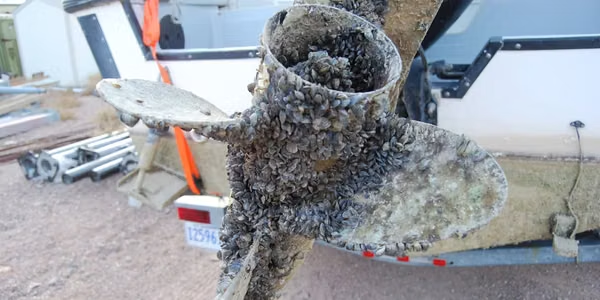
While they are perhaps perceived as fragile given how quickly they can expire in home aquariums, they’re actually quite hardy and unnatural invades much like (though not as bad as) the zebra and quagga mussels. (We’re running a piece from The Conversation on those species as a bonus.) They undermine the ecosystem dramatically, in keeping with bottom-feeding fishes such as the carp.
Backyard Study: The Universities of Toledo and Missouri recently published a peer reviewed piece in the Journal of Animal Ecology, demonstrating in a controlled environment what we already know practically about Goldfish invasion.
“The evidence is now clear – releasing a goldfish into the wild might be seen as an act of kindness, but it can turn into a major ecological threat," said study lead investigator, Toledo associate professor Dr. William Hintz of the Department of Environmental Sciences at the Lake Erie Center.
Context: The team examined two common freshwater conditions: nutrient poor (oligotrophic) waters and nutrient rich (eutrophic) waters. In both environments, goldfish caused substantial ecological disruption.
As bottom-feeders Goldfish stir up the silt, increasing the cloudiness of the water, which impacts aquatic plants and who suspended nutrients feed phytoplankton, helping catalyze algae blooms. They found native species decreased due to the disruption, including snails, amphipods, and zooplankton. They compete with the native fish species and can grow quite big, to as much as 10” – 15” long.
The study also documented what scientists call a "regime shift" – the point at which an ecosystem crosses a threshold and rapidly reorganizes into a fundamentally different and often degraded condition.

Holding a Sneeze Can Hurt You
Knot Graf: As you might already suspect, it’s not a great idea to stifle a sneeze. A sneeze travels as much as 70 mph and creates over 20 times the airway pressures which get externalized to your head, ears and chest which can (rarely) lead to serious injuries to your eardrums, blood vessels in you eyes or nose, fractures of your larynx, malleus (a small bone in your middle ear) or rib, or even a brain aneurysm. (Really!)
Context: Sneezing evolved as a defense mechanism: a fast, forceful way to clear irritants, allergens, and pathogens out of your upper airway before they can do any damage. Your diaphragm and intercostal muscles between your ribs drive air up through your mouth and nose.
When trapped it goes into your nasopharynx, your sinuses, your Eustachian tubes, even your middle ear. In rare cases, it pushes even further, into the deeper tissues of your neck or chest. This is more load than these structures were designed to bear.
Next Stop Snot Vegas: Dr. Qin Liu, a researcher at Washington University in St. Louis, told Popular Science that there’s also a brief window of opportunity to prevent a sneeze before the reflex fully kicks in. “Some people can occasionally interrupt a sneeze during its earliest stages by removing the triggering stimulus, altering their breathing pattern, pressing the tongue against the roof of the mouth, or applying mild sensory stimulation around the nose or upper lip,” she says. “These approaches may interfere with sensory processing before the reflex reaches full activation.”
But that window is small. “Once the sneeze motor program has been fully engaged, voluntary control becomes quite limited,” Liu said.

Mouse Study Suggests Why Childhood Memories are Lost
Knot Graf: The brain's memory center may come "prewired," rather than being built from scratch after birth, a new study in mice finds. Though not a tabula rasa, it does seem that installing the operating system involves repurposing existing pathways, and losing memories formed during the initial wiring. Indeed, far from a tabula rasa, their study suggests a block of marble, whose shape is formed by the chipping away and subracting, not through addition.
The research, published in April in Nature Communications, focused on the hippocampus, a seahorse shaped structure deep in the brain that’s essential for the formation of memories. They examined the collected mouse brain tissue shortly after birth, during adolescence or during adulthood, and found that early in life the hippocampal networks are densely wired, with many neurons hyper-connected in seemingly random patterns.
Hippocampus is an Editor: As the brain matures these networks become sparser and more structured as connections are pruned. What’s interesting to study co-author Peter Jonas, a neuroscientist at the Institute of Science and Technology Austria, is that these early connections that are pruned are dense the connections are already.
"You might think that early in development, you have poor synapses and weak synapses, but we found the opposite," Jonas told Live Science.
This pruning makes the connections more efficient. The study suggests early on, memories can be triggered by a single neuron firing along these connection networks. As the system becomes more sophisticated the connections are pruned, but it also takes more to trigger a memory, now requiring networks of neurons to fire in concert top trigger a specific memory.
Analysis: Jonas believes the initial state of single neuron triggers would too easily activate overlapping patterns of activity that could overlap and make it difficult for the brain to distinguish one from the other. Instead of forming distinct networks, it’s based upon broader, less-specific memories. It’s overly active and not very precise, befitting a young brain encountering a wave of new experiences.
As things get sorted and neural connections get pruned, behaviors are fine-tuned.
Beginning this way gives the brain a head-start on organizing the flood of initial sensory feedback until a framework develops. Jonas and company believe that if the brain began as a blank slate, neurons might be too sparsely connected to find each other, making early communication difficult, and slowing the accumulation of practical knowledge.

Flagging Dormant Cancer Cells for Disposal
Knot Graf: Scientists at ETH Zurich have designed a cancer treatment that potentially flags dormant cancer cells for disposal. Certain cancers will go dormant when specialized proteins called glucocorticoid receptors detect stress hormones in the tumor. Subsequently cell division slows as the tumor lays low and evades therapy. Because glucocorticoid receptors play essential roles in controlling inflammation and immune system function, a precision, targeted attacked strategy was required.
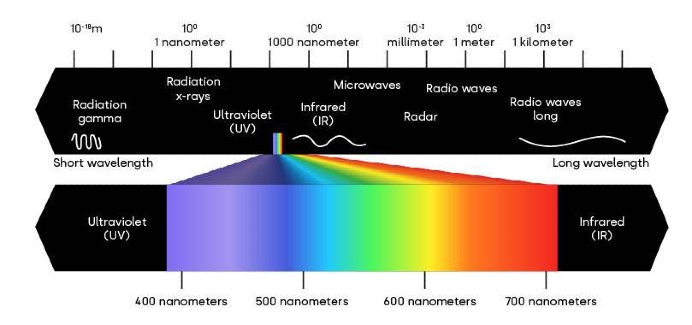
Their system triggers the destruction of glucocorticoid receptors inside tumor cells via low wavelength light. It essentially turns on or off the receptor, hopefully allowing for precision interventions without harming neighboring tissue.
"This system is based on existing medical technology and therefore offers a realistic prospect of localized therapies," says Robin Scheuplein, joint first author of the study and a doctoral student in the research group led by Katharina Gapp, Professor of Epigenetics and Neuroendocrinology
The Tactics: Cells identify damaged or defective proteins and mark them for disposal by attaching a small molecular tag, essentially labeling them as cellular waste. Once tagged, those proteins are broken down and removed. The ETH Zurich team adapted this process to specifically target glucocorticoid receptors in tumor cells.
It functions thanks to a molecular switch inserted between glucocorticoid receptor and the signaling enzyme “disposal tag.” Under normal conditions the switch extends out and the enzyme flag leads to the cell breaking down and removing the receptor. But when exposed to a particular wavelength the connector bends, preventing the enzyme from signaling properly and preventing receptor eradication.
Endgame: Researchers envision injecting the switch directly into a tumor and then using light to deactivate any molecules that move into surrounding healthy tissue.
"Activity can therefore be strictly limited to the tumor core, preserving the surrounding tissue and causing significantly fewer side effects. The effect is reversible and can be controlled precisely," says Scheuplein.
It worked in lab cultures, but the real test is in a living organism. Because the wavelength is so low, the light source must be very close to the treatment area. While this is ideal for lung cancer, where one could use an endoscope, tumors deeper in the body would require a longer wavelength (such as near-infrared light) which can travel farther through body tissue without causing damage.
They also hope to develop a modular system that can be used to shut off other important receptors such as estrogen receptor involved in hormone-dependent breast cancer and the androgen receptor associated with advanced prostate cancer.
Car-T Widens Fight from Cancer to Autoimmunity
Knot Graf: First approved by the FDA in 2017 to treat an aggressive form of leukemia, the therapy has recently set its sights on autoimmune disease, which like leukemia/lymphoma involves and over-reactive B-cell, and is often treated with monoclonal antibodies, lab grown antibodies that attach to a specific target on a cell.
In some cases reservoirs of the malfunctioning B-cells hide in tissues, then reemerge later prompting a relapse. Car-T has been effective hunting these cells down, and eradicating them, promising full-remission. Given they’re hunting the same target, it eventually occurred to researchers to apply this tool to autoimmune conditions like multiple sclerosis, lupus, Graves’ disease, vasculitis and others.
Context: CAR-T stands for “chimeric antigen receptor,” which sits on the surface of a particular white blood cell that destroys infected cells, a sort of bloodhound for this work known as the T-Cell. These cells are taken from a patient’s blood, chemically trained to seek out particular chemical receptor and kill cells that match the profile. After the patient receives chemotherapy to broadly attack the enemy, often cancer cells, the T-Cells are introduced to finish the job and root out any holdouts.
“It’s kind of like an attack dog who knows its purpose and target,” said Satyajit Kosuri, MD, a cellular therapy physician and an Assistant Professor of Medicine at UChicago Medicine, which began trials on using CAR T-cell therapy (as it’s also known) in 2025.
B is for Bad B-Cells: In blood cancers like leukemia, B cells proliferate out of control. With autoimmune diseases, the B-cells start mistakenly generating antibodies that attack the body’s own tissues believing them to be an invading pathogen.
It’s not without risks. Early attempts featured dangerous side-effects such as cytokine release syndrome where too many cytokines – proteins that regulate inflammation and immune response – would be released triggering a systemic inflammation response. Doctors have learned to watch for this and therapies continue to advance, though other risks have been identified such as increased chance of Parkinson and some cases where the T-cells turned malignant and spawned new T-cell based cancers.
Further Down the Road: We are onto second- and third-generation CAR-T approaches. They mention a group from University of North Carolina at Chapel Hill that is looking into using molecules of mRNA to encode the CAR T-Cells, as was done with Covid-19. That way the T-Cells would only retain their B-Cell targeting capabilities for as long as the mRNA. Without any genetically modified T-Cells long-term, there would be no cancer risk.
Beyond the risk is the cost – it’s hundreds of thousands of dollars for one round of therapy. So they’re looking at a way to use off-the-shelf T-Cells modified to limit rejection response. Others continue to pursue ways to generate T-Cell growth within the body, such as an approach that uses fatty capsules that bind exclusively to T-Cells delivering genetic instructions or gene-editing tools (like CRISPR-Cas 9). Others are looking at viral delivery systems (such as lentiviruses or adenoviruses) that can deliver CAR genes into the cells.
Given this line of research only began a decade ago, it’s difficult not to be impressed with the progress.


Longform Science Story of the Month
Chasing Lightning to its Source
Hopefully every week we'll find stories too rich and interesting to be quickly synthesized, pinned and posted on a board. This week it's about Zeus' plaything a force of dramatic force we are only beginning to understand as being a product of the same type of high-energy particle physics as govern super colliders.
"In 1994, a satellite searching for extreme deep-space explosions happened to pick up flashes of gamma rays coming from thunderclouds, often alongside lightning. Gamma rays are the most energetic type of light rays, typically marking the last gasp of a dying star or the cataclysmic clap of two neutron stars. They are not something you’d expect to come out of a cloud."
Dwyer hypothesized a type of chain reaction that quickly escalated. "“It’s like taking a microphone and sticking it next to a speaker,” said Joseph Dwyer, who is now at the University of New Hampshire. “It can get really loud quick.”