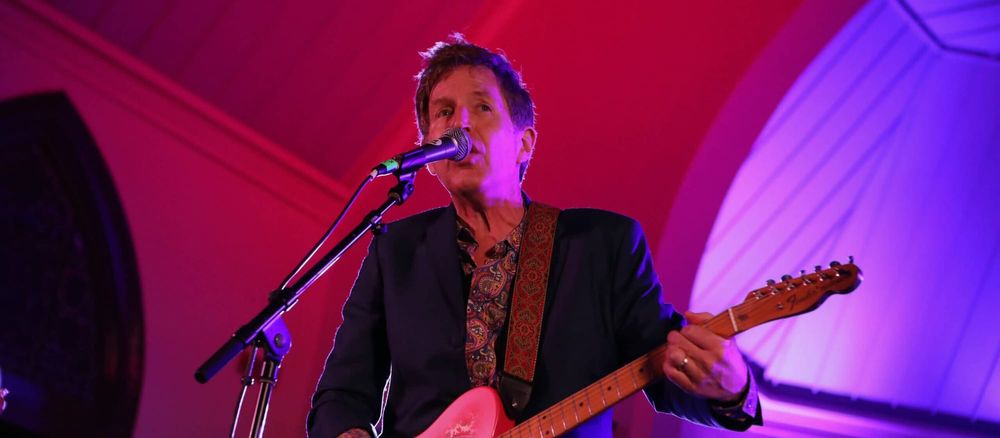
Interview with musician Steve Wynn (Dream Syndicate, Baseball Project)
Low-key story of how one goes from music nerd to making music for nerds
Steve Wynn came of age in the early eighties as punk was dying out and people were casting about for something else. He was part of a coterie of like-minded people from the culture's fringes who united - almost like Our Gang – to create a durable culture of their own when the mainstream refused and instead tried to sell last generation's musical retreads and lab-grown meat resembling a band. (Until they, later, finally created a real boy band!)
Besides being a part of the post-punk clique that helped make DIY a real thing because they had nobody to support themselves but each other, and used that step-stool, not to success, but to self-expression. Nobody made this music to get rich. They had a passion and they needed to let it out; nobody else was interested or would let them, so they did it for each other. Wouldn't you know some of the best art is made from the heart of people's souls, not on a contract-basis for a guy in a suit. Well, there are multiple means to the same end, and that's really a discussion for another time.
Mostly we want to call your attention to the fact that Wynn was part of a posse of very talented and self-directed (you had to be) people who didn't want to be told what to like and didn't see what they liked out there so they made it themselves and let the chips fly where they might. It didn't work out to badly, many of them still make music today.
Chief among them is Steve Wynn. He started from such a high point, with Days of Wine and Roses, the debut Dream Syndicate album, a wonderful wash of muscular wafting guitar color, a real synesthesia of the mind. But he kept going and in time has forged one of the finest catalogs of albums in all of indie rock, a stack of discs you could put up against the Bob Moulds, Lucinda Williams, Alejandro Escovedos, Los Lobos or other sterling musical peers. Arguably one of the top ten artists to emerge from the eighties underground.
What's even more is that Wynn is not the type to rest on his laurels, but rather wanders widely in search of new challenges, whether it be new collaborations, old teamups made new again (Dusty & Danny or Gutterball, for example) or long-running outfits returning to view, like Dream Syndicate, or Wynn's solo work.
He's basically a music nerd's kind of artist, with all the kind of obsessive, passionate love of the very essence of this pursuit and the ability to be a part of the grand history, that you could expect. A real nice guy with the right kind of flies in his eyes. (Don't ask me, ask Appleby!)
We discus how the early eighties Los Angeles scene really designed the template for what became underground music culture and the careers and outside-the-lines existence is due to he and his peers. We talk about how Dream Syndicate ripped off the Stooges and other acts besides the Velvets. How there is no real due for artists, as much as you might feel they deserved more accolades. We discuss how much fun he has with the Baseball Project and Gutterball and his desert isle discs and what a fascinating mysterious weirdo Dylan was and how he feared writing his memoir but now that he has he's excitedly working on the second book. And we spoke about how you stay passionate and don't sell out by not resting on your laurels and always challenging yourself with new potentialities or re-exploring old ones and how much he loves playing solo.
Transcription
Welcome to So Why Not? I'm your host, Chris Parker. Santa Monica native Steve Wynn loved music but thought he'd never find a band after he left UC-Davis. So he recorded a single in 1981. "That's What You Always Say" b/w "Last Chance for You" with his band 15 Minutes featuring Game Theory Scott Miller. And he self-released it.
That might have been it, but he fell in with some like-minded souls in Los Angeles who would collectively form a bunch of bands known as the Paisley Underground for their shared appreciation of psychedelica and garage rock. The similarities stylistically were somewhat minimal on the whole, but having a coterie of friends to share bills with always helps and a flag to fly above your ships.
Not a bad thing. Helps with the press. In 1981, Dream Syndicate would form after an aborting jam between Wynn, Karl Precoda, and still-not-yet Long Ryders, Syd Griffin. Precoda would suggest as they walked to the car that they form a band without Griffin. In 1983, they released seminal guitar psych album, Days of Wine and Roses.
They called it quits after eight years so that Wynn could pursue something else. It was an amicable split. He wanted a solo career as it turns out, not unlike Bob Mold. He'd form a variety of backing bands for himself or sometimes play solo. Went on for 20 years, still goes on. He had another band, Gutter Ball in the 90s.
They released a couple albums. In 2007, he started an odd thing, the baseball project, doing songs just about baseball with his wife, Linda Pep - PItmon, Scott McCaughey, Peter Buck, and Mike Mills later came and joined. He reformed Dream Syndicate in 2012 with bassist Mark Walton, who'd come in after Kendra Smith, had left after the first album.
Dennis Duck, still on drums from the original. And, , new guitarist Jason Victor, who played with Wynn his solo, in one of his solo formations. In 2024, he published the memoir, I Wouldn't Say It If It Wasn't True, that runs through the end of Dream Syndicate. He just kept releasing great albums. I, crack perhaps unfairly that he's no Warren Zivon because his art is more songwriting than just the lyricism though he still writes good lyrics.
But there's an aspect where his brilliance like Zevon has passed kind of beneath American attention, though not overseas ironically and his great string of albums and adventurous has not gone unappreciated. And if it has gone underappreciated here, perhaps that's fine because he was always drawn to cult figures.
It would be kind of sad to deny him his proper space atop that pantheon. He's a pretty cool guy and a tremendously underrated artist and guitarist, Steve Wynn.
SewYKnotPublishing:So Steve Wynn, thank you so much for coming on the show. I wanted to start by saying that part of the reason I'm doing this was because I felt like this kind of thing didn't exist anymore.
I don't mean podcasts, but my, my site is kind of a long form variety show. It has science blurbs and, and I try and I do sports and we'd be writing about the Timberwolves. I know you're a Yankees fan. I'm a Red Sox fan. And I think that there's this aspect somehow in our culture where we have gotten so, expertise, even as we have this moment where gatekeeping has been thrown by the door.
But everybody has become kind of narrow a little bit. And I feel like I, I like to do an example, the broadness of the human beings that we all are. We're very broad. So anyway, the other thing, the reason I mentioned is because I really took a lot from that punk moment. And I think, and we're talking a lot about this because I have that book coming out, or we're working on it, whatever I, the editor has it,
Steve Wynn:Hmm.
SewYKnotPublishing:How. And I think that as I wrote the book, I became more and more aware of how you guys helped to create this modern underground culture. was
Steve Wynn:Yeah.
SewYKnotPublishing:this by saying, uh, we can hide in the 'Cause you could have hide, you could hide the underground back then when, when Following James Moreland was singing that song.
But, but now there really is this kind of thing that if it's not fully sustaining, it's at least somewhat sustaining. And that was partially something that you guys created because it didn't exist and you wanted to put it, make it exist for yourself, but also for other people. and I was wondering in the shape of time, how you think about that and , do you see this as a fruit of your kind of collective cohorts' , behavior?
Steve Wynn:Well, yeah, I mean, and I, and I say this, you know, with, with all, you know, all proper humility, but honesty too, is the Dream Syndicate were one of the handful of bands that kind of invented what became indie rock. And when,
SewYKnotPublishing:Indie Rock.
Steve Wynn:we all started, and it was happening through like semafor signals around the country because there was obviously no internet and limited connection.
You just, you would know about each other through things like New York Rocker The Village Voice or whatever. Or maybe that's about it, you know, maybe people would come to your town and talk to you about other scenes. But at the same time we started, REM was starting in, in Athens and of course in where you are, in Minneapolis, who's doing the replacements are doing their thing.
And just there were bands around kind of figuring it out as they went along. There had been the punk rock movement, but if you think about the punk rock movement as, as radical as it was and influential on me and, and all of my friends, it was still mostly a major label, proper touring kind of thing. The Sex Pistols, The Clash, you know, they were all on, you know, Columbia and Warners and, Virgin and stuff like that.
So they, you know, when we'd see them, they'd be playing the big show.
We kind of came along in 82, 83, and it's like, how does this work? How do you even get shows? Where do you go? What do you, what do you do? It's all, all a mystery. And it was fun. It was really fun. And we would find out about each other, you know what I mean?
We got, , photographed by a really great, photographer, Laura Levine in New York for the Village Voice, and she's become a great friend. She's, to me, one of the great rock photographers of all time. And through meeting her, I heard, "Well, this band REM, you know, is in Athens doing this and I can pass your greetings along."
It was, it was that kind of naive and simple. And, you know, in, some ways right now, in these days, bands have it easier in some ways because you can just,
you know, there's a high of mind, you can connect lots of ways and there's streaming, , music so you can hear bands and all that.
But it was kind of fun. I kind of, you know, feel lucky to have been that time was so naive and so the rules weren't made yet.
SewYKnotPublishing:There is still. I mean, it isn't crate digging, but because of the collapse of the gatekeepers, it, you do have to really look out for music. And, and, and it's so much of it's out there that it becomes a little bit like crate digging and you
Steve Wynn:Hmm.
SewYKnotPublishing:the album covers or the Sunday morning record show to go and kind of weed it out as easily.
Steve Wynn:you do a little bit. I mean, there definitely, it's good, it's kind of important, at least for me, I'll, I'll speak for myself, but for a lot of people to have a filter, have somebody. So I have, you know, I listen to WFMU here in New Jersey or I have a few friends who are on top of things or you find, you find the publications or the podcast or the
SewYKnotPublishing:or the
Steve Wynn:radio stations where, "Hey, that guy has similar tastes
SewYKnotPublishing:more
Steve Wynn:or, you know, uncuts, you know, a great magazine."
Otherwise, it is a Tower of Babel. Otherwise, it's kind of like, you'll, you know, I, um, it's kind of interesting that, um, in the bands I'm in, the Baseball Project and the Dream Syndicate, and even in my solo, um, band, The Miracle Three, almost every member of all of those bands worked in record stores.
SewYKnotPublishing:Yeah.
Steve Wynn:Buck, Scott McCaughey, Linda Pittman, Jason Victor, Dennis Duck, we were all record store people, and we all come from that history and tradition of hanging out at the store and, you know, some guy behind the counter who knows what you like will tell you what you should buy.
Now it's a lot more difficult to, to find that thing, when I worked in stores, and that's, I was gonna say, um, when I worked in record stores in the early '80s, late '70s, I kind of knew every record that was out. It's weird to think that way, but. And I mean, bad stuff as well as good stuff. I knew, you know, whatever, you know, the latest Neil Diamond record or the latest whatever, you knew all the records because there weren't that many.
Oh, yeah, I don't know, Angel or Rainbow or whatever has a new record I've seen and I'm not gonna listen to it, that kind of thing. Now you could never know all the records. You couldn't even begin to know them, so it's trickier.
SewYKnotPublishing:Much trickier and, so I started this. Well, the podcast really follows the website. They're started concurrently, but I started the podcast slower because for me, I'm a print journalist. So, you know,
Steve Wynn:Mm-hmm.
SewYKnotPublishing:the writing thing was much more natural. I can get in and I can start doing that. and so I started doing the calendar and I realized, oh my God, this is like the thing that actually people really need. We don't have all weeklies. Now you can't just pick up your city pages. There is a,
Steve Wynn:Right.
SewYKnotPublishing:online one called The Racket. It's very good, but, but, you know, they don't do, like, as many blurbs as the, as the city pages used to do.
And it's just a little, you know, and you have to be a member, which is fine and all of that, but it, it isn't free, so you don't just pick it up and just
Steve Wynn:Mm-hmm.
SewYKnotPublishing:in, "Oh, Wednesday, I'm gonna figure out what I'm gonna do this weekend because the city pages will come out and I'll circle a couple things."
Steve Wynn:Mm-hmm.
SewYKnotPublishing:and so anyway, I started to do the calendar and I was, okay, this is actually something everybody needs.
I, I'm on Reddit all the time and every, every two days there's a popup. Like where do people find out how to, what shows are going on
Steve Wynn:Yeah.
SewYKnotPublishing:knows.
Steve Wynn:Yeah, here, here in New York, here in New York where I live, it's like, you know, it's so often, and I hate, and I hate it, where I'll hear about a show after it happened. So-and-so played down, you know, in, in Brooklyn. I was like, "You're kidding me. How did I not know about it?" And it's so frustrating.
SewYKnotPublishing:Oh, absolutely. And, and in trying to do that, I've realized, you know, even in Minneapolis, which, you know, sometimes I see bands go by here. They'll, they'll hit Chicago, go out of Denver. You know, they, they won't, they don't always hit here
Steve Wynn:Hm.
SewYKnotPublishing:Same thing as Cleveland when I was living there. But in any case, so I started doing, and I, you know, all these bands now, because it's been. , I kinda took a, dip like a lot of us, you know, when we do something for too long, you gotta take a dip. I took a dip. I did the basketball thing. I covered the Cavs for a while
Steve Wynn:Wow.
SewYKnotPublishing:of. And I wrote the book about, you know, about the, you guys,
Steve Wynn:Mm-hmm.
SewYKnotPublishing:of that '70s, '80s stuff that how it's, called Roots Rebels
Steve Wynn:Mm-hmm.
SewYKnotPublishing:how the '80s and '90s, uh, and I'm just sure how I'm gonna call them underground musicians help to cr - lay the foundations for Americana and an underground
Steve Wynn:Hm?
SewYKnotPublishing:and, and, and so, you know, but, but so I wasn't listening to new music. So it's been like 15 years. I start to do the calendar, and there are all of these bands that I don't know whereas I used to make my money writing
Steve Wynn:Hm.
SewYKnotPublishing:was how I, you know, I
Steve Wynn:Hm.
SewYKnotPublishing:for every alt weekly across the country.
If you don't want to write the, the Steve Wynn album in New York,
Steve Wynn:Hm.
SewYKnotPublishing:that maybe in Colorado or the Phoenix New Times or the Dallas Observer or one of these places is gonna take that blurb. I can just send the same sets of pitches. I just turned it into a mastic. So anyway, I used to do blurbs.
Now I'm looking and I'm like, you know, not only are there, like, 80 worthwhile, there's probably three or four decent shows every night of the
Steve Wynn:Mm-hmm.
SewYKnotPublishing:but, you know, there are, even more venues and so many bands on different kinds of platforms. Some of the bands are, TikTok , or, or that kind of created, and other ones are, real.
it is something, but there is also this kind of beautiful thing, like, okay, I'm back to how we, how I began when I was in my 20s and 30s. I'm writing blurbs and I'm discovering music. And,
Steve Wynn:Great.
SewYKnotPublishing:the thing, because I started thinking about, like, what is free? 'Cause I'm doing this for free.
Steve Wynn:Mm-hmm.
SewYKnotPublishing:this out there. You know, I was just interviewing, Cindy Lawson, who's, she's my age. She's , 58, 57, something, maybe a little
Steve Wynn:Mm-hmm.
SewYKnotPublishing:you know, a- a- and we're doing this because we want to put something back, and it doesn't really matter.
I mean, money's still important, but, but you reach a certain point where, like, it's really about what you're doing more than anything else. and, and I was thinking about you, I've had to mediate my instincts to, you know, just serve people all of my life, you
Steve Wynn:Hm.
SewYKnotPublishing:been writing stories about people.
I've been mediating for them, and so now I'm doing these things for myself, you know? And so I heard this guitarist a long time ago. I wish I could remember. I usually try and tie the names, but I can't
Steve Wynn:Hm.
SewYKnotPublishing:It's been too long. And he said, "I spent the first half of my life learning to play like my heroes,
Steve Wynn:Mm-hmm.
SewYKnotPublishing:and I spent the last half learning how to play like myself."
Steve Wynn:Hm. Yeah, yeah, yeah, yeah.
SewYKnotPublishing:curious for, for you, what that transition, and, and, and in the shape of time, how you see that kind of progression in yourself in, in what it is that your musical mission is in the, in that sense and how you maybe evolved.
Steve Wynn:I don't know. I, I feel like that, you know, you, you talk about the, the now you do it for free just because. But when we st - all started out, all I don't think any of these bands though about, "Oh, I'm gonna make a killing at this." It was like, one, I, well, I, I say this often. I, I, I think the band, the era that preceded us, the era in the '70s, I'm sure, I don't doubt that people in the bands in the arena rock era, the Prog rock bands were also fans, but I think the mission was to be a star, to make money, to, to, you know, whatever, um, to be in a rock band and live the life.
, My era that I came from, I was talking about earlier, we were all just kinda music fans, and with the same instincts that you might've had as a music journalist or a, or a college DJ might've had, or a guy at the record store might have where, "I love music so much, and I wanna convey to you what I love."
And that's why, for example, the Dream Syndicate, you know, we got compared a lot to the Velvet Underground. And fair enough, I got a little bored with that because I though, as I often said at the time, yeah, we rip off the Velvets, we, we rip off a lot of bands, have more imagination. We're ripping off The Fall and we're ripping off, you know, um, um, Echo and the Bunny and we're being off Dylan and, and The Stooges too.
So, you know, widen your perspective who?
SewYKnotPublishing:Rocket from the Tombs
Steve Wynn:Oh, yeah, the Voc
SewYKnotPublishing:Peter Laughner
Steve Wynn:Exactly. Well, that, I picked up on that later on. But yeah, so, I mean, a lot of what we were doing, for example, at the time, the Velvet Underground, as amazing as it is to say, weren't that well known. Their records were out of print. They were, they belonged to a select group of people who kind of were hip to that.
People knew Walk on the Wild Side, but they didn't win on the Velvets. So with the Dream Syndicate, it's not like we said we're gonna be a band so we can turn people onto the Velvets, but it was like, "Well, we like this kind of music and we're not hearing other bands playing this kind of music, so we'll do it."
And it was that, that same thing of being a town crier, being the one getting it out there. So it's not that different from what you were doing, from what, you know, from what D - you know, our favorite DJs were doing. It was just kind of this way of conveying our, our passion.
And I say this like we made that up, but when I really wanna talk about that, it's what The Stones were doing too in The Beatles as well. They were just kids in England saying, "Wow, we love this American R&B music where we love Howlin' Wolf and Chuck Berry and we're gonna turn the British kids onto this music we found at cool record stores."
It's great. It's a good reason to do what you do, the passion, the passion and love for it.
SewYKnotPublishing:And the thing that you've made a, a point of saying, read some of the recent interviews, you often bring up the luck aspect of everything. And I recently, uh, my last podcast was with Colin Blunston and,
Steve Wynn:you talk to him, yeah.
SewYKnotPublishing:and, and he, you know, talk about an incredibly lucky and unlucky kind of career.
You know, they quit doing music because they thought their album was a terrible flop, and then, you know, it turned out to be, in the time, a great album. , And the song becomes a hit time of the season. You know, they're all, he's already working in an agency somewhere,
Steve Wynn:That's funny.
SewYKnotPublishing:quit.
Steve Wynn:Yeah.
SewYKnotPublishing:And, and then, you know, and then ultimately in the ti - in the shape of time, he gets inve - inducted into the Hall of Fame and he's, you know, , I guess we were better than we thought we were. , If you're doing the music for doing the music, which ultimately becomes what it is, all of these are kind of ex - e- extraneous It, it, you maybe get the, the, the accolades, you maybe don't. I, I, I always remember talking to Betty Levette and she, she says, "Oh, I, I, I, I'm happy.
Yeah, absolutely. I, I just wish I, it had happened earlier because I'm so tired."
Steve Wynn:Well, you know, I mean, and I understand that. I, and I think it's no, it's, you know, it's very possible Betty Lavette had a maybe more difficult life than I have. I mean, I'm, I was, you know, I'm not saying that I was, you know, you know, there, there were, there weren't challenges along the way for me too, but for some people it's like, "Yeah, I need to, I need to make money at this."
And, you know, it's great if you can, because it means you can keep doing it. But I don't know, it's, I, I have dual thoughts on that. One is that I don't think we were lucky. I think we were good. When we made, when we started as the dream syndicate, when we made The Days of Wine and Roses, we knew it was good.
We had no doubts. It wasn't a false confidence. It wasn't a, you know, bluster. It wasn't like, you know, fake it till you make it kind of thing. We were a very, very good band doing something, but other bands weren't doing it, and we knew it, and we knew we were lucky. We were lucky and that we found the right people and the right chemistry to do that music with.
Along the ways, there were challenges years after that in trying to find the footing like every band had, every band has that. But on this, from the start, we kind of got to, you know, the Dream Syndicate paid no dues. We were popular in our scene then nationwide and then across Europe pretty quickly, almost immediately. It was, it was crazy. But we were,
SewYKnotPublishing:what
Steve Wynn:we were, we were, you
SewYKnotPublishing:you and
Steve Wynn:know.
SewYKnotPublishing:say about picking up any kind of magazine of a certain kind of magazine and finding yourself in there. That's the beginning of this counterculture we're talking about.
Steve Wynn:It was really something. You know, as a music fan, I saw that and I recognized it. And I though, this is really, you know, this is real. You know, this isn't, this is. I know when it's not, but this is really real. Now, at the same time, a question I hate, I really hate and I still get it and I deny, and I politely deal with it, is when people say, "Do you think you should have been more successful?
Do you think you should have been, as big as, you know, name any band in our scene, whether it's Nirvana or the Bangles or whatever?" It's like, no, because we weren't, we were, all of our heroes, all the bands we emulate ourselves after were other bands, like you said, with the zombies, but even further down, like Big Star, The Only Ones, Gun Club, The Modern Lovers, all bands who made barely a ripple in their time, and over the course of decades later.
I mean, the Gun Club, I used to go see the Gun Club in LA all the time to 10 or 15 people, and I loved the hell out of them
they're seen as, like, one of the most influential bands of that era. It's great. Great that they, the music is appreciated. I feel like some people would say, that's fine, but sadly, Jeffrey Lee Pierce is dead and he can't appreciate it."
But I feel like given the choice between having been headlining Madison Square Garden when I was when I was 22 and then and disappearing from sight or having the sustained long career of making the music I love, music I no question. I like what's the, the road I've taken, what, the way it's, the way it's worked out.
SewYKnotPublishing:There's a great comment. Again, this is one of the ones I've also lost the time, but this is another great insight a musician gave me from doing this. He said, uh, "Sometimes I think that they're, every musician has a certain amount of money that they're gonna get, and they get the choice. Are you gonna get it all at once on the front end? Are you gonna get it parceled out for the rest of your life?"
Steve Wynn:I like that. I like that. Well, you know, I've m - encountered and, and hung out with a lot of musicians over the years, peers or people, you know, and I've, known a lot of people, um, you know, from sort of my scene, my world, who had incredible heights of success who are now working day jobs, just trying to get by.
And no, no knock on that, but I feel like, holy cow, I feel like, holy cow, I've made, I've made a, a living out of writing songs and playing guitar since I was 21, so no complaints. It's funny though, you know, like, you know, dif- different, you know, di- different bands have different motivations. I, I think about the scene we were in in LA, and I think about, um, the Paisley Underground, as they call it, and bands like The Bengals and the 3:00, who, at the time, were the Bangs in Salvation Army.
And they kind of designed themselves, and they might say I'm crazy, but I think they designed themselves more to be like the Beatles, more to be a hit band, and there's nothing wrong with that. But we really designed our. We, we designed ourselves to be a weird, freaky band, you know, that, that only cool people would like.
We would do. We would go out of our way to test even our most hardcore fans as though, "If you wanna belong to this club, you're gonna have to put up with us playing your favorite song of ours that usually is a three-minute song we're gonna play tonight for 25 minutes. See if you can deal with that." You know, it, it, it was, it was bratty, but also it was our way of saying, "We're, we don't wanna be for everybody.
We don't, that's not what we're going for." So, you know, we made our choice early on.
SewYKnotPublishing:lost some of that though, you still see it.
Like the dirty projectors were obviously on that kind of
Steve Wynn:Good band.
SewYKnotPublishing:want. I, I remember talking to the, uh, I'm forgetting his name from The Bad Livers. Danny Bra - Danny D the, the, the fiddle player anyway, and he was talking about the fact that they added the tuba, you know, and he's like, "We added the tuba and you guys still like us and we're gonna have to do something else."
Steve Wynn:That's funny. We never tried that.
SewYKnotPublishing:But, but it's the same kind of idea that, you know, there was this thing like if you like us, we're doing something wrong. We, you know, it, it, we have to do something to make you. There's antagonistic thing, but I think it was also, it's almost like the internal thing for an artist that you, you know, you can't be doing the same thing or why are you doing this?
Why are you not moving forward? You want to kind of create that
Steve Wynn:Well, se - yeah, second albums are a funny thing, and I, I was just thinking about this the other day. I was talking, actually talking about this with, with my wife, Linda, you know, some bands do second albums that are kind of, , just a slow step forward, more of the same, which is great.
And then there are bands like ourselves, like, , the Velvet Underground, like, well, I'd say Nirvana, except for their second and third album, but it's, but I think In Utero almost feels like a second album, where they went, "Oh, you like that? Well, then brace yourself because we're gonna take you for a rough ride."
And I kind of admire that, bands that do that. And they do it, I think, for the reason of, like, you know, no, I'm,
I feel very lucky that I even got the success I got, so rather than rest my laurels, I wanna see how far I can take this.
And it's, you know, it can be, it can be exciting or, I mean, God, White Light, White Heat, what an insane record to make when you've, you know, gotten some attention as Andy Warhol's pet band.
Crazy.
SewYKnotPublishing:Well, you guys, I mean, obviously that was a real step to the left. I mean, you
Steve Wynn:Oh, yeah.
SewYKnotPublishing:the, in the light, but I'm thinking about also like, , you know, um, Blister in the Sun, Violent femmes
Steve Wynn:Oh, yeah.
SewYKnotPublishing:that, you
Steve Wynn:Mm-hmm.
SewYKnotPublishing:went in an entirely different direction for that next album. And it, it was a great choice in the end.
But in the moment, and that's the other thing that's really hard for people to understand, you were talking, I was reading this thing and you talked about This Is The C, because you were talking about Medicine Show,
Steve Wynn:Mm-hmm.
SewYKnotPublishing:we're gonna make a big music album. And, and I, I remember when that came out, people cannot appreciate sometimes the context.
I was, oh my God, that was such a big album. And people were really struck by that album. And I was thinking about, like, at that same time, right, about the Media's Murder came out, and I can still
Steve Wynn:Mm.
SewYKnotPublishing:first time hearing Johnny Mar's guitar and being like, "What the hell is that?"
Steve Wynn:Yeah.
SewYKnotPublishing:You know? A- and, you know, when you think about that, you know, I, I remember the first album I came, I bought, one of the first ones was English Settlement, and they came out, and it was like they were playing in a different, you know, I'd heard Black C, but still it was like they were in a different language compared to Night Ranger.
Steve Wynn:Most certainly, yeah. Well, you know, I mean, and, and thing is, we, we, when we made o second album, we made Medicine Show. It's funny because when it came out in the, in the states where people had loved Days of Wine Roses so much, there was sort of a mix, some very positive, but also mixed reaction over here because people loved that first record so much, and they were confused.
Um, I think over time, people have kind of grown to like it more and more. But in Europe where we'd never toured and people didn't know Days of Wine Roses, people went crazy for that record. It was seen as just like the next big thing. So from the beginning, first of all, it taught us not to worry too much about what people say because we were having simultaneously very different reactions on both sides of the Atlantic.
But also, you know, sometimes there, some people would hear, heard Medicine Show, you know, we, we had been on a smaller label slash records and moved to A&M and pe - some people said, "Oh, they sold out." I said, "Man, if you think selling out is making a record about murder, mayhem, you know, arsonists, the stuff that's on that record, you're insane."
Selling out for us, honestly, would have been to make Days of Wine Roses part two. That would have been selling out. That would have been like if we, if we wanted just to kind of, you know, cash in, we would have made more of the same. And, and our label we were on would have been very happy for that. But we had, we had this mission as creative, curious artists, for lack of a, you know, pretentious, whatever that might sound, to do something
more interesting, something that excited us at that moment.And I've never changed from that kind ofway of doing things.
SewYKnotPublishing:Things. Well, I think that's, as a, that's the, where the commerce and the artist runs into kind of itself. I often talk about the idea that, you know, in order to continue to make music as you go along, it's got to be like any creative things, you have to feel like you're doing important stuff or you're cr - pushing some new territory, you're doing something that challenges and interests you.
Otherwise, why are you doing it? Nobody just goes out to repeat themselves, though it is interesting because as one of my favorite, musicians, David Dondero used to sing or sings, , singing a song or a facsimile of the song.
Steve Wynn:Right. Yeah, yeah.
SewYKnotPublishing:remaking it up each night again,
Steve Wynn:Yeah, yeah.
SewYKnotPublishing:and it's one of the rare forms of art where you, you kind of do the same thing over and over again, but you also get to redo
Steve Wynn:Yeah.
SewYKnotPublishing:it each night
Steve Wynn:Which is fun, which, which is why I love touring. But, you know, every time I make a record, I'm trying to make the best record I've ever heard, and that's fun. I mean, I'm right now I'm just finishing a new solo record that I made, with, with the members of my band, The Baseball Project with, um, scott, with, with Mike Mills, Peter Buck.
SewYKnotPublishing:Miracle three.
Steve Wynn:Well, not Miracle, no. This is with, um, Peter Buck and I wrote a dozen new songs together, and when it came time to record the songs, just kind of looked to our, our best friends or the people we hang out with the most, which is Mike Mills and, and Scott McCaughey and, and Linda Pittman. And we went in to record these songs. And anybody who knows me right now, all my friends
know how obsessed I get with just every day, if I can change one thing or add one thing or alter one thing to make the record 0.001% better I do it. , That's the fun of it,. It maybe not fun for people around me because sick of hearing me talk about it. As I exhaust everybody in my circle. But I, I, I like that process. I like, I like, I still think it's a privilege
to make a record. It's still a privilege to have a statement like that, that people are gonna hear and care about. It's great. So I, I don't take it lightly and I just kind of think what would be the coolest, best, weirdest, most exciting, whatever thing I can do at this moment.
And sometimes I get it right and sometimes I get it wrong, but that's, that's part of the, you know, part of how it goes down.
SewYKnotPublishing:I think, you know, and, and I was kind of bringing it up because you, you, it's really hard not to talk about the Gun Club because
Steve Wynn:Yeah.
SewYKnotPublishing:they were so visionary and yet nobody got it and yet they didn't stick around and wait for people to get it. They could have stopped it like two or three times
Steve Wynn:Hm.
SewYKnotPublishing:their career and just hung out for a couple albums at that place.
And eventually it would have become huge. People would have caught up that thing. But, but
Steve Wynn:Yeah.
SewYKnotPublishing:to people to catch up isn't what you do if you're, if you're doing that. And it's so weird in the ti - shape of time because you're talking about how you listen to Medicine Show and you're like, I don't know, it sounds like dream syndicate it to me, right?
And you know, I'm thinking about, I'm listening to those Blasters albums, right?
Steve Wynn:Hm.
SewYKnotPublishing:how do they not hear these hits? Like what is wrong with this, this, this, this third album? I, I, I'm really, why is this not a, why is this a problem for anybody? Why is he, Dave sweating bullets for this album? This is a great
Steve Wynn:Yeah.
SewYKnotPublishing:know, or, or I go to a next show and I'm like, this is hit after hit after
Steve Wynn:Hm.
SewYKnotPublishing:How are these not like radio songs? These are hits.
Steve Wynn:it doesn't matter,
SewYKnotPublishing:in the shape of
Steve Wynn:ultimately it doesn't matter, it doesn't matter, you know? Again, like, I mean, of course at the time you might say it matters because you might have a tour bus instead of a van or you might stay in a nicer hotel, whatever. There's nothing wrong with that, you know, but, it doesn't matter. You make it and you move on. You do, you, on. You know, I think, you know, one of my favorite quotes from any movie is, , Clint Eastwood in The Unforgiven saying, "Deserves got nothing to do with it." I think he says that before he shoots Gene Hackman. And it's a great line because it's like, yeah, it's like, you know, Deserves got nothing to do with it.
You do, you do what you do and let the chips fall where they may. It's really sad that Jeffrey Lee Pierce isn't around now and died, died s- so young, it's sad on so many levels and he was a, so talented. And, but if he was around now, he'd probably be like basking in his influence. He'd probably be, you know, making records with Nick Cave and, you know, but,
SewYKnotPublishing:Yeah.
Steve Wynn:you know, he, we, we had the music to enjoy and it's great.
SewYKnotPublishing:One of the questions I have right here is, is there some kind of a little bit of a survivor's guilt about your 80s cohort?
Steve Wynn:No, I mean, it's, I just, well, I guess myself fortunate, but, you know, no, not, I don't think about that too much.
SewYKnotPublishing:That fine, that's fine. It's just, it's an interesting question because it was, uh, you guys were all, you all were very young and you were all figuring it out as you went along and some of you guys were figuring it out quicker than others.
Steve Wynn:Well, I, I'm not gonna say I'm, you know, I haven't, I haven't been, uh, I,
SewYKnotPublishing:it out. Well, yeah,
Steve Wynn:I have,
SewYKnotPublishing:but
Steve Wynn:I haven't been, I have, I haven't been a choir boy. I've lived the life I've lived, and some people are fortunate, some aren't, you know, we lo - we lose some along the way, but, really, , I am glad I get to still do that.
I mean, I'm 66 now and I've got four tours planned between now and next summer, and I'm very grateful that I'm, physically able to do that. That's the one thing I fear. I don't fear any kind of numbers or commerce, this or that, but, you know, uh, I, I, I'm lucky enough to have done a lot of shows with and become somewhat friends with Ian Hunter, and he was touring till he was 79.
, The Dream Syndicate had opened the final Mott the Hoople tour in, in 2019, and he loved touring. He was on the road all the time, and he is 86 now. He'd probably still be touring, but he got tinnitus but he and , couldn't play live anymore. And that's my greatest fear is, like, just something happening, whe - whatever it could be where it's like, "Well, I can't go on the road anymore."
No, I love this. So, you know, so, I'm grateful for that. That's wonderful, and I d - I don't take that for granted.
SewYKnotPublishing:ok, that's fair. That's fair. So I, I've got a couple picked up things. One of the things I wanted to mention, I, I didn't realize, uh, it seems like, and, and I hadn't put this together, but it seems like Falling James might have been kind of a, a satellite or fringe person on, on that Paisley scene.
Obviously,
Steve Wynn:Yeah.
SewYKnotPublishing:uh, you know, for Vicky and,
Steve Wynn:Mm-hmm.
SewYKnotPublishing:Well Down the Blue Highway kind of had a little bit of, you know, he had his brothers from that,
Steve Wynn:Mm-hmm.
SewYKnotPublishing:their
Steve Wynn:The Hope, the Hofer Brothers, yeah Tom, Tom and Manfred.
SewYKnotPublishing:Yeah, Tom and Manfred. Yeah. And, and so there was a little bit of that kind of Paisley. Obviously Kill Tunes went kind of even more in a different direction, but I was curious, was he a little bit, uh, outside on that green on red,
Steve Wynn:Mm-hmm.
SewYKnotPublishing:party scene?
Steve Wynn:No, I, I think James, James was part of that, definitely part, you know,
SewYKnotPublishing:Definitely part of it. You
Steve Wynn:scene back then, there were,
SewYKnotPublishing:back then
Steve Wynn:we were all very much hanging out together, all those bands were mutually supportive, and we would really hang out together. And, and definitely Leaving Trains and James, they weren't maybe, you know, there from the beginning of that scene with us, but months later they were there. And, they were there. I think I saw Leaving Trains and Green on Red and us kind of as a certain subset that was a little greasier and dirtier and a little more messed up in some ways. And so we kind of gravitated toward each other, you know, than, than, than some of the other bands. Um, and I love why, I love Leaving Trains.
I'm sad that their stuff is so much just out of print because those are great records.
SewYKnotPublishing:Yeah. Yeah. No, I, I, and one on the site, because I, I, I just, such an incredible album. And again, at that time, it was really well reviewed. It was a critically adored album. And, you know, again, this is how strange these kinds of things are. They're, they, you know, you don't know how things are gonna turn out and things change, these kinds of critical tastes.
Uh, people don't pick up on them. Sometimes they don't get passed along. You go back into the thing for somebody to discover as a Velvet Underground or as
Steve Wynn:Mm-hmm.
SewYKnotPublishing:or as a Peter Loeffner
Steve Wynn:Mm-hmm. Peter Lofner for sure, yeah.
SewYKnotPublishing:So, you know, I, I, this is a, this is another picked up thing and I don't, I don't want you to speak for Peter Buck, but I will anyway.
Is there a bit when you've been something, a part of something so successful as he has and, and, and that where it's freeing and he can feel a little bit like it's to be Peak Bill Murray, where you can just show up and do stuff and you don't have some of the kinds of baggage that other people do who have not had that kind of pinnacle situation?
Steve Wynn:I know Peter, I mean, just speaking about Peter, I mean, he,, he makes records and tours at a pace as ferocious as anybody I know. And I think it's safe to say it's not, you know, it's not for the money. I don't think I'm speaking out of turn there, but he look, he loves music. He loves the camaraderie.
He loves the, the discovery. He loves, you know, the, he loves it just like he loved it when he was young. And I, I've, I've been on the road with peter and Mike Mills and Vicky Peterson in recent years. They're really good friends, of course. And, when you're on the road, it could be the same as when we were 21. I think about this often ,
I think back to the our forebears of the, the Mick Jagger or, or Bob Dylan or Paul McCartney who are still out there doing it, and I always feel like when people say,
"Oh, don't they have enough money? Or why don't they just quit?" And you think like, I think it's because they just feel they're the same person they were when they were 21.
Maybe they've made some money along the way, maybe they've, you know, they don't need to do it, but they just but get the same thrill from walking on a stage
on the with their band mates or with a new audience and figuring it out each night. You know, and, and I think that's a lot of, that's a lot of I think about this a lot. I think, I think no matter what we do, no matter what it is in life we've chosen to do, part of the excitement is that challenge of, you know, I'm very good at my job. I've done this forever this here's a new challenge and I'm going to use everything I've learned in my life to solve this challenge. And then when you do, you feel great. And, you know, the, the dream syndicate, just last weekend, last we did one of those crazy things we tend to do because we're insane, but we, we flew to Spain on a Thursday to play a festival in Galicia on a Saturday and flew home on Sunday because we do stuff like that.
And, you know, we landed jet lagged and a little, you know, discombobulated and walked out to 4,000 people and played one of the best sets we've played and just kind of looked at the audience and thought about what was going on in the moment and took in the sound and the other bands on this festival with us and just said, and "what do we do with this?"
And it was almost like, you know, wa - being a contractor and walking to a house and saying, "How can I, saying, you know, how am I gonna do my job on this house?" We had that same thing and then when you do it right, would you have a good day, you say, "Wow, that was great." And I think that's what keeps everybody going. I think it's just that kind of thing.
It's not an ego boost. It's not, you know, not, you extra 20 bucks. It's because you're, because know, you're good at it. You, it's what you spent your life learning and you enjoy doing it well.
SewYKnotPublishing:There's an aspect that I don't think everybody always gets where it's of service too. In that moment, you're serving the fans, you're serving the people there listening and they're rewarding you for the, for the good service. There was this great comment that Richard Thompson made to me. I, obviously I'm not a performer.
I don't get this, but I, I, I've mentioned it to Colin and, and there's an interesting thing. Richard said that he really liked performing for American fans because he felt like they were invested.
Steve Wynn:Hm.
SewYKnotPublishing:And
Steve Wynn:Oh, interesting.
SewYKnotPublishing:fans were as, as comfortable taking the piss out of you as they are if, if they enjoy the show.
Steve Wynn:Maybe for him. Yeah.
SewYKnotPublishing:I, I don't know, but I though it was a really interesting thing because I think there is an aspect where we want you guys to put on a show for us and you, we want you to do it well.
Steve Wynn:I don't, I, I like British audiences and I really like, and I've done very well in Europe, so that's been always been good to me. So maybe I, I, I, I think, I think it might, it might be, for Richard, it might be a matter that he's, you know, over here,
SewYKnotPublishing:Over
Steve Wynn:he is,
SewYKnotPublishing:he
Steve Wynn:you know, the other or whatever. He's British coming here, so there's a certain kind of.
Even to, I mean, he's lived in America so much, but that novelty. Richard Thompson has one of my favorite quotes actually of any musician, which I, I'm getting it wrong. I paraphrase and I'm sure I'm off by a few miles, but I think he said something like, "My failure is the secret to my success." Love that.
I love that because I know it's, I, I think it keeps him, it, it drives him. You know, you, it keeps him wanting to just kind of, you know, do the new thing to, to, to make his best record yet, because he feels the need to constantly be the keeper of his own museum, the guy who, you know, who makes ev - the, the whole thing look better.
And that's great. I love that.
SewYKnotPublishing:A little bit of the same thing. You know, uh, I, one of my, I had a very long ago, honestly, as it turns out now, , I had a chance to interview Lindsay Buckingham. And at
Steve Wynn:Hm.
SewYKnotPublishing:I'd done, he was the second biggest person I'd done because I'd done Ray Davies at that point
Steve Wynn:Great.
SewYKnotPublishing:I got to interview Lindsay and he, he's great.
He's really like, he's like you think he would be or felt like. And so I asked him about the, you know, this was still, he was still doing, and I guess they're backed now, but, but he was still doing, Fleetwood Mac and he had this great analogy. He said, "Oh, I love the life because I play solo in these small, intimate little rooms and I can feel, feel and see everyone. And then I go on this giant cruise ship every so often."
Steve Wynn:Yeah. Yeah.
SewYKnotPublishing:And, and, and you kind of, I mean, like Richard, you have these two au - you have an American audience where you're a cult figure to some extent and, uh, you know, a European English thing where you are a real star on a different level.
Steve Wynn:And it's ever evolving. It feels kind of like, you know, it's, it's whack-a-mole. It's like, you know, the, when you've been around the song, one year Spain is the best, and the next year Norway is the best, and next year, US. I mean, I, I didn't play the US for,
SewYKnotPublishing:the US
Steve Wynn:hardly at all for about five, six years back when I went solo. I was just like, why, why should I bother? It's better over there. I just didn't. And I started playing the US again a lot because of the baseball project, because we started doing well here. And all of a sudden,
it seemed like a exciting novelty to be playing Cleveland and Kansas City as much as it was to play Madrid or Oslo.
So it ju - it just comes in waves, , that's the, the beauty of it also just like, "Oh, great. Oh, somebody, somebody likes me there now. Okay. I'll, I'll take that. I'll go, I'll. My bags are packed. I'll go."
SewYKnotPublishing:It has to be kind of fun to have this idea that people are continuing to discover you.
Steve Wynn:I never get over the. I'm just constantly amazed that I can go to some. Well, this festival was a, was a small town called Orense in, in like St. Galicia. But I, it's always amazing that I can go to, you know, some small town I've never heard of, across Europe or the US, and there's going to be a bunch of people in the room who know all my records.
It's not, it's not lost on me. It's weird. It's. I was going to say weird, that's the wrong word for it, but it is, it is gratifying. It's kind of like, wow, you. I don't, you know, you know that song you're requesting that it was like the, the outtake from that record and only on this box that good on you and I'm glad you're paying attention.
It's really, it's, it's wonderful. It's, it's. And, and when I see that, not only does, you know, it's, it's good for my ego or good for this or that, but it's also like I recognize that because I, I was that person at 20 and I'm still kind of that person. You know, I go, I go see,
SewYKnotPublishing:that
Steve Wynn:yeah, I go to a show, yeah.
SewYKnotPublishing:things that you do is you talk about the craft and, and you, you made a point. I think it's a very good candy point that often they don't. Often they don't. It, it's crazy. And I did this interview with, uh, just the other day, Will Kaufman, this, historian who loves music and he's an American look guy.
He's talking about, you know, he's interviewing us here. Didn't, didn't say who, but he said, "You know, I, I started talking to him and all he wanted to do was talk about the business. I wanted him to talk
Steve Wynn:Oh.
SewYKnotPublishing:guitar
Steve Wynn:Yeah.
SewYKnotPublishing:And, and you, you understand how people slip into that,
Steve Wynn:Yeah.
SewYKnotPublishing:it is really fascinating, just like you, you know, the demystifying of the, of the process.
And everybody has a different. I, I remember I just did an interview with M. Ward a couple years ago
Steve Wynn:Great.
SewYKnotPublishing:talking about the fact that he, uh, he records like 10 songs a month. I
Steve Wynn:Wow.
SewYKnotPublishing:a really large number of. And then he doesn't listen to them, doesn't work on them. He almost immediately puts them away and doesn't go back to them for eight to 12
Steve Wynn:Nice.
SewYKnotPublishing:what a process.
Steve Wynn:Mm-hmm. That's what. That is. I like that. I, I should do more of that. I, I tend. These days I tend to write to, um, to assignments. You know, it's like, "Oh, you know, um, Peter wants to write us new songs or there's a new baseball project record or I'm gonna make a record in Slovenia and I tend to write for that.
So I admire. I, I admire the M Ward thing, , just constantly spewing out. My approach to that has changed over the years
for better or for worse. Sometimes I wish I had that kind of discipline just to write 10 songs a month just to do it. Maybe I will. May- maybe it's a, a New Year's resolution.
SewYKnotPublishing:Didn't think you were ever gonna write the book.
Steve Wynn:Man, that, that was not neat. And I'm writing a new one now. I'm, I'm writing the follow-up right now. And that's, that was.
SewYKnotPublishing:the follow up.
Steve Wynn:well, yeah. I, I, I, there, I, that book ends in 1988 and I don't, so yeah.
SewYKnotPublishing:You left them hanging. But you know at the Elvis Costello book, he, he writes up until he becomes, you know, famous and then stops. Like, you know.
Steve Wynn:Well, I mean, I, I think you wanna have some kind of focus to the book. And, and I.
SewYKnotPublishing:Yeah.
Steve Wynn:There was a story I wanted to tell with that book, basically , how you go from being just a music fan obsessed kid to the trials and tribulations of figuring out how to become a musician and connecting with the world.
And that was the story I wanted to tell there. I think the next book is going to be, more about, just reinventing yourself, finding different ways to, get your, your music out to people and, and independence in music where you are not beholden to anybody but yourself. That's kind of a thumbnail sketch of where the next one is going.
SewYKnotPublishing:Well, that's a hard thing. I, I know for myself that, you know, I know I have talent, but it's very, very hard to have him, not to have an imposter syndrome. I went Tuesday to see George Saunders, arguably one of the greatest writers of
Steve Wynn:is good. He's great.
SewYKnotPublishing:And he's talking about how bad he was when he started and how, like, kind of bereft of feeling whether he had any talent to a certain extent.
And, you know, obviously that was in the beginning, but, you know, it is reassuring to understand how wide and deep the imposter
Steve Wynn:Hmm. Well, yeah. I mean, we're all doing a thing where, on any day, the thing you think you're really good at, you just can't do it, you know? And it's different. I'm not gonna single out any one job, but there are certain jobs where, yeah, you go in each day and you do, you know how to do it and you do it and you, you know, clock out.
And that's great, you know, and. You know, for me, it's like I. I think I've written some good songs, but if I try to write a song tomorrow or try to finish a lyric tomorrow on a song and just not coming, I'll think, "Oh my God, I've lost it."
I think the one thing that's changed over the years though is I know if I have a bad month, it'll change. When I was. Man, when I was. I will say, like, when I was. After Days of Wine and Roses and the next year, I had trouble coming up with 10 new songs. It was really. I have, six songs basically on The Medicine Show, and that's kind of all I wrote that year. I think just I was paralyzed a little bit. I like those songs that I wrote, but I was just c-
couldn't do it. I just, you know. And the imposter syndrome was a big thing. Now, it's just like, ah, you know, there are gonna be bad days and good days. I'm sure you feel the same way.
SewYKnotPublishing:I think when you have to reinvent yourself and you're trying to do something, and this is part of the beauty, is, is when you are doing that challenge, you're tearing yourself a new one, but that's making you better and that is, you know, that, that, that's what the key is.
But I love, you know, we had the last conversation, you were talking about going solo, and there was, it was a little like a tightrope, and you looked to Bob, and Bob obviously had the same thing. He went and lived in that small town, you know, left everybody living by himself making that
Steve Wynn:Mm-hmm.
SewYKnotPublishing:Uh, an acoustic album, the guy who played the loud guitar, like, how is anyone gonna receive that?
But he took the chance because that's what he
Steve Wynn:Yeah.
SewYKnotPublishing:that's the same thing as you. You're talking about you have to follow that thing that it is you hear in your head. What choice?
Steve Wynn:For sure.
SewYKnotPublishing:Now, um, I remember talking to this guy who was talking, and wish I could remember what book he said. He said, like, he, whenever he wanted to get going, he would read this book because it was so boring.
He would stop, put it down, and feel the need to put something good out into the world. So I heard Bob Mole playing in the '90s at First Avenue, he, he talked about seeing Richard Thompson
Steve Wynn:Hmm.
SewYKnotPublishing:and he just wanted to put down the guitar. Like, what is the point? You know, but. And then he picked it back up, obviously.
But I was wondering if there was somebody for you who does that kind of the negative of that, like, who reinvigorates you or makes you
Steve Wynn:Hmm.
SewYKnotPublishing:cha - makes you feel like pick up the guitar again and change your place or your idea. Uh, you know, talent recognizes genius kind of thing.
Steve Wynn:Bob's actually a big part of my second book. This is interesting enough to come. . I very nearly played in his band , for the workbook tour, and how that came about and didn't happen is part of this trail. I'll, I'll leave that there. But, yeah, there are definitely people who, you know, who just, you know.
Look, I remain a fan of, you know, Bob Dylan still fascinates me, still just like you know. And whatever people wanna say about what he's doing, I still. I saw him play last month or a couple months ago here in Queens where I live. And, you know, I still see him think, God, you know, how does he, how does he do anything he does?
You know, everything he does to me is so otherworldly and mystifying, evenwen appears to people like it's insane or like he's, you know, or it's horrible to some people it's horrible. I just find how compelling he is at all times, how utterly fascinating what he does is, whether it's good, bad, or indifferent, it's still Bob Dylan.
And I think, I think that's, that's amazing to me. You know, to be, to be interesting always, to be worthy of attention and comment, that's great. That's a. That's in a way a hardest thing. You can be thoroughly competent from record to record and, you know, and that's nothing wrong with that. I sometimes feel like, you know, I, I don't think I've made a bad, bad record.
Other people migh disagree, but I don't think I've ever made that clunker. And Bob Dylan and Lou Reed, for example, made clunkers. And I often am kind of jealous of that because I think that's kind of the way to get to your best records is to make a really awful record. I just never had the desire or courage to do that, but, you know, you, you can have your metal machine music or your, um, um, or, or, or what's the Bob Dylan one for me?
Oh, we have different people that. I actually like Trans, for example, but I think Landing on Water is, um. Well, yeah, Landing on Water and Life are definitely two low points, um, in the Neil Young catalog. I like Trans. But every- everybody's got that record and, and, you know, Lou's got a bunch. Dylan, what, you know, Knocked Out Loaded is probably that one.
And there's something to be said for allowing yourself to be just fall just down the hole to pick yourself up again. So I kind of. When your question. I'm sidestepping your question, but I do admire people who will allow themselves to really be awful. That's a, that's a very daring move.
SewYKnotPublishing:, You gave a list to somebody, off the top of your head, desert island discs. Eh, I though you did a pretty good job, so I was gonna let you revisit it. This was about a decade ago. So you had Marquis Moon,
Steve Wynn:Yeah. Huh?
SewYKnotPublishing:Big Star Third, Tonight's the Night, Calling.
And, and honestly, you know, the only. I, I, I think somehow you have to get the Bad Brains ROIR tape in there, but
Steve Wynn:i'm laughing. I'm laughing right now because it's funny you say, because I just yesterday, just yesterday , I did an interview, , another podcast, , where that was the theme of the podcast, and I had to do a five record Desert Island disc just yesterday. And so I'm kind of laughing. If that was 10 years ago, three of the five were the same yesterday.
I changed a couple. Um, I think I left off Tonight's the night in Big Star Third, and I had on There's a Riot going on by Saline and Family Stone. And ladies and gentlemen, we are floating in space by spiritualize. I'm glad to say I'm somewhat consistent. That's, that's funny.
SewYKnotPublishing:Well, I mean, how do you move Exile off of there and how do you move Marquis Moon? I mean,
Steve Wynn:I don't.
SewYKnotPublishing:London Colic too. I mean, any,
Steve Wynn:Yeah.
SewYKnotPublishing:but I, I. The Tonight's the Night was the one that I felt was a little, a little loose like a tooth, you
Steve Wynn:Mm-hmm.
SewYKnotPublishing:you know, it was also interesting, you're talking about the Jangly.
It's so funny. You know, now we think of Big Stars being a part of punk rock and New Wave and all of that, but it really was a, more of a late thing, people discovering it than
Steve Wynn:Oh, yeah.
SewYKnotPublishing:'80s, right?
Steve Wynn:I mean, there are, there are different. Well, before we're talking about bands.
SewYKnotPublishing:Obviously people,
Steve Wynn:There are different level on top because, oh my God, even the Stooges and the Velvets and all the bands we've been talking about still made records and toured and has, had, you know, some kind of thing going. Big Star was unknown.
I mean, you know, maybe a, maybe a, maybe a city here or this there, but they were, they were nowhere, even despite Alex Children being in the band. So it's amazing and wonderful how, you know, how much it's caught on. And I love that Jodi Stephens gets to go out and appreciate it. That's great. The, the drummer for the band who's still in the band and still playing great. It's wonderful. It's, it's great, you know. But I've always like. When I think about these, you know, this inevitable records or records that mean the most to you or Desert Island Discs, I gravitate towards records that create their own univer- universe, that through sound and style, take you out of, your realm of consciousness, your daily ordinary thinking. So if there's an album with 12 perfect pop songs, even like Big Star or like Beatles or whatever, which I do like, I find those to be well crafted or even a zombies record, I mean, which I, again, I love, you know. I sort of, when I talk about favorite records, the records were just so much create their own universe.
And I mean, you could say Odyssey Oracle does that, I guess. , But London Calling or Marquis Moon, London Calling and Marquis Moon and Exile Main Street, you were, you were there, you were in the South of France, you were CBGBs, you are at, you know, you are, you are, you are in London with Guy Stevens. You're, you're where that's happening and you're peering through a keyhole to see the craziness going down.
Those are my favorite records.
SewYKnotPublishing:I think you could probably argue Double Nickels on a Dime probably offers that kind of keyhole into that moment where
Steve Wynn:Sure, sure. Yeah. That's great record.
SewYKnotPublishing:Yeah. Yeah. No, and, and again, there's a certain chaos. I mean, I think that e- each of those albums, there's also an aspect, uh, who's next?
Where there's a. Where the water, you know, that great comment, David Foster Wallace, about, it's hard to, for the fish to describe the water that they're swimming in. But when you get those albums, the albums are a moment from the water around them.
Steve Wynn:Mm-hmm. Yeah, for sure. That's, that's a good way of putting it. Yeah, exactly. They're in their own little moat and, you know, and you're sort of like, may- maybe if you're lucky crossing the water to get to their side , of the chasm. I like that. I like that, that, that approach.
SewYKnotPublishing:So the memoir. So, so you, you, you write this memoir, which is in, in itself very cool. A- and you have a life worthy, worthy of memoirs. A lot of curls and turns and that. And it was interesting you talking about how it fed into , the songs a- a- and that. I rarely hear people talk about looking back and, how that immediate aftermath.
Like, so, so, you know, the songs are in that moment, but how does two or three years later after writing your memoir and after having come from looking at yourself in that way and kind of examining your life, what is the, what, what is kind of the coda? What is the reprise after that happens? Obviously you're writing the second book, but, but, but I, I wondered if there was an emotional thing that comes from having had that kind of look back and, and retrospective on yourself kind of experience.
Steve Wynn:I don't know. , It was a weird process to spend four years writing about your own life.
I mean, that was kind of like a strange, most people don't think about them. Well, hopefully maybe they do, but, you know, think about themselves and their whole life that intently and was, it was, it was a strange process, but, you know, it was good. I liked it. I'm, I'm glad that I was able to get that all down on paper. I always said I, I would want to have written a book. I'm not sure I want to write a book, but I end up. I end up enjoying the process, if you're doing it right, you're digging into your own life. And think one thing people said about the book, which I appreciated, is people said, "Well, you weren't afraid to, know, to take some of the blame for things, to stand up there and say, yeah, that, that was not my best moment and here's what I think about it." But I did. That was my approach rather than just like, wasn't I wonderful? And I met all these people and aren't I fabulous?" And I kind of, I kind of took myself to task as much as anybody.
SewYKnotPublishing:I think that's. Yeah, I think that's, that's admirable in that. Now, now you mentioned Bob. I don't have a Bob Dylan story. I usually repeat the, Joe Henry story about Dharma and Greg and, , just to cut to
Steve Wynn:I saw that on your site, so what is the story?
SewYKnotPublishing:The, the story is that he gets invited to a sound stage in LA in the
Steve Wynn:Yeah.
SewYKnotPublishing:out of nowhere by T-Bone Burnett. He drives down there and they, they perform on the show and he's wondering forever what, did that happen? How does that, how does, how does that even happen
Steve Wynn:Yeah.
SewYKnotPublishing:And finally, a reporter asks him.
And for me, again, you're talking about how Bob Dylan is, there's a Swengali aspect
Steve Wynn:Yeah.
SewYKnotPublishing:for me that he says, they ask him like, "You're Bob Dylan. You could be on anything. You could be on Seinfeld. You could do
Steve Wynn:Yeah.
SewYKnotPublishing:you wanted. Why Dharma and Greg?" it was also a good creative kind of thing. He said, "Well, all these times in my life, everything pointed towards something, some kind of collaboration, some kind of work. Never turned out how I wanted. Never went to my satisfaction. There was absolutely no reason at all to do this, so why not?".
Steve Wynn:Yeah. That's, that's great. I mean, that seems to be. Like I said earlier, that's the thing that amazed me about Dylan at this point, like, you know, Mick Jagger and Paul McCartney are admirable and great and heroes, but not mysterious and fascinating. I don't know how. You know, it's amazing how anybody who has a Bob Dylan story, and I've got a few of my own, you know, anybody has a Bob Dylan story, they, tell it like they're talking about, you know, some mysterious oracle from the 17th century, you know?
It, it's incredible how he's maintained that. I think part of the reason because he just does the most bonkers things like that. You know, if he, if he did just go on Seinfeld and just, you know, whatever, people say, "Oh, another, another, you know, rock star trying to promote his thing." He does weird things. I, I really, I admire that.
I, I aspire to that. I aspire to think someone who does strange, you know, who does things that are head scratching and he does it in such a public eye. It's great, wonderful. All power to him. That's why he's Bob Dylan.
SewYKnotPublishing:redoing songs that were that popular completely unimaginably remaking them? Like on one level because I witnessed it, I went to the jazz fest and it was I couldn't tell lay lady late until it got to the chorus.
Steve Wynn:Yeah.
SewYKnotPublishing:like what is that? But on the other hand, just I mean incredible respect both for the utzvah to just do whatever he wants to do, but also to take something you're known for that, that was part of your legacy and just fuck with it. Could you imagine doing, doing a tour where you just completely reimagined these songs that you've done your whole life different ways? Like I mean, I saw, who was it? It was, uh, Robin Hitchcock came, went across, I think, did these songs, these bands in, in Italy that didn't know his music or, or, or whatever.
And, and they did their own reinterpretations of the songs.
Steve Wynn:You, you mean people in Italy that covered his songs? I'm not, I'm not, I'm not sure what you meant there.
SewYKnotPublishing:There we go. Yeah. Okay. There we go. So, uh, y- yeah, yeah, um, I think that, you know, I interview people and sometimes I get the stories crossed, so I though it was right.
But yeah, he, he, people, two guys who have a band went over and re-imagined and re-explored these albums in Italy,
Steve Wynn:Oh, I see. Right. Yeah. Yeah.
SewYKnotPublishing:with, with
Steve Wynn:Mm-hmm.
SewYKnotPublishing:these two banking. So, so the songs were different both because he had two guys who he'd never played before, you know. And, and, and obviously, you know, uh, Bob Dylan, uh, that's the story of, you know, what, what's his name?
The, the two guys that were, uh, um, uh, in the 70s, right? Uh, they were playing in, in one of the LA band. They became his backing bank because he would, he called them into the middle of the night. They would
Steve Wynn:The plugs. The plugs, yeah, yeah.
SewYKnotPublishing:Yeah. You know, and, and he's like, "Let's just make some mu-" Like how do you even, how does that even begin?
Like, oh, let's just make some music with Bob Dylan.
Steve Wynn:Well, I've, among the stories I have that I, I don't think I'm speaking out of school, he or somebody in his camp called our original bass player, Kendra Smith, to do exactly that, said to come over and just jam one nigt. And she said no, being, that's very Kendra to say, "Uh, no, I can't be bothered." But I guess that's what he, of course, she was also a very, um, and still is, but very beautiful.
So I'm sure who knows what his motivations were, but, he did, he did call her and she did say no.
SewYKnotPublishing:Say no. crazy. So, um, let me, I, I kind of, that whole thing threw me off here. We're getting towards the end here. I, I know it's getting on here. , What was the most rewarding thing or the thing that stuck out to you about writing the memoir or the thing kind of, one of the stories that you liked from the memoir going back and revisiting?
Steve Wynn:I guess, I've always been a writer and I, and I was a, a journalist sports writer like you, um, for early on. And I was glad the r - the, the memoir kind of felt like very conversational and felt very readable and felt like, you know, something you could enjoy. I think sometimes my music, I tend to get a little obtuse and sort of, you know, gauzy and, and on purpose, you know, but I liked this book, the book was just very, very direct.
So I was very proud of that. Um, that, that, and it just happened that way. Um, you know, several people who know me well said, "it feels just like you're talking to me, like hanging out with you." Great, that's what I was shooting for. That kind of clarity that I don't always go for in music, playing music or writing songs.
So I, I was happy with that. You know, stories, you know, just I was very fortunate to have people around me who helped me get where I was going. I had a really good publisher and editor, jabo and Press in the UK, and friends like Vicky Peterson or Peter Buck or especially Ira Kaplan, of Yo La Tengo, who read it and said, you know, "Are you sure you wanna say it that way? Or are you sure this is right?" And so I was able to kind of it by good people, you know, who, you know, was very important for my first book to have that around me. But otherwise I, I think I was just happy how easy it was. I put it up forever. And, you know, I, I talked about this often, but I wrote the book mainly because of the pandemic and it's like, "Well, I've always wanted to do this, now I got the time, so give it a shot."
And it really just flowed. And now that I've kind of got that out of the way, the second book is just kind of coming along easily because it's just not, you know, it's like, oh yeah, this is what I do. I write, you know, I write and with any luck, in this case, remember.
SewYKnotPublishing:That' great. And I think that's a, that also seems very common to me as part of, you know, the trepidation of doing something very new that's a little bit of a stretch, but it's still in your creative wheelhouse.
Steve Wynn:Yes, exactly. Yeah. Yeah. In some ways, in some way, I feel, I feel, in some ways I feel, I shouldn't say this because I think I'm pretty good songwriter as well, but I almost feel more suited to do this than anything I've done because it's just, it's something I've done my whole life. So writing, writing the book was just, you know, like, like, you know, falling with the cliche, falling in the, off a table into water, I, I, I can't think of the proper cliche, but that's what it was. It was like that.
SewYKnotPublishing:yeah, for sure. So I, you know, I think I asked you this, last time too, but I, I wanna ask again because I'm still, I'm still kinda curious about this. You know, it feels like baseball project, you know, you talk about something that's kind of direct. There's a directness to this. A- and, uh, I, you know, there's a mass aspect. It's America's pastime.
Steve Wynn:Yeah.
SewYKnotPublishing:and, and it seems like it's brought you to both a different audience and maybe a, a little bit of a different level in America. I'm curious about your thoughts about that.
Steve Wynn:It's a wild band and none of us saw that coming. I mean, God, it has gotta be the weirdest side project and everybody in this band would agree. You know, when we first did it back, we started the band in 07, um, me and Peter and Linda and Scott, and we just, we just did it as a labor of love. We, we, we honestly, our plan was to press 500 copies on vinyl just so we'd have a keepsake. And the fact that it's taken on this kind of life, none of us would've imagined that we'd be spending all this time, all these years making records and traveling around the country singing about baseball. But we love it. It's just a fun band. So it, and it, it does reach a different audience and it's, and it's, it's a fun band. I mean, you know, we all play music I think could be described as fun but I think some of our bands do things that are fun but also more challenging. Baseball projects just pure joy and fun. As, and I like having a band like that. It's just like, you know, don't worry, you're not gonna be, you know, hit with noise or weirdness or difficult, you know, things or whatever. It's just, you're gonna have a good time. That's, it's, it's, it's nice having a band like that.
SewYKnotPublishing:You also kind of like an American folklore band.
Steve Wynn:Kind of we are. Yeah, we are, exactly. But with the proper subject matter for an American folklore band, I mean, we're, you know, the stories are just great stories.
SewYKnotPublishing:Absolutely. And that was the thing I was so, you know, I was listening to Yips and I was thinking like, "This is just a great song at any context. Yips is a great
Steve Wynn:Yeah. Well, thank you. Thank you. And, and, and it's a great subject matter because everyone can relate to that, you know, it's just a,
SewYKnotPublishing:Absolutely.
Steve Wynn:Uh, I'm writing about, I'm writing about, you know, well, any baseball fan knows who I'm writing about because there's certain people who are known for that. But I mean, I'm also writing about musicians who just like, "Oh my God, I played this solo every night and now I'm on stage and I can't figure out where the notes go."
And that's, that's a universal feeling. It's like, "Oh my God, i've done this forever and I can't do it now." Yeah, people, people can appreciate that.
SewYKnotPublishing:Absolutely. Okay. Last thing I'm gonna ask you about, just something because again, curiosity and, and I'm not a musician and, and obviously you are. So , there's this thing called the Gen Alpha melody. Are, are you familiar
Steve Wynn:No, no.
SewYKnotPublishing:It just gets down to the idea about how kind of flexible music is.
So recently, not too long ago, maybe three years ago, this guy started noticing that, or he wrote a thing about, he noticed that there's this four note sequence divided into two phrases. I'm gonna read this from the, you know, because I am
Steve Wynn:Okay.
SewYKnotPublishing:to put this into music terms well. So
Steve Wynn:Okay.
SewYKnotPublishing:starts on the fourth degree of the scale and drops a tri-tone, an augmented fourth, down to the seventh degree, leaving the song hanging unresolved.
And then
Steve Wynn:Mm.
SewYKnotPublishing:bit, there's a phrase or whatever, it comes back, on the third degree and leaps to a fifth to the, uh, leaps down a fifth to the sixth degree. uh, they've actually isolated it. I, I though you'd like this, that, uh, John Lennon wrote one of the earliest versions of this in 1965 in the song, It's Only Love.
Steve Wynn:Wow. I think about that. Okay. Mm-hmm.
SewYKnotPublishing:a- and I though that, you know, one, for me as a, as a nar - as a writer, you know, it makes perfect sense. You, you frustrate them with like a tri-tone and unresolved thing and then you make a, you know, something happens and the, and the next melodic phrase ends with the resolution, of course. And then they, they brought it to these p - these musicologists and they were like, "Well, you know, you've only got so many notes and you've only got so many phrases and only so many of them
Steve Wynn:Hmm.
SewYKnotPublishing:this emotional tenor.
So of course you're gonna end up with certain arrangements of notes, you know, being used because those tri-tones, it's a universal thing, the resolution, it's a universal thing, but there's so many different ways you can play them.
Steve Wynn:Yeah. I do, I mean, I, I love, it's become inexplicably and unexpectedly one of the most famous songs of our lifetime, but Hallelujah by Leonard Cohen, where he, he lays it out for you. The minor fall, the major lift, like, oh, beautiful. I love how he does that. He tells you what he's doing and he does it.
Fantastic. But it's true. You know, there, some of it's mysterious, some of it's just kind of, yeah, you learn the tricks, you learn the falling a major chord with the minor fifth, which I do all the time, is just that combination of hopeful and devastating at the same time. It's, you know, it's great. It's, again, the fun part of, you know, the, the weird little vocation that, that we have.
SewYKnotPublishing:Like, you know, because you could do a song like a reggae track, you could, and it's all in the, you know, the place of the. Do you ever think of playing with your songs and just doing things like that? Like, oh, we're gonna do wine and roses like a reggae track. We're gonna put this nice little, you know, downbeat in it, you know. Do, does that ever occur to you or do you ever have fun just in sound checks with stuff like
Steve Wynn:Well, it's, it's what I do. I mean, much like you're talking about some people like Richard Thompson, Robin Hitchcock, where there's certain people who play with bands and then go out by themselves all the time. And I tour half the year with bands and half by myself. When I go out on solo tours, the song is reinvented every night.
When I'm on stage, it's like it's, I'm not trying to recreate the record. I just go out and where, where's the song living rightnow? So I do, I can't, I do that. I actually do that on my solo tours it's a favorite part of my year. I probably, I probably do, every year, to 30-50 solo shows. It's great.
SewYKnotPublishing:Does that make it going back to the band like there's like, you know, it's like the, the appetizer or the apertif?
Steve Wynn:I, I guess so, that's a good way of putting it. Sure.
SewYKnotPublishing:It's like, you know, you get to be quiet, you get to be intimate, you get to do whatever happens, you know, i- i- in the Jo - in the Joe Henry thing, you get to follow the rabbit around the yard,
Steve Wynn:Y
SewYKnotPublishing:uh,
Steve Wynn:follow the rabbit around the yard. Exactly.
SewYKnotPublishing:and, and you get to be a loud train that's gonna
Steve Wynn:Mm-hmm.
SewYKnotPublishing:over.
Steve Wynn:Well, it's oversimplifying it, and maybe not true in everyone's case, but I always say that when I play with a band, the audience is w - there to watch me. We're in a fishbowl. We're there, they're there to watch us interact. They're watching us jam, us connect with each other on a good night. When I'm solo, I'm jamming with the audience.
I'm connecting with the audience. I'm keying on what they're doing and how they're responding and what's happening in the moment, and I'm playing off that. So when I'm solo, the audience is my band, and I love that.
SewYKnotPublishing:Surprised when I read the, uh, things you saying that, uh, because I mean, again, I'm not a musician. I was not aware how much Dream Syndicate, especially ear - when you, from initial conception was kind of a jam band. It was
Steve Wynn:Hmm.
SewYKnotPublishing:about interacting with the people you
Steve Wynn:Still,
SewYKnotPublishing:stage with. A- and, and I was curious how, now that you've had this other band that's Dream Syndicate, uh, how that, because obviously the first Dream Syndicate, that was fluctuating pretty, pretty rapidly, I mean, in the
Steve Wynn:Yeah. Yeah.
SewYKnotPublishing:the, the partnerships and who,
Steve Wynn:Yeah.
SewYKnotPublishing:and going, the first album, the second album.
Now you've had this kind of really established crew
Steve Wynn:14 years. Same, same, same lineup for 14 years. I love it. I, I, I cherish the fact the 14 of, the, the. Well, me and Dennis and Mark go 42 years and 44 for Dennis, so that's crazy. But
SewYKnotPublishing:mean,
Steve Wynn:with this lineup, 14 years now, I, I, I. That's fantastic that, that we, that we have that chemistry as friends on stage, and it really pays off, you know, that, that's.
I wish I would've done that before but when you're young, you can't. It's, it's harder when you're young to maintain that kind of personal relationship. I.
SewYKnotPublishing:absolutely
Steve Wynn:Yeah.
SewYKnotPublishing:But also, the shared vocabulary, the other thing is, you know, I mentioned this to, to John Doe.
I, I, I thought it, it's so sad because a lot of you guys are at the top of your games. You are, as musicians, as good
Steve Wynn:Hmm.
SewYKnotPublishing:have ever been. And, and sometimes the attention just isn't there. You got it early on when you weren't really as polished. Still a, a, a, a, you know, in a different way, a brilliant musician, but not as polished of a musician.
Steve Wynn:it's okay. It's all good. It's all. We're, we're all still here, we're all still here, so it's all good. John's still touring, I'm touring. Everybody, e - almost everybody you've talked about in this interview is still out there doing it, so no complaints.
SewYKnotPublishing:Yeah. Well, and, you know, I guess it's also the path. You, you've been able to do it pretty consistently for, for, for all of these
Steve Wynn:Hmm.
SewYKnotPublishing:know, you know, I, I, I feel Alejandro's kind of frustration with the whole game, know? On the other hand, he is still doing it and he is respected. Uh, you know, what is the expectation?
What can you expect? If so, why not?
Steve Wynn:Yeah. Do it till you die.
SewYKnotPublishing:Peel the boots off you. Yeah.
Steve Wynn:Exactly. Y-
SewYKnotPublishing:You've got four tours coming up, you said, r- right? Four different tours?
Steve Wynn:yeah. Um, well, a Dream Syndicate tour and then three different solo tours on the immediate horizon. Yeah.
SewYKnotPublishing:And a new Dream Syndicate album coming out and a solo album that is in the process.
Steve Wynn:new Dream Syndicate album, although , we know that's in the cards eventually. The next. I've actually got the, the new solo album coming out in May. I've, I did a solo album also of all covers out in LA, and that's gonna come out shortly on the heels of that. And then, the band I had in the early '90s, Gutter Ball, just made our first record in 30 years, and that's gonna be finished later this year as well.
Yeah, so we're, we're just finishing a record as well, so that's three records in the pipeline, so that's, that's a lot. So those are all being finished in the coming months, and then after that, eventually, a new Dream Syndicate album. I'm busy, I guess.
SewYKnotPublishing:crew was one of your favorites and most fun. Was getting back together, was the energy still great?
Steve Wynn:It was great. I mean, we. There's four of us, and we've sadly, , lost two of our members, and it's very, you know. , I think the record reflects not only our, our, the four of us, the, the chemistry and history we have, but also it's, it's a little tribute to our, the ones we lost. So it's a very. Joyous and also very, , melancholy record. So I'm, I'm very. Even if nobody remembers that band or cares about that band, for us, it was very therapeutic. So I'm, I'm excited about that for the 40 or 50 people or maybe more who, who are still hip to that, I think they'll dig it. I'm, I'm underselling it.
Prob- probably no more people, but I, I do, I do. I really. I love that band and ma - it makes me sad that. Well, it makes me sad the circumstances of which we lost our, you know, our, our, lost Brian Harvey. Um, but, um, that we can go out there and be the same group of people and give a little tribute to him is great.
Um, it makes me happy.
SewYKnotPublishing:Yeah, no, I, I, again, anything that kind of helps us to, to knit the, the, uh, sew back together this kind of quilt that we
Steve Wynn:That's right.
SewYKnotPublishing:of what is giving us and helping us in this moment where we're facing this unprecedented, uh, political situation is that
Steve Wynn:Mm-hmm.
SewYKnotPublishing:other kinds of institutions that
Steve Wynn:We need it.
SewYKnotPublishing:that value solidarity, that, that teach
Steve Wynn:Mm-hmm.
SewYKnotPublishing:unionship and, and, and coming together and, and trying to, believe in a better possibility for the future.
Steve Wynn:I like that. That's great. You put it very well.
SewYKnotPublishing:All right. Well, hey, , best of luck. Again, , I will see you when you, , Sunday, I guess. I can't believe you're just about to get here. Um, not this
Steve Wynn:Oh my God, you're going so soon. You're right. That's totally funny. That's great. Well, come up and say hi. I, I, we always hang out afterwards, so just, you know, come.
SewYKnotPublishing:All right, take care. Have a good day.
Steve Wynn:You too. Great talking to you.