Colin Blunstone and The Zombies Had More Life in Them Than They Knew
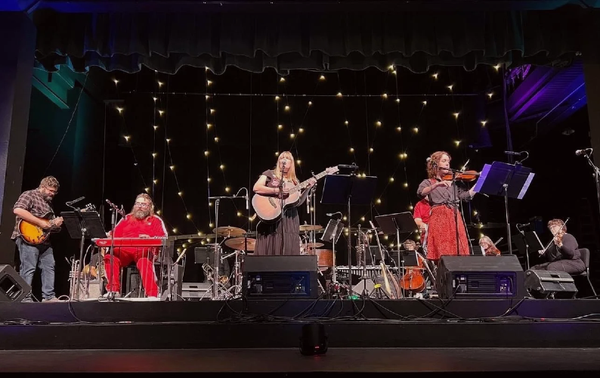
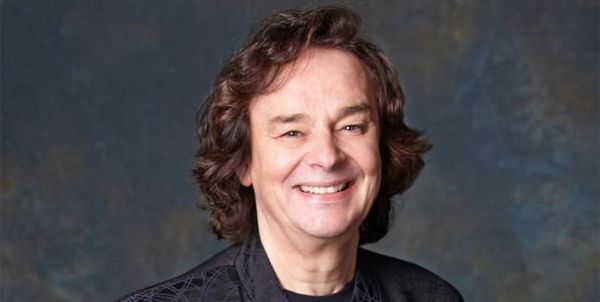
(Colin Blunstone appears as part of Tuesday, September 15's show at the Uptown Theatre with The Fixx & Peter Asher)
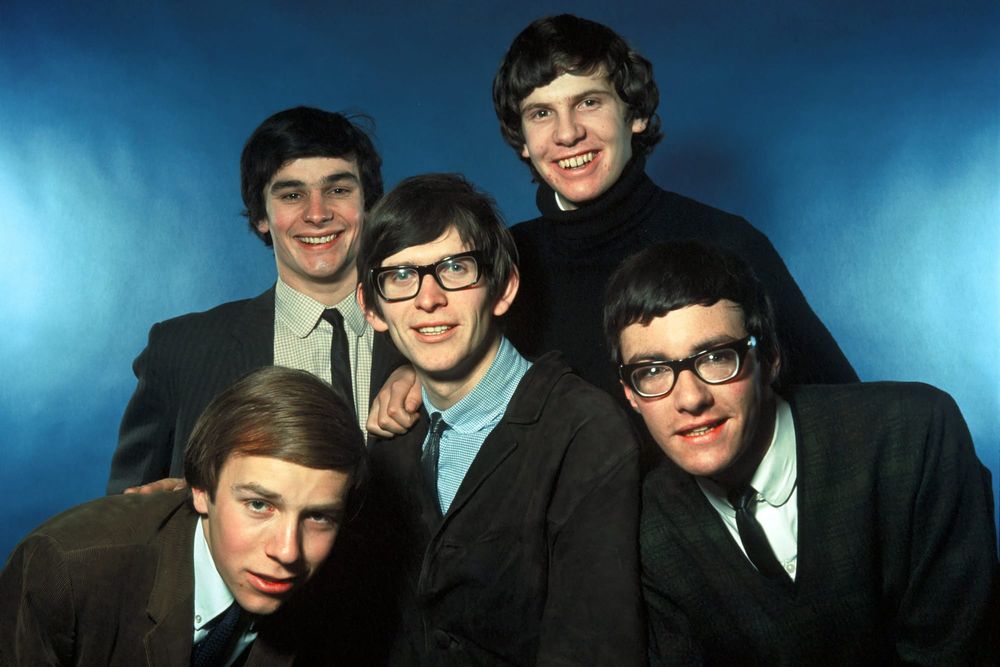
The Zombies have a story out of a Franz Capra film. There’s incredible serendipity in the whole thing, a reminder of how thing can build a momentum of their own. At the same time it’s a story of incredible heartbreak. They were stars before they could’ve possibly known what that was, and it was over almost before they had but a moment to savor it.
For years, they saw themselves as failures. They released but two albums. Their biggest hit came after they’d broken up, the indelible “Time of the Season.” Now the whole album is seen as one of the classics of all-time. (Thanks to Blood Sweat & Tears’ Al Kooper, almost completely.) They eventually wound up inducted into the Rock ‘n’ Roll Hall of Fame in 2019, 55 years after their debut was released.
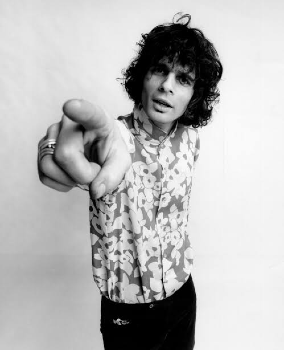
Good things come for those that can wait? Guitarist Paul Atikinson didn’t live to see if but the other four members did and the original lineup’s reunited several times, and have the bittersweet experience of being recognized for their skill and genius, and the beauty of the harmonies, yet the commercial success that eluded them ensured that they only got to make those two albums together.
Blunstone and Argent did reunite and play with a putative second incarnation, dancing around calling themselves The Zombies out of respect to their former colleagues. Blunstone, who was just the singer in the Zombies, went solo and has slowly built up in songwriting chops in addition to well chosen covers to where his next album is going to be his first album of nothing but originals, a nice feat for an 81-year old musician who never really sought this out as a career.
Serendipity & Good Fortune
It was really Argent who had the professional ambitions. He saw Atkinson playing at a folk club and sought him out. He say Grundy and secured him. Argent knew Paul Arnold because he lived a few streets over, though they went to different schools. He saw that Arnold was building a bass in his wood shop class and enlisted him. Blunstone went to school with Arnold, and his name began with B. That’s essentially how the Zombies happened.
“He sat in alphabetical order in my school,” said Blunstone. “So Blunstone sat behind Arnold, and Paul Arnold turned round to me, having just been accepted as the bass player in a band. He turned round to me and said, ‘You've got a guitar, haven't you?’ And I said, ‘Yes.’ And he said, ‘Do you wanna be in a band?’ And that really was my audition for the Zombies. I wouldn't have got the opportunity if we weren't sitting in alphabetical order. It's just chance upon chance how things happen.”
Blunstone joined the band as the rhythm guitarist. Argent was also on guitar with Atkinson. That was the fashion of the day – three guitarists. But when they took a break, Argent fooled around on the piano, and a truly inspired keyboardist, such that Blunstone said something, but Argent rebuffed him – they needed to have three guitars to be a rock band. It was just common sense back then, and they were 16, remember.
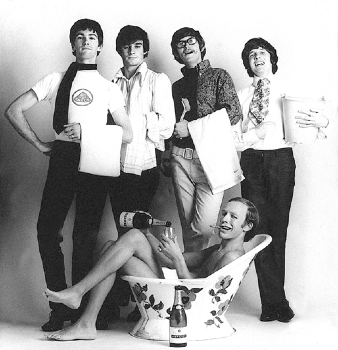
As they were getting ready to go, Blunstone was singing to himself. Argent was no fool. He no doubt imagined this distinctive high tenor might give them an edge. (Let this be a lesson to the youth: don’t try to copy the fashion – lean into your unique strengths.)
“As I took off the guitar, I started singing a song, Ricky Nelson's song, It's Late,” said Blunstone. “And he just turned to me and he said, ‘Okay, if you'll be the lead singer, I'll play keyboards.’ And essentially, that was The Zombies.”
Their distinctive sound helped them build a following quickly. But the summer was coming to an end and the little residency they had was ending with it. There was a contest – 10 bands every week for 10 weeks and then a playoff of sorts.
“The prize was 250 Pounds, which was a fair amount of money in those days. We won the semifinal, and went along to the final. To our amazement, there were busloads of people coming to see us with Zombies banners. We were really excited. We won the competition,” Argent told Forbes in 2020. “On the night we won it, there was a knock on the dressing room door afterwards. It was Dick Rowe, head of Decca Records. He was the guy who turned down The Beatles [laughs]. He had a contract in his hands. He said that none of us were old enough to sign, but he wanted us to take it back to show to our parents.”
This too proved fortuitous. By this time, Paul Arnold had left the band (to become a physician) and a friend of his older brother, Chris White, stepped in. When they won the context, White’s father passed the contract along to a friend of a friend in the industry, Ken Jones. He suggested changes in the contract that essentially had them leasing the recordings to the record company, allowing them to keep the masters.
It seems Dick Rowe could not make a good deal to save his life.
She's Not There
Their very first session the engineer got hammered at a wedding and was loud and belligerent until he passed out. But the replacement was very good and they created “She’s Not There” when Jones suggested that, rather than their reworked version of “Summertime” which was among their biggest songs in the contest, that they try to write something new.
Argent was inspired by Summertime and a song title by John Lee Hooker, “No One Told Me.”
“Nothing in it to do with any Hooker melody. I just liked the way the words tripped off the tongue. I started to construct a fictional story around them. I wanted a verse that was quite moody based around a blues scale, which I did. I also wanted to introduce three-part harmony, which we had been doing ever since we had gotten together. Not many bands other than The Beatles did it at the time,” said Argent.
“Then I wanted the verse to end on a climactic note - a major chord - and then sink back down to the moody minor bluesy thing for the next verse," he continued. “That was all that was in my mind, really. I wrote the song and we rehearsed it.”
Jones suggested they return they loop back to the beginning after the break, and Argent got to work on a second verse. The result was a great pop song that peaked at #12 in the UK and at #2 in the U.S. Suddenly the label wanted more material, but the guys had only just written their first songs. The pressure was tough. The touring was rough. They really had to stretch to have enough songs for their debut album, 1965’s Begin Here.
There were an album worth of failed singles, and the band moved to CBS Records in 1967 for their second album Odessey and Oracle. They made an ambitious album in Abbey Road Studios, just after the Beatles had finished recording Sgt. Pepper’s. Like, literally. (The Beatles mostly used Studio 2 but did some stuff in their studio, 3, with Lennon leaving behind a mellotron they added to “A Rose For Emily.” As it turns out, Pink Floyd recorded their debut, Piper at the Gates of Dawn, in the studio 3 around this time as well.
But the singles tanked. The label wasn’t going to release the album – and indeed, it wasn’t released in England at all initially. But Kooper insisted, and also pushed to have “Time of the Season” released as the third single after the first two tanked. This was in April 1968. The band had already broken up in December after the first two singles failed to chart.
There were tensions in the band, not the least of which was because the two songwriters, White and Argent, had money coming in from mechanical royalties, but nobody else did, and they were flat broke. Without the singles hitting they couldn’t score gigs. Atkinson got married and had a job offer in IT back when computers used punch cards. The band broke up after a late December 1967 gig. They were a band for about 42 months.
The album came out in April of 1968. “Time of the Season” was a grower that didn’t really start to take off until 1969, when it reached #3 in the U.S. In the end Odessey and Oracle was an international hit, and a word-of-mouth grower. It’s just that nobody really told the band.
Back In The Saddle Again
Still, Blunstone, who spent 10 months working a day job as a way to address his grief (“I was too busy to think to much about it”), tried for a moment to make it back under an assumed name, releasing three singles as Neil McArthur. Instead, Argent and White contacted Blunstone, producing his solo album and finding a home for it.
Deeply informed by the strange whirlwind he’d lived, and this second chance, One Year was another album that didn’t hit at the time but which proved deeply influential in the space of time. Christopher Gunning added strings for six tracks and the chamber/baroque pop approach, which is different than Left Banke, provided a touchstone for subsequent acts such as Belle & Sebastian, the Pernice Brothers and avowed fans such as Paul Weller, Hayley Wlliams, Dave Grohl and Post Malone.
Blunstone continued to make solo albums through seventies, endured through the fallow period, returned with the fine Echo Bridge, after a 16-year hiatus, only to have the label, Permanent Records, ironically enough, go out of business two weeks after release. All that work for naught. He followed with the Light Inside in 1998, and then the Zombies back up, and there was another solo disc, 2009's The Ghost of You and Me. He never quit climbing the hill, and doing the work.
"When you start at the top, you start at the top of the pole and you gradually slip down it over two or three years at a young age, it shows you, it's a very good lesson in life actually, not to get too carried away. Always try your best. Get stuck in. It's a marathon, it's not a sprint," says Blunstone.
"All those kind of sayings apply to the music business," he continues. "But you've gotta remember, you may be successful today, but tomorrow it could be a different ballgame. And so it pays to not get too carried away."
Last May, Robert Schwartzman – who was lead singer of Rooney, and a Coppola, Talia Shire's son – produced a loving documentary chronicling the band’s odd, touching journey, The Zombies: Hung Up on a Dream.
There are so many people that get but a taste of their dream. What an extraordinary thing to not only reach the pinnacle of success at 17, only to watch it drift away like smoke the next three years, spend a lifetime making music without ever quite catching that ghost you were chasing, only to find that your peers never saw you as failures at all, but inspirations to aspire to.
Scott Levesque of the band Wheat told us this great story three decades ago about sharing a bill with the Guess Who, long after their heyday. He’s standing there, watching them climb into and muffin-top out of their spandex and he puckishly asks them, “So, what are you guys doing?”
Wily vets that they were, they stared him back in the eye and said, “Same thing as you; looking for a record contract.”
From a certain perspective the chase is all there ever was, and if you truly love the craft, you may never lose the desire to keep after that rabbit you will never catch again, because life is full of surprises. You might even make the Hall of Fame.