Intrinsic Value
Things and Plaudits Won’t Stanch a Vacuum
I had been pondering this term for a few days (on top of a few years), when I encountered an article by a British fellow in the Guardian that took my breath away in how much it echoed my feelings. Not only did I feel seen, it reminded me how unusual the feeling was.
What I am talking about is the way in which nothing can be done without purpose or an end in mind. What will it get me? It’s the grindset/mindset, or perhaps the unfettered pursuit of perfection and material/personal benefit. I am very into the journey for self-betterment but I feel our culture has jump-cut the very long and important process (as in a movie montage segment) such that the end is all anyone ever envisions, not the surrender to the process.
Of course, most of us intuitively understand that life isn’t something to perfect so much as live, but we’ve gotten into an attitude that glorifies that conquest rather than the long, enduring pursuit, such that nobody wants to make the effort. Is there a shortcut? Surely there is, and obviously with enough money anyone can cut the line.
Less What Than How
So there’s an aspect where it feels like this very ends-oriented thinking tends to take people out of the everyday aspect of being present – just doing and living. It’s not that I don’t think we’re capable of efficiently filling our life to the brim with activity like the crowded aisles and walls of a generational thrift shop. It's just that in such cluttered environs most of us will inevitably get lost. Who can see a forest when everything is trees?
Our lives even more than our houses could use a Marie Kondo-style bad habits cleansing, refocusing our efforts and seeing the telescope from the other perspective.
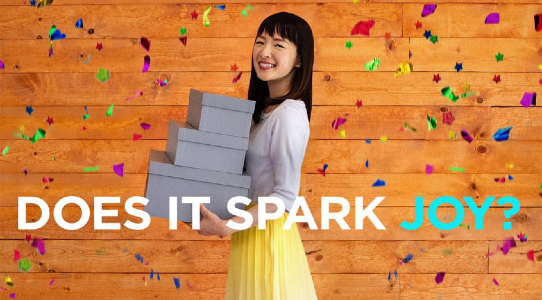
The trick is to make this moment small that you might tromp around somewhat recklessly like Gulliver over Lilliputia. In the article, Julian Baggini, a food writer, complains that life has become instrumentalized. He notes in Gretchen Rubin’s 2010 sensation The Happiness Project where she mentions how hugging her husband is a good way to release oxytocin and serotonin, and how recent studies has shown masturbation reduces prostate cancer. (Bury the lede much?)
Is there anything we can do for the implicit joy or pleasure without being overtly concerned about how it will impact us down the road? Not every decision need be like meeting strangers in Los Angeles – accompanied by quick mental calculus how they might forward one’s personal goals.

Baggini marshals Aristotle, in his defense: “Some things as means to ends and other things as ends in themselves. Only the latter have intrinsic value, while means to ends have mere extrinsic value. If we ask where the ultimate value in life lies, it is clearly in things with intrinsic value.” [emphasis added]
In my own life, I spent thirty years writing about and featuring the work of other people as a journalist, a sort of Cyrano, never speaking directly to my Roxanne. It took a number of life changes to get me to adjust my perspective. It was something that had been building for a while when journalism died for me with the extinction of alt-weeklies across the country. It made more sense to pursue whatever it is I felt like writing.
But it’s hard. That’s why most people retreat back into material acquisition or romantic entanglement. Creating your own meaning from whole cloth and assigning your own value to your experiences is not a sidewalk so much as a parallel bars. You prop yourself up and you’re kind of slowly swinging yourself forward with the momentum of your own will. But the joy isn’t in the distance you travel so much as the dance of movement that brings you there.
Burns Blots Out the Sun
Indeed, I can’t help but wonder how much our current situation of massive financial inequality is about people who couldn’t find value in the relationships in their life replacing them with the pursuit of money. Money won’t ever reject you, but it won’t ever love or encourage you either. Its inherent extrinsic value makes attempts to paper over an emptiness like bartering with shells in Bergstroms. (Sure it worked once, but that was hundreds of years ago!)

This failure to extract meaning from your own life leads to exploiting others around you like resources to be culled, and is the mindset that brought us here. What people can’t understand, they will subjugate and control, and that gets even scarier as people align with Chat GPT over other human beings. (Shut up with that “they rejected me first”; social accommodation is a life-long process in a socialized society!)
Maybe we’re “Bowling Alone” because we’ve become too miserable to be around?! It isn’t necessarily our failure to use Right Guard so much as deodorize our social behavior, something that we don’t know is an issue because nobody’s hawking a cure on television. (In the hyperlinked article, the book’s author Robert Putnam notes the single best aggregate predictor of Trump support “is whether people are socially isolated or not.”)
It’s about people afflicted with inward sensation of playing a role-playing game where everyone they meet are Non-Player Characters. There’s a growing failure not just to develop a good theory of mind (how others think and feel about what you say) but a cohort don’t feel it should be necessary at all. Like society is something you can opt out of and humanity is optional with enough wealth.
This degrades the social commons, and we all suffer.
You Mean What You Do For Me
As Baggini notes, there can be debate about values and which one favors, but the process of making everything a means to an end drains the value from anything that isn’t to a purpose. A lot of life experience indicates that’s the opposite of how things work. Joy most often manifests through things without an expressed or necessary purpose, as simple as a smile or a nod that assures you that you’ve been seen.
“The relationship between intrinsic and extrinsic value is complex,” Baggini writes. “And one of the problems of instrumentalization is that it seeks to flatten and simplify it. It encourages us to identify what is most useful, and then separate it from, and prioritize it above, what is of ultimate value. In doing so, it often diminishes or destroys the very benefits it promises to maximize.”
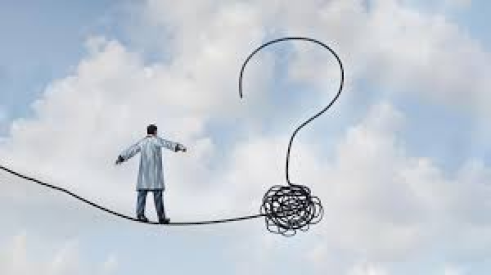
Ah, the arrogance of self-assurance. If we could control everything, it would be the death of joy.
It’s surprise that amplifies wonder and the impossibility that dances about us each day, delivering the occasional misaddressed miracle to remind us how mysterious life can be. Trying to solve the mystery kills Schrodinger’s Cat. Much better to live with the uncertainty – it’s integral to what makes discovery illuminating. Control runs counter to enjoyment.
It’s also about the idea that surrendering control is giving up something that was always a self-delusion to begin with, and better to learn that the easy way than the hard.
“Call it surrender but you know that’s a joke / the punchline is you were never actually in control”
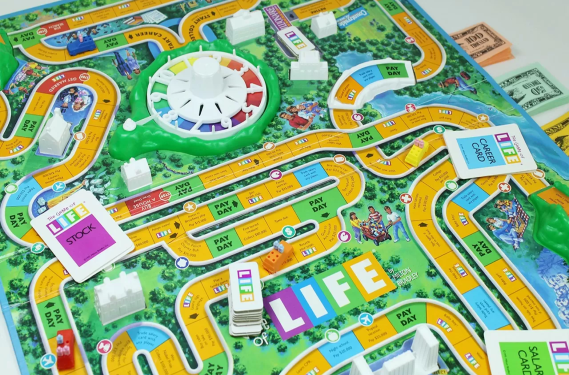
You are part of a game that moves while you play, and no matter how many times you beat it, you can never win, and really, if you could, would the game be that good? Ask the very unhappy billionaires unable to forge meaningful personal relationships and showing their whole ass on the reg.