SewYKnot? Interview with Musician Colin Blunstone (Solo/The Zombies)
From Nowhere to Stars to Forgotten to Feted, The Zombies' Glorious Ride
Watch Monday for our feature on Blunstone's career, in advance of Tuesday September 15's show at the Uptown Theatre with The Fixx & Peter Asher.
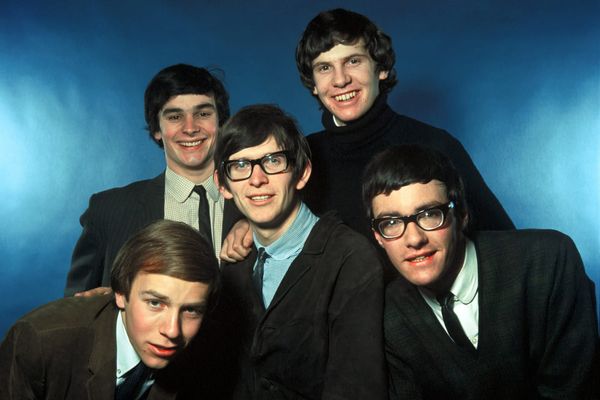
The Zombies have one of the most extraordinary stories in all of Rock'n'Roll. They won a battle of the bands to earn a recording contract, and during that first session recorded the iconic "She's Not There" with its slinky bass line, cool organ sound and sweet 3-part harmonies.
As it turns out, the first engineer passed out drunk, and had to be replaced. The band were a huge sensation, and washed up a few years later. However, months after they had broken up, with the insistence of Blood Sweat & Tears' Al Kooper, their song, "Time of the Season," became a slow-burn hit.
It allowed Blunstone to leave his 9-5, and become a musician again, creating the gorgeous baroque pop solo album, One Year, that would be an enormous influence on many nineties indie pop artists even beyond the obvious once like The Delgados and Belle & Sebastien.
He continued to release solo albums and now has over a dozen. Around the millennium, he and Rod Argent reformed the Zombies, whose music was now held in higher regard than at any time in their career, and launched a second run showcasing their still abundant skills to those still curious. Meanwhile, Blunstone has continued to build and grow, as he puts the finishing touches on his first album of entirely original content – only his own songs – at the age of 81. It's never too late to try something new.
We talk about the many fortuitous incidents that led to their creation, the slow slippery slide when you stop atop the pole, and the many mitzvahs that have allowed him to not just endure but grow, and make music with the same set of childhood chums his entire life.
We discuss the origin of the clap and breathe in “Time of the Season” and the “Who’s Your Daddy” line, how the mechanical royalty played a role in their demise, the cultural scene in London in the early sixties, the pressure they were under to follow up "She's not there," and the Robert Schwartzman directed documentary of their strange bittersweet but ultimately validating journey. Can you imagine finding out 40 years laterm what Sally Fields did in (closer t0) real time?
Podcast Transcript
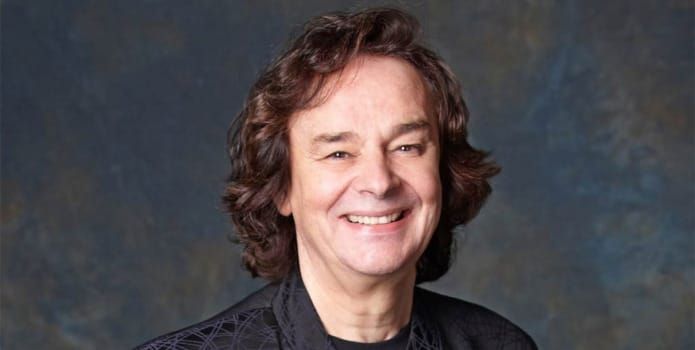
SewYKnot:hello, this is So Why Not?, and I'm your host Chris Parker. I'm here with Colin Blunstone, the voice of Rock and Roll Hall of Fame British Invasion act, The Zombies, and a talented solo artist in his own right, with over a dozen releases and a sweet-toned tenor that could be the yin to Barry White's yang.
How are you doing tonight, Colin?
Colin Blunstone:I'm doing great, Chris. Thanks for that wonderful introduction. I'm impressed with myself. Well,
SewYKnot:I'll tell you, the thing that ... I found one of the most extraordinary things about , your very extraordinary story as a band was that, you did it all with these childhood chums who remained friends , and colleagues for your entire lifetime.
For 60 years, you still were with the same bunch of people and doing things, inter- interacting with the same... And, you have your mate's son on drums, and I just kind of wanted you to reflect on that, 'cause I feel like in today's time and culture, that's a fairly extraordinary thing.
Colin Blunstone:Well, people do say that, but I mean, for us it just seemed very natural. And the original lineup of the Zombies never changed in the, in the '60s. Uh, and then later on when Rod Argent and myself started what we call the second incarnation of the Zombies, it stayed pretty constant as well, in that lineup.
And as you rightly say, the son of one of the Zombies in the second incarnation is playing drums with me. He became the, actually the drummer in the Zombies as well. So , they're just lovely people. They're great musicians, they're easy to work with, and they're easy to travel with, and so why not stick together?
SewYKnot:No, for sure. For sure. There's a great story about John Doe, interviewing all of these guitarists , and bassists when Joan Jett was first trying to put together the Blackhearts. And finally at the end of all their auditions he said, "Well, hey. This band's already together,, bass, drums, and guitarist.
You could just take them, and they're really nice too. Wouldn't you rather be with a bunch of nice people all summer long?"
Colin Blunstone:Yes. It's really important, actually. Obviously they've gotta be good players- Yeah ... but it's really important what kind of people they are if you're traveling with them.
You know, everyone gets tired, and, uh, irritable, and annoyed, and, it, so in those sit- in those situations it's best to have really good people with you. Supportive, sensitive people.
SewYKnot:Well, and you also have mentioned in another interview that those, people who you've been with all of your life, you don't let each other's egos get too big
Colin Blunstone:Well, I think that's another plus as well, isn't it?
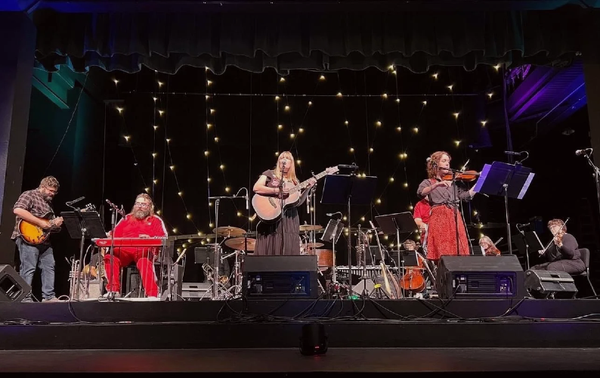
No one gets carried away. I think the Zombies are a very down to earth band, always have been , and always will be. And now I, with my solo band, I've got half of the Zombies with me. Steve Rob is on drums and Soren Koty is on guitar. And on the other side of the stage I've got two of the Strawbs, Dave Bainbridge-
on keyboards and, Chas Cronk on bass. So it's the Zombies versus Strawbs on stage, but they're all, same as with the Zombies, they're great players, but they're really great people as well.
SewYKnot:Yeah. No, it's funny, there was just a, article that came out the other day, one of these scientific pieces where they were doing this, study, in Antarctica, uh, for space travel.
And they're saying, "Well, you know, it turns out that loneliness is not the only concern. Spending 10 months in close proximity to another person can make you start to really dislike them."
Colin Blunstone:I'm sure it can, yeah. And we've only got, a month on the road in September, and I'm sure we'll be fine.
Everyone gets along, it'll be fine. 10 months or a year or something might be a different matter. But, I think we can manage a month on the road.
SewYKnot:I got to imagine, traveling on the road now is so much different than it was, back, uh, you know, in the '60s when, I know you said you had a rattled down van, you're going through these two-lane county roads.
Colin Blunstone:Well, absolutely. We had a terrible van which we bought for virtually nothing, and it had two doors on the side that were on runners, and they always came off the runners whatever you did. So in the winter, there's just a gale blowing into the truck. It would only go 50 miles an hour. It took us all day to get anywhere.
It was a nightmare.
SewYKnot:I was curious, you credited, Ron Arg- you know, , the story you told about how you became, you started out as the , rhythm guitarist. , My first thought was, , anybody who's willing to step aside, let somebody else sing for the betterment of the band, that's a pretty good and humble fellow that you wanna be, strapping your cart to
Colin Blunstone:It's interesting, isn't it?
Yeah. Rod was gonna be the lead singer, and I was, as you rightly said, I was gonna be the rhythm guitarist. But in our first rehearsal, we were a very average band really. None of us had played that much. , But i- in a coffee break, Rod went over to a broken down old , piano, and he played, uh, Nut Rocker by, um
Oh, I've forgotten. God, I've lost the story. Ricky Nelson? I'm so sorry. No, no, no. Nut Rocker by B. Bumble and the Stingers. Rod went over to a broken down piano in the corner, and he played Nut Rocker by B. Bumble and the Stingers, and it's a classical piece that's been sort of rocked up. It, you've gotta be quite an accomplished keyboard player to play this piece, and he was so much better than us.
I'd only just met him, but I went over to him and I said, "Man, you should play keyboards in this band." But he said, "We're gonna play rock and roll. It's gotta be three guitars." And that's how we left it. But at the end of the, rehearsal, I was putting my guitar into its case, and as I took the guitar, I started singing a song, Ricky Nelson's song, It's Late.
And he just turned to me and he said, "Okay, if you'll be the lead singer, I'll play keyboards." And essentially, that was The Zombies. That's how it happened.
SewYKnot:And the other thing that you said about the band, too, that I don't know that it gets brought out enough, is how, , all of you guys had very divergent , or eclectic tastes.
You weren't all on the same page, and that seemed to really make it so that when you guys came together, what you created was uniquely a product of your five individual tastes.
Colin Blunstone:Well, I think there's a lot of truth in that. I think that we all liked a wide spectrum of music. And w- there were certainly some things that we all agreed on.
We all liked classical music. We liked modern jazz. We liked the blues, rhythm and blues, rock and roll, pop music. We loved it all. And when you take, , influences from all of that music and mold it into one band, then you get The Zombies, particularly if it's a keyboard-based band featuring three part harmony.
That's how we ended up at The Zombies. It was quite unfashionable to have a keyboard-based band when we got together in 1961. Everyone was playing three guitars, and we actually probably lost quite a lot of work because we were different. But in the end, it paid off Because, , you can't keep on copying all the time.
You have to stand up for what you are, what the essence of the band is. And it was a keyboard-based band featuring three-part harmony. And then later on we developed, we realized we've got two really good writers in the band, Chris White and Rod Argent, and we would feature their songs as the band developed until we recorded our last album, which was Odyssey and Oracle.
It's 12 tracks, m- 12 magical songs written by Rod Argent and Chris White.
SewYKnot:Well, that's, one of the things that's also very interesting is, that you learned to sing to Rod Argent's and, Chris's songs, but, Rod especially. And he was saying that he learned how to write to your voice.
There seems like there's a synergistic aspect of the way that you guys came together as very young folk, as it turns out. And then later, you and Rod in, in the second , but the way that you came together, seemed to, kind of push each other in the right ways.
It was very organic, I guess maybe you would say?
Colin Blunstone:I think so, yeah. And Rod will often say that he always writes songs for my voice. He can always hear my voice when he's writing a song. And he certainly taught me how to sing. I was very raw when we first started. As I said, , I never thought I was gonna be the singer.
I had no idea that I would have a career as a singer, so I needed all the help I could get. \ Yeah, I think we did help one another. And that's, that's true today, you know? I mean, I've just been talking to him earlier on this afternoon actually. We recorded a track a couple of weeks ago
A new song that he's just written that he's very excited about, and, I've put a vocal on it, so hopefully people will be hearing that soon. Even though he's not gonna tour, I'm sure that we'll go on working together. He lives quite close to me, actually. He lives about an hour away, so we meet up fairly regularly, and I do hope that we'll keep recording.
SewYKnot:And that was the thing, isn't it? That originally the reason you even met up with him was because ... Is it Mr. Arnold? I forgot his first name, but he lived near Rod, right? Wasn't that the thing, and that's how they knew each other?
Colin Blunstone:That's right. There's no way I could have known Rod, because although we all went to school in a place called St Albans, the rest of the band went to a different school.
Rod and, well, this is when the band started. Rod and Paul Atkinson and Hugh Grundy all went to a different school, and there's so much chance involved in this.
SewYKnot:Yes.
Colin Blunstone:Hugh Grundy was in the army corps. It was a marching band. He'd never played a drum kit, but he was a very good side drummer in a marching band, and Rod spotted him and approached him.
Paul Atkinson was playing in a folk club, and Rod thought he was the best player in the folk club, and he approached him. Then he had a friend called Paul Arnold who lived in the next road, didn't go to the same school as him, and Paul was making a bass guitar in woodwork. He'd never played one, but he was making one, and that got him in as bass guitarist.
And at our school, Paul Arnold went to my school, so I didn't know Rod at all. I knew Paul Arnold. We sat in alphabetical order in my school- Oh my God ... and so Blunstone sat behind Arnold, and Paul Arnold turned round to me, having just been accepted as the bass player in a band. He turned round to me and said, "You've got a guitar, haven't you?"
And I said, "Yes." And he said, "Do you wanna be in a band?" And that really was my audition for the Zombies. I wouldn't have got the opportunity if we weren't sitting in alphabetical order. It's just chance upon chance how things happen.
SewYKnot:It's, there's all of these little things that don't seem very big in the moment, but like, the idea that you got signed to, Mr. Jones. Again, I forgot the first name. But when you won the Rock 'N' Roll Contest, again, another improbability. You win the contest- Yeah
but it's a private contract. It's a contract that's not to a label, it's to a fellow who apparently, he dealt with you guys fairly right, and, that allowed you to have these masters that otherwise would not have, would've been in control of these labels. Another very fortuitous set of , circumstances.
Colin Blunstone:Absolutely. Yes, we won this Rock 'N' Roll competition. Uh, it was on a Sunday night, and they would have 10 bands a night, and it ran for 10 weeks, so there's 100 bands. And I really didn't think we were gonna win, but when we, when we did win, that was the first time I thought, I didn't say anything, but I thought, "Maybe there's a chance of us, moving forward as a professional band," because we had just beaten 99 other bands, and that was the first time I thought there was a chance.
And from that, we met Ken Jones, who was our producer- Yes ... and he signed us to Decca Records. We never signed directly to a record company. We were signed to a production company that was owned by Ken Jones. Another fortuitous things you just said, because the masters, the rights, the ownership of the records reverted to us.
So this didn't happen to a lot of the '60s bands. They never owned their records. But we own them, and, obviously, there's all sorts of advantages to owning our records. We were just lucky.
SewYKnot:Yeah. Yeah. And obviously you've had this very strange career, semi bittersweet career, but on the other hand, you had a chance even though you didn't
I mean, I did this interview with Lindsey Buckingham a long, long time ago, but he had this really funny comment where he made this anecdote about being in Fleetwood Mac and having a solo career was like occasionally you go out on this cruise ship, and then the rest of the time, you're out on your fishing boat, doing your thing.
And that kind of duopoly kind of does make sense for you guys in the sense that there was this moment where you were the kings of the world for a brief second, and then that, all kind of dissipated, and yet in the smoke and shape of time, it was found that you were the girl that people wanted to go home with.
You were the one who got inducted into the Rock & Roll Hall of Fame, not 100 other bands.
Colin Blunstone:It's strange, isn't it? There's ... I think there are many mysteries, involved with the Zombies, things that I don't understand myself. How we felt when we finished that we were being very unsuccessful. Later on, 'cause there was no internet to know what was happening in the whole world- Yeah
later on we were told we always had a hit record somewhere. We were just concentrating on the UK and the States, but really it's good, good thing to remember that the music business is, there's a whole world out there. There's a big world out there. And I think if we'd known that we'd had hit records in the Far East and in obscure places in Europe, possibly the band would've stayed together.
But it's a career that's very hard to understand how these things happen and I was there, and I don't understand- ... how these things happened. So much of the Zombies career is shrouded in mystery, I think, and I'm not sure I'll never understand it.
SewYKnot:Well, when I interviewed Richard Thompson, made what he would later describe, , as a puckish comment, but I thought it was great at the time, and I asked him, you know, what was the secret to his continued brilliance.
And, he said, "Well, , the secret is my continual failure." And well, you know, I, I think there's an aspect where, if the Zombies hadn't come to that end, , and the way that it happened where, you're dead and buried in the ground, and then a year later you're a hit, bigger hit than you'd ever been when you were around.
The way that it unfolded- it helped create this, incipient solo career, and then it encouraged you to write, which you had done a lot of. You'd been doing, but, you know, it really pushed you in this direction that made it, when you guys came back 30 years later, that you could really seize that in a different way, that maybe if that hadn't happened just like that, it wouldn't have been quite like that.
Colin Blunstone:Well, absolutely. I mean, you have to learn from your failures, don't you? And you pick yourself up and, and start again. And, and if you can learn from them, you'll be stronger. And I think that the band, the second incarnation of the band, and started in 1999, I think we were a lot stronger because we'd been through so much in the 30 or so years, before 1999.
And also, I mean, the music business is like that. It's very up and down. Yeah. There are great peaks, and there are big troughs, you know? And you have to learn to deal with them. It's not the end of the world. You've just gotta learn from those, experiences when things go wrong, "Okay, what can we do? Let's get it sorted." It's that kind of business. You've gotta have stamina.
SewYKnot:Yeah. Yeah. Because it goes on far longer than you think and, , just when you got out, they'll call you right back.
Colin Blunstone:Well, it's really funny, When we started in 1964, I thought that we'd possibly have, two or three years of a career, and here we are, 1964, 2026.
I don't know. It's 60-something years. I never in my wildest dreams thought I would still be writing, recording and touring in 2026.
SewYKnot:I also can't help but feel like there's an aspect of the humility with which you approached your craft that comes out in this idea. , That was the thing I was wondering, if, that spate like, I guess it was, 10 months in an office, if that kind of made, the subsequent years that much sweeter because there's a very real image in your mind of where it might have gone,
Colin Blunstone:Well, it probably did.
, From my perspective, I enjoyed my 10 months in an office or how long it was because it helped me get over the disappointment and sadness- ... of the band finishing. I didn't have a plan B when the band finished. I didn't know what I was gonna do. And eventually I just, I phoned every company I could fi- find, and just took the first job I could get.
And it helped me. It was a very big commercial, , company. The phones were ringing off the hook. I couldn't dwell on the fact that the Zombies had finished 'cause I was so busy. So I think it really helped. But with regard to humility, remember that at 18 or 19 years old, we were having number one hit records, and by the time we were 20 or 21, it seemed as though we were really unsuccessful, and that, I think teaches you quite a lot.
When you start at the top, you start at the top of the pole and you gradually slip down it over two or three years at a young age, it shows you, it's a very good lesson in life actually, not to get too carried away. Always try your best. Get stuck in. It's a marathon, it's not a sprint.
All those kind of sayings apply to the music business. But you've gotta remember, you may be successful today, but tomorrow it could be a different ballgame. And so it, it pays to not get too carried away.
SewYKnot:No, no. There, there's this great comment, I kinda say this one a lot to, musicians today 'cause I just think it's a great per- perspective.
And I talked to somebody, can't remember the name, but they said, ", I realized that writing music, it was like you have this big pot of money, a specific pot of money, "and you can either get it all at once or you can get apportioned out over the length , of your lifetime."
And to a certain extent, that's true. You can either be like this person for whom your music career was just something that happened, or it can be something that informs the rest of your life. And, I think it's a great mitzvah, when you can find something that gives you such rich feedback.
And from the same thing, like , I just think the story Odyssey - and Oracle is a great in that same way. You know, you guys thought you were doing something great , or at least meaningful when you did it, and you finished and nobody else did, and then later you found that no, no, no, not quite true.
Colin Blunstone:Absolutely. Um, you know, Al Kooper from Blood, Sweat & Tears was a, was the guy that really helped out here. He'd just become a, a producer at CBS, and on his first day in the office, he went in to see Clive Davis. A very brave thing, because Clive Davis was absolutely one of the most powerful guys in the music business.
And he said to Clive, he'd been in London, he'd bought 80 albums, and one album really stood out. He said, "Whatever we have to pay to get this album, we have to get Odyssey and Oracle." And Clive Davis said to him, "We already own it, and we weren't even gonna release it." But Al Kooper fought for it. The album really nearly wasn't released, but Al Kooper fought for it, got the album released, and eventually he actually fought for Time of the Season to be the single.
It was the third single, I think, from the album. So we owe Al Kooper so much, and eventually Time of the Season was the number one in Cash Box and two or three in Billboard, I, I can't remember. But it was a huge hit. If Al Kooper hadn't have got behind the album and the single, it, it would've just disappeared, I think.
Again, it's just chance. These, these things happen, and, um, I'm, I'm just so grateful that they have.
SewYKnot:And it speaks to, I mean, that's the other thing that's strange about the music business. It's one of these things where you can be playing to seven people, but if one person is one of the right people that to play to, it can change your life.
It's such a strange business like that.
Colin Blunstone:It absolutely is. And, if ever I've been in a situation where a, a concert just reminded me of something, a concert's not very well attended, I'll always have , a talk with everyone. I don't have to remind them that we're there to give the best show we possibly can.
It's harder , when there's a diminished audience- Yeah ... you know, there's not many people there. It's much easier when you've got, a huge audience that are really enthusiastic, and they lift you, it's a wonderful experience. But it's worth having a little pep talk if you're going on stage and there's not many people there.
That's not their fault. We just have to work harder, and we have to make the show the best we possibly can. And I've always thought that way. And as you rightly said, there could be one person in that audience that's very important, and, , you will be rewarded for your effort. And, and maybe there won't be someone there who's really important-
but it's still worth it. You know, you're a professional musician. You have to go out there and give it the best you possibly can. Smile on your face, get on, up on your toes, and let's do it. Yeah.
SewYKnot:That's one of those other weird things, you know? You've always The Zombies always were, seemed like they were more successful in the States than they were in the UK.
And I know that you've said that I think, the Odyssey album, Odyssey and Oracle still hasn't become, , been the hit in the UK, whereas it has been across the world. And, and so, , a while back when I did my Richard Thompson interview, he had this interesting comment he'd made about audiences in the States versus audiences in the UK, and he said that, he thought the UK was tough because people there weren't really committed to you performing well.
They could be just as happy taking the piss out of you as they could be if you did well, whereas in the States, people it felt like they really wanted you to do well so that they could cheer you on.
Colin Blunstone:Well, I think there's an element of truth in that. I think that the UK is a tough place to play. I, I've got a theory.
I mean, actually, I think that The Beatles changed everything for British musicians in, in 1963. Suddenly British musicians were, uh, being called for from all around the world, and that didn't happen before The Beatles. Yes. But another thing, uh, that's true is that the UK is a tough place to play. Audiences are tough, and I, I don't know.
Everything seems to be not so well organized backstage as it is in other countries. It's just challenging to play here. And, and my theory is that if you can make it in the UK, as most bands that go to America will have made it in the UK first, if you can make it in the UK, you're gonna do pretty well in other countries just because the audiences and the organization of touring in the UK is tough.
It's, in, in many, many little ways. You get out there and, you're waiting for this wonderful response, and sometimes you get it, and sometimes you don't. And you've gotta work for it
SewYKnot:it's fascinating, and you've spoken to it, in interviews this idea that, when you guys came along, it was this incredible moment for all of British culture, and there was so much happening.
Richard Thompson and talking to some of the people , I've interviewed that late s- mid to late '60s moment, you guys saw, , the, The Stones in like '64 right when they were starting up and, would just go to bars and be able to see your contemporaries.
Richard Thompson was talking about the many times he went to see Jimi Hendrix , in London. I was curious about, your thoughts on that and how that might have also made it into like this melting pot, 'cause there was so much happening. It was so hot. So hot.
Colin Blunstone:I think it really was.
You know, when you think of fashion with Mary Quant and Twiggy and photography, David Bailey, art with David Hockney, Yeah ... just everything, and, the theater with John Osborne, films with Michael Caine. It seemed that the center of the artistic world was London at that time it seemed to me.
And it was a time when it felt that anything was possible, and we were really fortunate to be teenagers at that time in the music business when so much was happening, um, in London. And we did go and see The Stones. I think it was actually 1963. They'd just made- Wow ... their first record. It was a record called, Come On!,
and it was a small hit, but they were playing in a very small club called Studio 51. It's just off Leicester Square. And, there were probably, , two or 300 people in this very, it was packed in this very small club. And I have to tell you, they were absolutely fantastic. Absolutely fabulous. They all sat on stools like I think like the blues players that they admired- Right
so much. There was no sort of dancing or anything like that. They just sat on stools and they'd play. Oh, it was fabulous. I'll always remember it.
SewYKnot:Why don't you tell me, i'm curious, I know you've got a new solo album coming out, or you've been working on it, and maybe gonna be out maybe next year I think.
What's going on with that and if some of these songs with Rod are gonna go there or if there might be, you've hinted there might be still some more Zombies stuff to be done. What can you tell me?
Colin Blunstone:Well, I have recorded with Rod and the Zombies, we've recorded one song.
But that's kind of a separate project. I don't know what's gonna happen there. I hope that we'll record more tracks. We have to wait and see how that goes. But I am recording a solo album with a young producer called George Moore in London, and we've started eight tracks. We know what the 10 tracks are gonna be, but we've only started eight tracks.
And for the first time, I've written all the songs, which is, is great for me. I've taken my time. I'm 81, and I've just recorded an album of all my own songs, so I'm really thrilled with that. I would think it will definitely be finished before Christmas, and hopefully it'll be available from about spring next year.
But I'm only guessing that logically, that seems to be about the right time.
SewYKnot:So tell me a little bit about that. Obviously, uh, Maybe not obviously, but I feel like there's an aspect where when you've been doing a creative thing long enough, you stop trying to do it for other people, and it becomes a competition with yourself.
And I'm curious how songwriting has been that way, that kind of gulf for yourself. And what you would say about the progress and how you feel. Like, obviously having, a full batch of songs for yourself to do
Colin Blunstone:Well, it's certainly true of me, I think, that at this time in my life, I want the album to please me first.
I am, if you like, recording for myself, but I'm very aware that I want other people to like it as well. So it's, I suppose it's a, a twofold ambition. I want it to please me and we've worked hard on these songs, and so far I think they sound really good. Difficult to judge your own songs-
SewYKnot:Yes
Colin Blunstone:but as far as I can tell, we've really tried to be open about it. My producer George Martin and myself, I would say, "Listen, don't hold back. If you don't like this song, feel free to say it." , But I do think that, especially as you get older, you are recording for yourself first and foremost, and then of course, I want other people to like it as well.
I really hope so. I'm crossing my fingers while I'm saying this. I really hope that they do like it. And in a way, it could be the start of a new career for me at 81 as a singer-songwriter. Because before, I've usually had a few songs on an album, but I would be covering other people's work. But it would be great if I get some recognition on this album.
As I said, I'm a new boy on the block. A singer-songwriters at 81, I can start all over.
SewYKnot:Well, I think it's wonderful any time we can continue to reinvent ourselves because, it's like the shark, right? As soon as you stop swimming, that's it. Uh, you know- Yeah
If you're an artist, you have to always believe that there's something you can still conquer or deliver , or why would you be doing it?
Colin Blunstone:Of course. You always want new aims, don't you? And, and for me, I mean, I love performing. You never stop learning about performing, and I love performing.
I, but I love writing too, and you never stop learning about writing and recording. It's that kind of business. There's always something new to, to understand.
SewYKnot:Sometimes I make fun of it and, I think a funny way to deride it that, you know, you guys are traveling beer merchants.
But I was thinking the other day that it's actually, you guys are also kind of traveling crowd ventriloquists. You're speaking for people, to steal a little from Lou Reed, who never had a voice to call their own, you know? And you're giving voice to people, to words and emotions that they maybe don't know always how to express.
And that's one of the things that I think is fascinating about being a singer. You're recreating a moment over and over again. Most art is, like, done once and that's it. You're recreating it because it's like an emotion, and every time you recreate it, it's still a little bit different than the past time.
Colin Blunstone:Well, that's true, and it is, it's really wonderful when you connect with an audience and you can, you can feel it, on a particular song or hopefully it's a whole performance. And I think I said before that when an audience is on your side, when they're really enjoying a performance, it lifts you in the most extraordinary way, and it's a very exciting experience.
And I've never tired of that experience, of getting out on stage and hopefully singing songs that mean something to people, and they repay you. They repay you by lifting you as a performer. And as I said, it's a wonderful experience
SewYKnot:So now, there isn't per se a question in here, but maybe we can ferret something out from this.
I just was thinking about, your connection with, is it Chris Golding? And the strings, and I was thinking about how, strings are such a tricky thing, musically to bring off in a way. You don't want them to be too big. You want them to, complement what you're doing with the band aspect.
And, \, I'm just fascinated with this, the first album by Genesis with Peter Gabriel, from Genesis to Revelations, 'cause I know that they don't like it. And, and I really kind of like it, but I know that they've written it as a folk thing, and then they had this producer who was, doing the album, who actually owned the masters.
They didn't, and, you know, he ladled on the strings. He put all these strings all over it, and it's really quite beautiful. They're 17, 18, so maybe , there's some clunker lines in there. But it's still, a really, I think it's a beautiful album. I was curious about your perception or your thoughts about that line on Too Much and Not Enough and how strings, interact with a rock song
Colin Blunstone:Well, yeah, I think you have got to be very careful, using strings, in any contemporary context.
For me, I worked with an arranger called Chris Gunning-
Speaker 6:Fantastic ...
Colin Blunstone:and, he arranged much of my first album, which is called One Year, and there was a huge hit on that in the UK and in Europe. But... Oh, sorry. Something just fell over. There was a huge hit on that in the UK and Europe. , But he was very careful with the strings.
What we were looking at was a more sort of Bartók-type arrangement, very striking, powerful, usually just a string quartet, but sometimes a bit more beefed up. Sometimes it could be a 12-piece string orchestra. But they're really attacking, when they play, and so it's not really romantic.
It's quite- Right ... hard-hitting, and I quite like that sort of thing. But especially if you get an orchestra behind a band or a singer, you do have to be careful because it can get very easily get very sweet, and, , that's not the kind of thing that I'm particularly fond of. But if you ever check out my first solo album, it's called One Year, and then you'll hear what I'm talking about, these very strident, chords that, , Chris Gunning managed to get into quite romantic songs, but , he gave them a real edge.
SewYKnot:Well, and I think that, one of the things that's always been fascinating about the, the tenor of your voice is that it has this kind of bitter sweetness that just seems implicit in, how it's delivered, you know? I mean, something about, the tonalities and the, high register obviously, but it also really worked with what Rod was doing very well or vice versa.
Colin Blunstone:Well, I, you know, it's funny because I did start as a singer, as a rock and roll singer, but I know a lot of people think of me now more as perhaps a bit of a balladeer. But- Yeah ... I'm lucky in that I can sing all different kinds of songs. But I would say that if I'm singing a more of a ballad type song, I am very conscious of the lyric.
And I do see singers sometimes, it- they obviously are not thinking about the lyric when they sing, but I do. And hopefully that comes through, that I'm feeling the lyric and I hope the audience are as well. And so I do hope that that makes people realize that I'm very genuine when I'm giving this performance.
You know, for that time that the, the song lasts, that's all I'm thinking about. That's my whole world. And, that's why perhaps people think of me as more of a balladeer, because I do really get stuck into the lyric.
SewYKnot:I agree. Though I think there's also a way that your voice and the register lends itself to a little bit of a sadness or a reflectiveness.
Something about, I don't know, our norms or the way it hits you, it sounds like something, \... And not always. Obviously, as you say, you could do the ... But I'm just thinking about some of those hits. It has this eerie, otherworldly quality to it that makes you think
Colin Blunstone:Yeah, I mean, it's just the voice I was born with.
Um, I'm not consciously trying to do anything with it. Although , you know, , I have, been coached years ago a little bit- -
SewYKnot:I was gonna say, I did
Colin Blunstone:see- Go
SewYKnot:on ... that you, you'd worked with, Ian Adams, I think. Is that, was that his name?
Colin Blunstone:That's right, yes. I was coached by a guy called Ian Adams, but only for a short time, and he taught me a little bit about the technique, singing technique, and gave me a set of exercises to work with.
It's about 30 minutes, 35 minutes. I do that, before soundcheck and I do it before the show. So I've sung for about an hour before I actually do the show, and that really helps\, but otherwise, when I sing, it's just my natural voice. Ian Adam never tried to change your voice.
He just tried to make your voice stronger and more accurate , and hopefully that's what he's done.
SewYKnot:Yeah, it seems like, obviously , you've been able to do your career for a lot of different reasons, but seems to me that part of it is that your ability to perform is because you've learned to continue to take care of yourself , at a crucial enough time that you didn't degrade your instrument, in those intervening years by the time you'd figured out how to strengthen, your other muscles around it or whatever.
Colin Blunstone:Sure. No, that's true. , And the other thing is that as you get older, you learn that when you're on the road, you really do have to look after yourself. Probably the most important thing is to stay hydrated. You have to drink water when you're on the road. It's, you know, quite a lot of water.
And when you're performing as well, you have to drink water, watch your diet, eat well. The other thing is to get plenty of sleep. You've got to sleep. Whereas when we're kids on the road, you know, everybody's- partying every night and going crazy. You can do that when you're young, although it's probably not a good idea-
but people do do it. As you get older, you've gotta take it more seriously and look after yourself. That's the three things I do. Try and drink plenty of water, eat sensibly, and get plenty of sleep.
SewYKnot:In 1995, you, did an album, Echo Bridge, and,
Colin Blunstone:Yep ...
SewYKnot:it had been a while since you'd done, , a album, all original songs and I was curious, , could you tell me about what that album was, how it came about, a little bit of the history on that?
Colin Blunstone:Absolutely. I was collecting songs and listening to lots of demos, and I got a couple of demos from a guy called Jon Sweet.
It's J-O-N, S-W-E-E-T. And, the demos, the songs were great, but I thought the demos were really good as well. The sound on his demos sounded better than the masters that I was recording. So , I tracked him down , and he had his own studio. - Nice ... he was just starting out. It was in his garage.
It didn't have its own building, but this is when we did Echo Bridge. He now has a beautiful studio. But it was in his garage, and I went down there and met him, and it was really funny because in his garage he had , a grand piano and so much recording gear. It just filled his garage up.
My only thought was, when I walked into the studio or garage, w- great, but where do we stand? There's no room in this place for anyone to stand. But we got round that. It was a little bit restrictive, , physically to be in that studio, but , he was just a wonder. He got great sounds.
It's one of my favorite albums, Echo Bridge, and it was all recorded in the producer Jon Sweet's garage. We had such fun. There were two backing singers came in one night, and the roof started leaking, and it was leaking right above their heads, ... It was so funny.
While they were singing, I was bailing out the studio at their feet. And I thought, "If only we could take a photograph of this," because I'm trying to get the water away- ... from their feet while they're singing, and it's pouring in through the roof of the garage. It wasn't very deluxe and grand.
It was very basic. But I love the album. I've always liked that album.
SewYKnot:I think that there's something charming that comes out in that album. And, telling that story you can see how, there's so much that goes into making especially an album as opposed to a song.
There's a vibe that you're encoding into that vinyl and, the vibe of the people that you're doing it with.
Colin Blunstone:Absolutely. It took three years to record that album because, finances were very tight, and so I was relying on a lot of favors. But this is the irony of that album.
, It took us three years to record it, and then when it was recorded, we signed a deal with a big indie label over here called Permanent Records, and two weeks later they went bust. So Permanent Records didn't live up to their name. Wow. We'd spent three years making this album. They had it for two weeks and they went under.
For two weeks. So it was a sad tale, I'm afraid.
SewYKnot:It never really got its chance to breathe in the marketplace, so there was another kind of lost opportunity.
Colin Blunstone:I know. There's a thousand ways that, that albums can get lost, you know, that things go wrong, and you're so fortunate if everything connects and suddenly you've got an album that's, creating a bit of a stir or, or even a chart album.
That means that everything went right. And as I say, there's a thousand ways that it can go wrong, and one is that the record label goes bust, which is what happened there.
SewYKnot:That was also really fascinating because, you guys had the experience that ended up breaking up a lot of American underground bands in the mid-'80s, late '80s, early '90s before Nirvana broke.
The mechanical royalty. So many bands start out with this idea, we're all for one and one for all, but they don't necessarily put all of the kitty in the middle because those songwriting royalties are a little different than the performing royalties. And for a lot of bands, and certainly, before it became the business it is now, but in the '70s and '80s, if the songwriter didn't share it, the other musicians, you know, wouldn't have the money to live.
Really talented musicians, you know, they were taking side jobs. You guys , in the late '60s were already experiencing that.
Colin Blunstone:Yeah, it did, it happened with the Zombies as well. Um, the three non-writers, Hugh Grundy, Paul Atkinson, and myself, we were absolutely broke, and it certainly played a part in the band breaking up.
We had this terrible, terribly sad meeting where I think we all knew we were gonna say the band was gonna finish. But right at the beginning of the meeting, Paul Atkinson said, "Guys, I've just got married, and I have absolutely no money. I ha-," You know, he, he'd been offered a job- Oh, my gosh ... he's very bright, Paul Atkinson, and he'd been offered a job in a very new computer industry.
It was just starting. And he said, ", I have to take the job. I've just got married." And I think the band would've finished anyway, to be absolutely honest, but, as a result of that, Rod said, "Well, look, Paul's leaving. I think we should end the band." And that's how we finished, because basically the non-writers just had no money at all, and it was very challenging.
SewYKnot:Yeah. There's a case with, the, Squirrel Nut Zippers, and they had, several songwriters, but the hit was made by one person, you know? So when he leaves the band, what happens to that money? It's crazy how these things play an oversized role in what happens.
But as you say, there's so many little things that go into making a band successful that any of these things can end up tripping you up.
Colin Blunstone:Absolutely. Absolutely. There's a million ways that things can go wrong. But overall, I mean, if you try to think n- not about chart success and even financial gain, if you try to just focus on your craft and just, becoming a better writer, learning a bit more about recording, how can you improve the show, how can you improve your voice?
If you try to focus on that side of the business, it's not so vital if your next album isn't a top 10 album. You need to make enough money to live, of course you do, but for most artists, that's enough. If you're just making enough money to live, it's fine, and, you just get on with it.
I think sometimes when big money comes along, that can be another reason that a band can break up. Absolutely. There can be disagreements about what's happening with that big money. But if you can just make enough money to live, I think most artists would be satisfied with that.
SewYKnot:So one of the things that's crazy is that you guys started with one of the most insane recording sessions I can imagine a band having for the first time.
And you guys, as we're talking about just that just now, you guys rolled with it, and you figured out what to do. As it turns out, the replacement engineer was a pretty talented guy in and of his own self
Colin Blunstone:Absolutely. Our first session with Decca was booked as an evening/night session. A, a lot of people recorded into the night in those days, and it started at 7:00 at Decca Studios in West Hampstead in Northwest London.
And we arrived, and because it was a 7:00 start, the engineer, who was a very successful recording engineer, but the engineer had been at a wedding all day, and he was blind drunk- ... and very aggressive. Very aggressive. And it, it just makes me laugh because I've been in the business now for 60-something years, but inside the first 20 minutes of that session, I really thought, "This is not for me."
'Cause I just remember being in the studio with the headphones on, and this guy's screaming all the worst language you can possibly think, and threatening to practically kill us at any minute. And I thought, "This sounds very dangerous. I'm not sure this is for me." But then we had a bit of luck, and he just, he passed out cold.
And, we had to pick him up, one zombie on each arm and one zombie on each leg, take him up two flights of stairs, and put him in a black London taxi, waved him goodbye, and never saw him again. His assistant took over, and his assistant was Gus Dudgeon, who went on to record all of Elton's early albums.
He worked with David Bowie, , Kiki Dee, many, many huge artists. And that was Gus Dudgeon's first session with The Zombies- Wow ... She's Not There. And it was our first session, and he never forgot that, and neither did we. And so Gus Dudgeon's first session was She's Not There with The Zombies.
SewYKnot:Yeah, crazy that you, you made a hit on your, your very first time in the studio.
Uh, you know, amazing.
Colin Blunstone:Absolutely. Absolutely. As I said, we started at the top of the greasy pole- ... and gradually slipped down day by day.
SewYKnot:If you're gonna end with Geoff Emerick in the studios that they just finished doing Sgt. Pepper's Lonely Hearts Club Band, that's not a bad place to finish. I
Colin Blunstone:mean- I know.
Uh, uh- ... Geoff Emerick did a lot of the album, Odyssey and Oracle. Another engineer called Peter Vince did some of it as well. They were the best engineers in the country. The studio was the best studio in the country. I mean, I don't even know how we got in there- ... because Abbey Road was known as EMI Studios, and it was there for EMI artists, and we were on CBS.
I don't know how we got in there. I honestly don't. They only recorded EMI artists, but somehow we got in there. And yeah, we just followed, The Beatles had just left a couple of days before, having finished Sgt. Pepper, mostly in Studio 2, we were in Studio 3. But they had played in Studio 3, and we were picking up the percussion instruments off the floor that The Beatles had left behind.
We were huge Beatles fans, and it was a real thrill for us.
SewYKnot:I understood, that especially early on before Rod , and Chris really kind of, got into the flow of the, of the situation, you guys were under a fair amount of pressure, especially after She's Not There, kind of like, Buffalo Springfield when they did, , For What It's Worth.
Like they were breathing, "You've got to give us an album now," kind of situation. And you made a really canny comment about, it's very hard for a young band that doesn't know themselves or who they are enough to stand up to that kind of thing.
Colin Blunstone:Well, absolutely. Uh, I think in the first place that Decca put pressure on for another single, and so we didn't follow the same releases in the UK as in the States.
Remembering that Rod and Chris had only just discovered they could write songs, so they didn't have a back catalog of songs that we could explore. Yeah. They were writing day by day new material, but Decca didn't worry about that. They said, "We have to have a single within six weeks of, of She's Not There."
And so we only had one song. It had to be that song. And, , none of us thought it was a single. It's called Leave Me Be. It, it's an okay song, but it's not a single, and of course it wasn't a hit. And then Decca will be saying to you, "Well, you know, you're not a hit band anymore." I mean, I don't remember ever talking to them-
but I'm sure that's what they're thinking. Yeah. "You're just, you're not a hit band anymore. We're not too interested in you." It's sort of, it's a very strange way to do business and, but, but they did also start pressuring us for an album, and our first album was recorded probably in two evenings, I think.
It was very, very fast. And Rod and Chris again, they didn't have the songs. They were building up their, their repertoire, if you like. Yeah. And it, it took two or three years for them to really find their feet, and that's when we recorded Odessey and Oracle. So it was very funny being , under so much pressure from the record company, and
You're 18 and 19 years old. You presume they know what they're talking about. Yeah. But I can assure you they didn't. And very often they don't when you're talking to them now.
SewYKnot:No,
Colin Blunstone:no, absolutely. 'Cause no one knows the rules.
SewYKnot:No,
Colin Blunstone:no, and that's- Yeah, no one knows the rules, you know?
SewYKnot:No, and that's actually the beauty of the whole business because , the fact is that,
Point of fact, the Zombies the first incarnation of the Zombies were at the top of their game when they recorded that album. And you may not have gotten the response, but I think the verdict of time is that, yeah, it was an amazing third album, you know? You guys really hit it.
Colin Blunstone:It's strange, isn't it? I, I'm, you know, I'm absolutely thrilled that people have discovered Odessey and Oracle, although it, it is a little bit, of a long gap after we recorded it. But it's great young people coming up to us talking about Odessey and Oracle now. - ... And I think it's wonderful.
But at the same time, I do sometimes wonder what might have happened if we've got that sort of reaction in 1967, '68 when it came out. It would be interesting to know what The Zombies would have done next. Of course, we never will know, but it would be interesting to wonder about what it could have been.
I mean, there's very few careers that have been like The Zombies.
SewYKnot:No.
Colin Blunstone:You finish this album, no one's interested, and then sort of 50 years later, people like Tom Petty, Dave Grohl, Susanna Hoffs, and in England, uh, Paul Weller has been a huge advocate of the album, and they're just saying it's one of the best albums that's ever been recorded.
Rolling Stone named it the 100th best album ever recorded. Think about how many albums are recorded every week. Thousands. And this album that was totally ignored- Yes ... is thought of by many people as one of the best albums certainly of the '60s, and maybe of all time. It's a very strange story.
SewYKnot:It is. And I love that you
That's the other beautiful thing. You got to have a really skilled person put together your documentary. Think about that. Anybody can do your documentary, and to some extent, you are you're liable to them. I mean, how they tell your story, that's not always up to you, and you got a person who was very sympathetic to what you do, and they did a great job with Hang On To Your Dreams, or Hang Up My Dream.
Colin Blunstone:Absolutely. Yeah, Robert Schwartzman was the director, and he was the driving force. He wanted to do ... He's a - successful musician himself, but he's also a film director, and, he wanted to do a documentary on The Zombies. And we were amazed because one concern we had was that there wasn't a lot of film of the original band in the '60s.
People didn't film bands- Yeah ... as they do now. And we thought there wasn't enough original film from the '60s, but he found film that we had no idea existed, and I think he made really good job of the documentary. And, so I'm really glad that that came together.
SewYKnot:Yeah, no, I mean, to have your life be important enough for somebody to go through , the trouble 70, 60 years later, or almost 60 years later, of making sure that there was a, a record and an archive of this, that's, that's very special and a great credit to the work that you guys did
Colin Blunstone:Well, thank you.
I mean, I, I'm, I am proud of what we did, and I'm proud of the documentary, although I didn't play a big part in it. It was mostly Robert Schwartzman. But I'm glad that he put it together, and we've got that record of our career in the '60s. And afterwards, of course he also talked about the things we've done more recently as well.
SewYKnot:I got two more questions I wanna ask before I go. One, I would feel really, really remiss if I did not ask you about the who's your daddy, is he rich like guy. , Where did that come from? What were you thinking? Where, how does that work?
Colin Blunstone:Well, I mean, um, Rod wrote that song, and he always says it's a nod to Summertime, the song, , the Gershwin song Summertime.
When we first started, we used to do a sort of a jazz waltz of Summertime. It was one of our big numbers. And, so he just thought back to that and some of the lines in Summertime, and that's where he got it from. And I think that's the first time that particular phrase was ever used in a song.
But the inspiration from the phrase comes from the song Summertime. Rod was very spontaneous with things like that. It was like with, Time of the Season, the hand clap and the breath. He just thought, "You know, I think that would work really well. I'll just go and do it." One take and it's so much a part of that song.
The song wouldn't have had the impact without that hand clap and the breath. And it was just a moment's thought on Rod's part, and he just went out in the studio, one take, and it was done.
SewYKnot:Yeah, no, you guys have always had, I mean, go back to the, one of the first things we said in this interview.
You were talking about the fact that you were never afraid to do your own thing. You guys had that kind of spunk, which I think is also that funny thing. When you're young, it's almost like you don't know any better.
Colin Blunstone:Well, that's true, isn't it? I mean, people have said that to me about, we were a local band in the summer of '64, and by the end of the summer, sudden- we're touring internationally, .
How did you manage to transition from a local band into traveling all over Europe, coming to the States? But when you're young, you don't know any different. You just get on and do it. And, so it was a little bit scary, I suppose. But , it was more exciting than scary. And as we've just said, when you're young, you don't know any different.
You just get on with it.
SewYKnot:So, so last thing. What is, obviously I've put you on the spot, what was one of the most special, occurrences or events that you've had through your music career? A thing that kind of really meant the most to you?
Colin Blunstone:Well, I mean, there've been many, but, one that comes to mind is the induction ceremony at the Rock & Roll Hall of Fame. It was just wonderful. 17,000 people there, and you know, Stevie Nicks, Janet Jackson, , The Cure, , Def Leppard. So many wonderful artists. It was, , at the Barclays Center in Brooklyn in 2019, and it was a magical evening.
I absolutely loved it, and it was so great to be inducted into the Rock & Roll Hall of Fame in front of your peers. There's everyone- Yeah ... in the music business in that audience, and to be acknowledged and recognized by your peers is just a wonderful experience, especially after the ups and downs of our early career.
It was just great. Made me feel like it had all been worthwhile.
SewYKnot:And I guess that, if there's an epitaph or a, tagline to, the Zombies story, it's that you do your best 'cause you never really can tell what will happen down the road.
Colin Blunstone:Absolutely.
Never give up. Never give up. Never say die is an expression in the UK. I mean, just keep going and enjoy the music for itself. That's the thing. And as I said before, obviously you need to make enough money to survive, but focus on the music. That's what I would say. You need to have a little bit of talent, and you need to have a lot of stamina.
Yeah. And it'll all work out in the end.
SewYKnot:Yeah, because, that's the thing you made that nice comment about when The Isleys came through and you guys were with them, and they did hit in the UK. It just wasn't quite the right timing. It's just so much of that, so much of this business is just that right timing that nobody controlled.
That's something completely outside of your control, so you've gotta focus on the things that you can.
Colin Blunstone:Absolutely. Control the things you can control and hope for the best, I would say.
SewYKnot:Yeah, yeah. Well, thank you so much for your time. You're a very gracious gentleman. It was so much fun, and I also wanna thank you for some really, wonderful music.